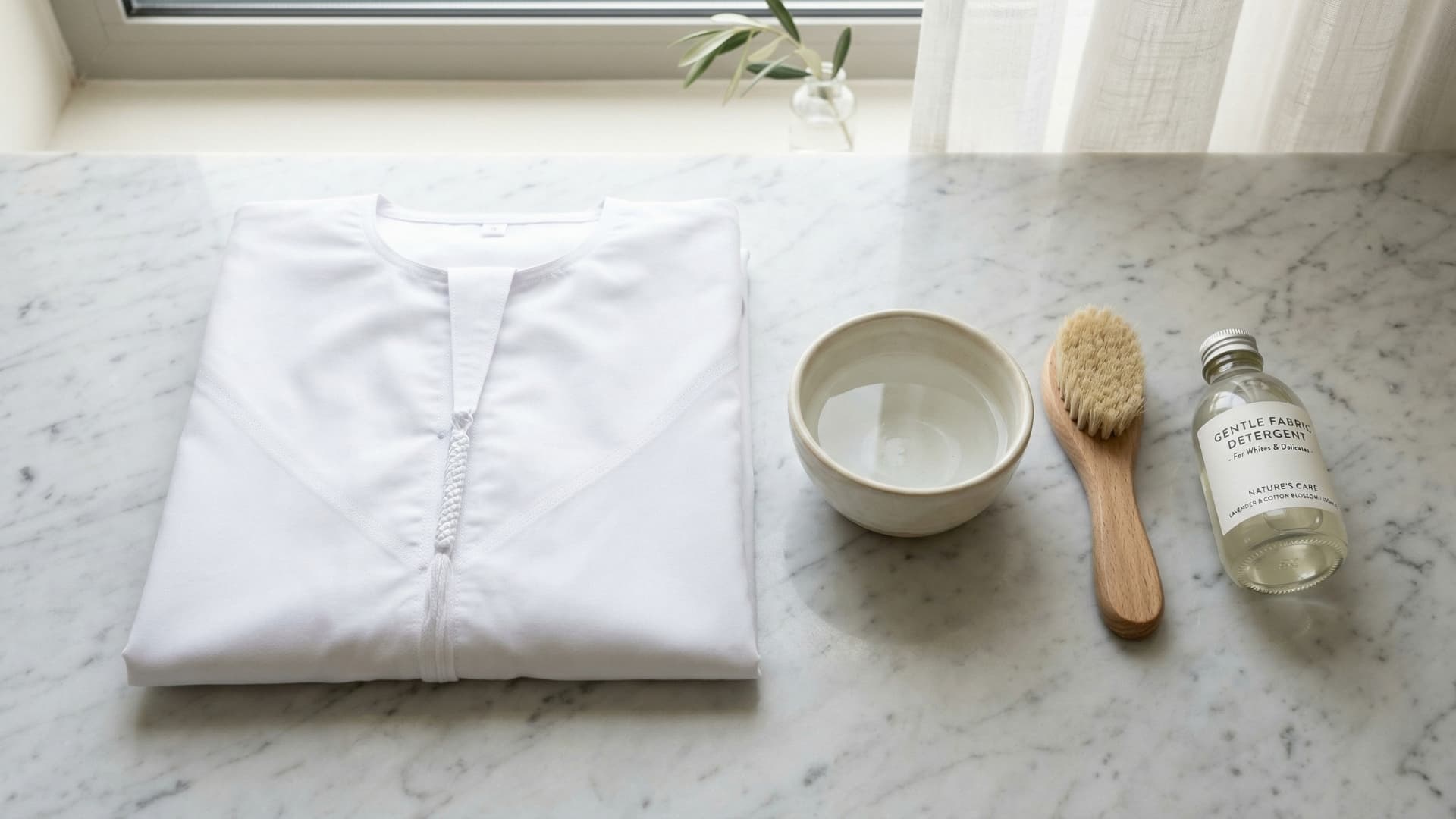
كيفية غسل واعتناء بکندورتك بالطريقة الصحيحة
Shabab Al Yola Teams
Table of Contents
Table of Contents
كيف تغسل وتهتم بكندورة بشكل صحيح
الكندورة تقول الكثير عنك قبل أن تتكلم. عندما تكون نظيفة وبيضاء ساطعة ومنضدة جيدًا، الناس يلاحظون. عندما تكون مملة أو متسخة أو ممزقة، ذلك يلاحظ أيضًا.
المشكلة هي أن معظم الناس لا يدركون مدى سهولة إتلاف كندورة جيدة دون قصد. دورة الغسيل الخاطئة أو المنظف الخاطئ أو مجرد تجفيفها بشكل سيئ يمكن أن يأخذ كندورة حادة ويتحول إلى شيء لا تشعر بالثقة عند ارتدائه.
لذا دعني أرشدها لك حول كيفية العناية بها بشكل صحيح. الغسيل والجفاف والكوي والتحفظ، كل شيء.
لماذا تحتاج کندورة إلى رعاية خاصة
معظم الملابس سهلة التعامل. تغسلها، تتعليقها، ترتديها. الكندورة ليست كذلك.
الكندورات الجيدة، خاصة تلك المصنوعة من القماش الياباني أو القطن الناعم، لها نسيج وتنفيذ يتفاعل بشكل سيئ مع الحرارة والمنظفات القاسية ودورات الآلة القاسية. ولأن اللون أبيض، كل خطأ صغير يظهر بوضوح. بقع صفراء، خيوط فضفاضة، مناطق مملة، سترى كل ذلك.
ما لا يدركه معظم الناس هو أن الضرر لا يحدث دفعة واحدة. إنه يتراكم ببطء، غسلة بعد غسلة. يومًا ما الكندورة تتوقف عن الظهور بشكل صحيح ولا يمكنك معرفة متى пошك.
الحصول على الأساسيات بشكل صحيح من البداية هو ما يحافظ على کندورة جيدة في الظهور جيدًا لسنوات.
غسيل يدوى أو غسيل آلى — أى يجب أن تختار?
كلاهما يمكن أن يعمل. لكنهما ليسا نفس الشيء، والاختيار الصحيح يعتمد على کندورتك.
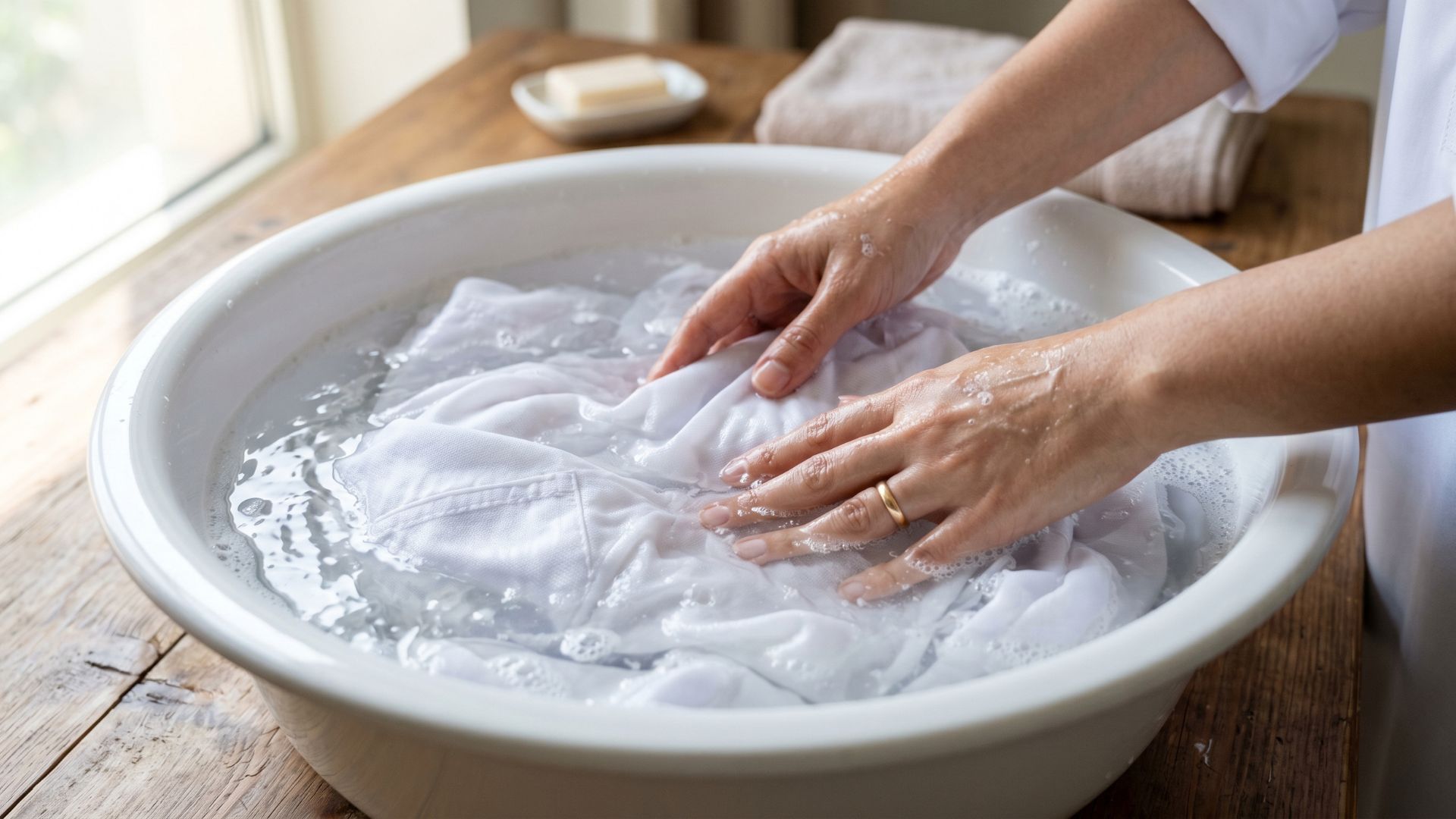
الغسيل اليدوى هو الخيار الأكثر أمانًا، خاصة للكندورات المصنوعة من أقمشة премيوم أو لطيفة. هنا كيف تفعله بشكل صحيح:
- املأ حوضًا بماء بارد أو دافئ وأضف منظف لطيف
- اعمل القماش بيدك برفق، لا تحك أو تلفه
- اهتم بشكل خاص بالعُنق والكفين والشّق، لأنها تجمع معظم العرق والغبار، خاصة في حر أبو ظبي
- اشطف حتى يصبح الماء صافٍ تمامًا
الغسيل الآلى جيد للكندورات اليومية، ولكن فقط إذا فعلته بشكل صحيح:
- استخدم دورة لطيفة أو حساسة فقط
- احتفظ بالماء عند 30 درجة أو أقل
- ضع الكندورة داخل كيس غسيل شبكى بحيث لا تتشابك أو تفرك مع الملابس الأخرى
- لا تغسلها مع ملابس داكنة أو ملونة، حتى إذا كانت رطبة قليلاً، يمكن أن تنتقل الألوان إلى القماش الأبيض وتتسبب في بقع لا تُزال بسهولة
نصيحتى الصادقة هي هذه. إذا كانت کندورة премيوم أو دفعته مبلغًا جيدًا منها، اغسلها يدوياً. لکندوراتك اليومية العادية، الآلة تعمل جيدًا طالما اتبعت تلك الخطوات.
هل تستخدم المنظف الصحيح?
هذا هو المكان الذي يخطئ فيه الكثير من الناس دون أن يدركوا.
استخدم منظفًا مصممًا للأقمشة البيضاء أو اللطيفة. ابتعد عن أي شيء يحتوي على مبيض عادى إلا إذا قال الملصق بوضوح أنه آمن للقطن أو الأقمشة الناعمة. المبيض العادي يضعف القماش مع مرور الوقت وبعد الاستخدام المتكرر يسبب اصفرارًا، وهو عكس ما تريده.
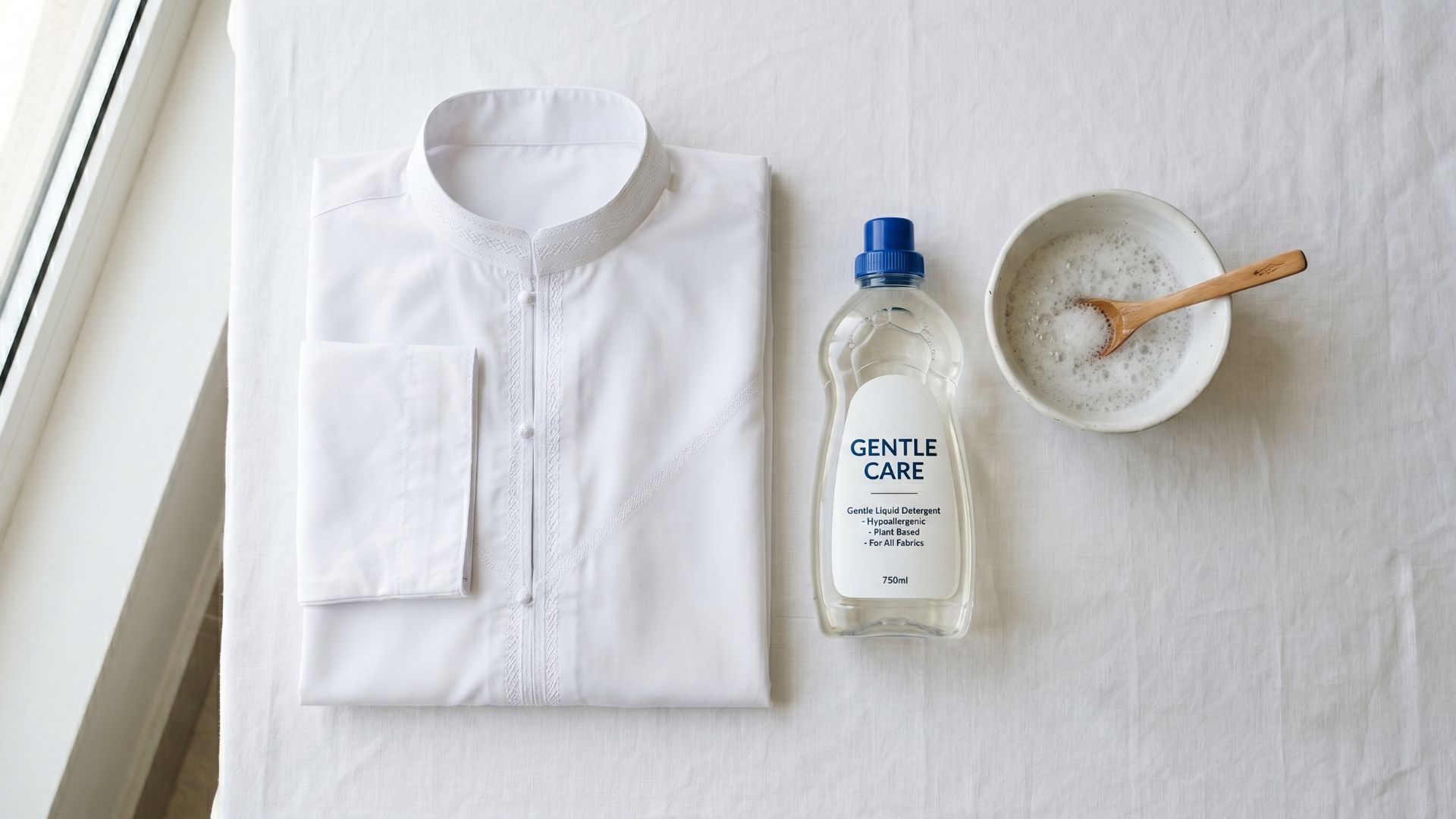
对于 کندورات مصنوعة من القماش الياباني أو مزيج премيوم، منظف سائل لطيف يعمل بشكل أفضل من المسحوق. السائل يذوب بشكل صحيح ولا يترك بقعًا من الرواسب على القماش.
بعض المنظفات تحتوي على مشدّات بصرية تساعد في الحفاظ على البياض. تلك جيدة للاستخدام، فقط تحقق من أنها آمنة للقماش. ولا تفرط في الكمية. كمية صغيرة من المنظف الصحيح دائمًا أفضل من كمية كبيرة من المنظف الخاطئ.
لماذا تتحول کندورتك إلى اللون الأصفر: وكيفية إصلاحها
الألوان الصفراء على کندورة بيضاء هي واحدة من أكثر المشاكل شيوعًا و السبب هو几乎 دائمًا واحد من ثلاثة أشياء. تراكم العرق، المنظف الخاطئ، أو الغسيل في ماء ساخن.
الخبر السار هو أنك لا تحتاج إلى منتجات باهظة الثمن لإصلاحها.
قبل الغسيل، اغمر الكندورة في ماء بارد مع كمية صغيرة من الخل الأبيض لمدة حوالي 30 دقيقة. الخل لطيف على القماش، يكسّر رواسب العرق، ويُبيّض الأبيض بشكل طبيعي دون التسبب في ضرر.
يمكنك أيضًا إضافة ملعقة كبيرة من صودا الخبز مباشرة إلى الطلمبة أو درج المنظف أثناء غسيلك العادي. يعمل جيدًا على المظهر المملة ويتخلص من الرائحة بعد الشطف.
كيف تجفف کندورتك بدون إتلافها
الحرارة أثناء الجفاف هي حيث يحدث الكثير من الضرر، ومعظم الناس لا يدركون ذلك حتى يصبح quá متأخرًا.
مجففات الملابس هي أكبر مشكلة. الحرارة تقلص القماش، تغير الشكل، وتضعف الخيوط التي تعطي الكندورة شكلاً نظيفًا ومنضبطًا. مرة واحدة کندورة تفقد ذلك الشكل، الكوي وحده لن يُ戻ها تمامًا. تجنبهم قدر الإمكان.
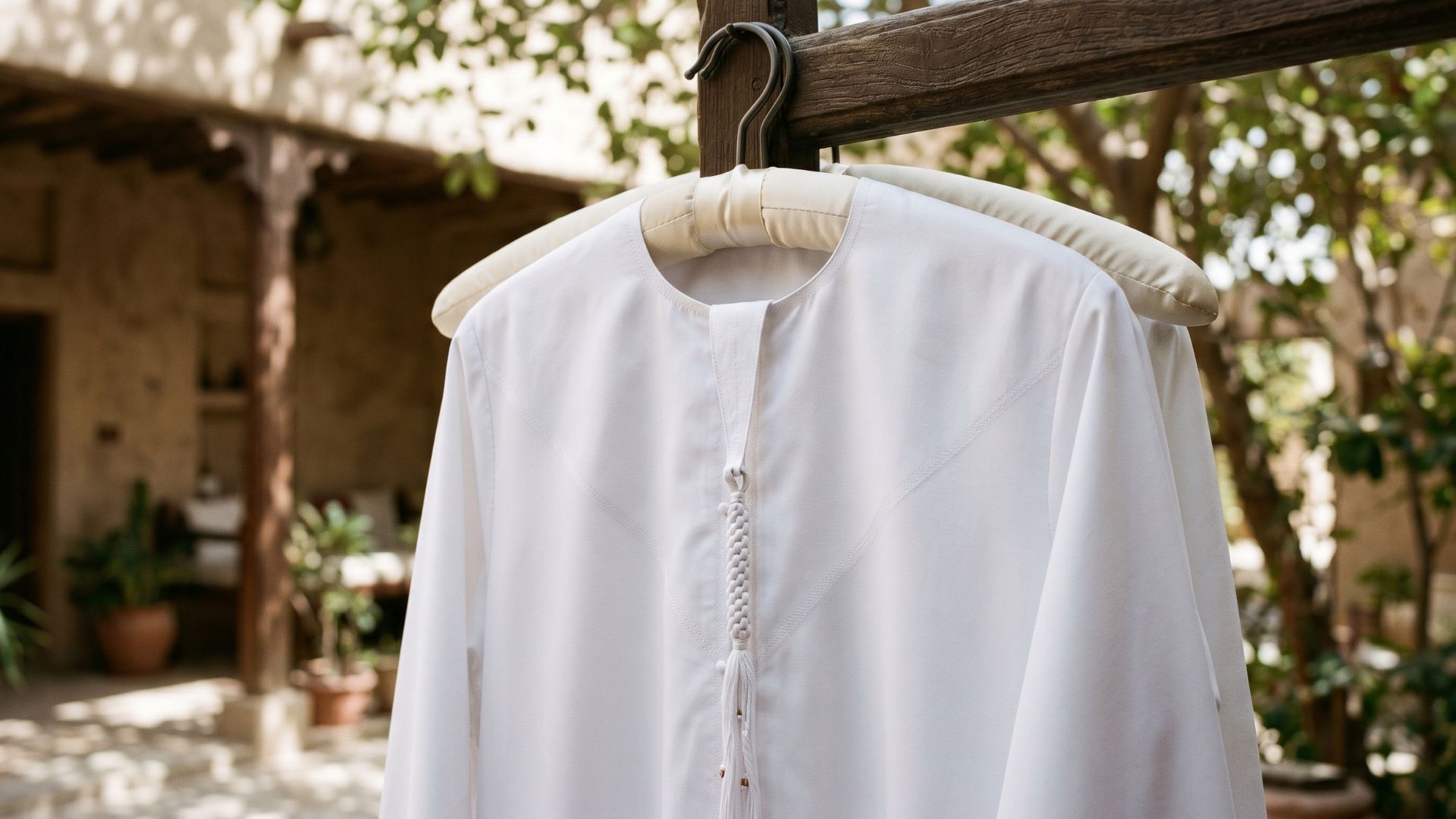
التجفيف بالهواء هو دائمًا الخيار الأفضل. هنا كيف تفعله بشكل صحيح:
- تعليق الكندورة على معلق واسع مخمد ngay بعد الغسيل
- مسح أي طيات بيدك قبل تركها لتجف
- اختر مكانًا مظللًا مع تدفق جيد للھواء، وليس أشعة الشمس المباشرة
- التعرض لأشعة الشمس مع مرور الوقت يُبّدئ الأقمشة البيضاء ويمكن أن يسبب لونًا أصفرًا
إذا كنت يجب أن تستخدم مجففًا، لا تشغل الدورة الكاملة:
- ضبطه على إعداد حرارة منخفض
- أخرج الكندورة بينما لا تزال رطبة قليلاً
ذلك الجزء الأخير من التجفيف بالهواء يُحدث فرقًا حقيقيًا في كيفية ظهورها ومدى طول عمر القماش.
كيف تكوي کندورتك وتحصل على هذا الشكل الحاد
كندورة مكوّاة بشكل صحيح تغير كيفية ظهورك تمامًا. كندورة مكوّاة بشكل متسرع واضح والناس يلاحظون.
اكويها بينما لا تزال رطبة قليلاً. الطيّات تخرج بسهولة أكبر والشكل يبدو أنظف. إذا كنت غير متأكد من القماش، جرب على جزء داخلى من الحاشية أولاً قبل المكوية على القماش كله.
أشياء يجب أن تضعها في الاعتبار:
- للصدر والظهر، اكوي من الداخل لتجنب مظهرًا لامعًا مكويًا على السطح الخارجي
- للعُنق والكفين، استخدم قطعة مكوية رقيقة بين المكواة والقماش
- استخدم ضربات طويلة ومستوية، لا تدفع إلى الأمام والخلف في مكان واحد
مرة واحدة أنتهيت، تعليقها على معلق ngay. حتى بضع دقائق متكئة أو ملقاة على سطح سيرجع الطيّات.
کندورة جيدة أسهل في العناية
شيء واحد لا يفكر فيه معظم الناس هو أن العناية تبدأ قبل الغسلة الأولى. تبدأ مع القماش والخياطة.
كندورة مصنوعة من قماش جيد تحتفظ بشكلها بعد الغسيل، تكوي بسهولة، وتحافظ على لونها الأبيض يبدو جديدًا. کندورة مصنوعة بشكل سيئ سوف تعطيك مشاكل بغض النظر عن مدى عنايتك بها.
لذا إذا كنت بذل جهدًا، تأكد من أن الكندورة تستحق ذلك من البداية. زورونا أو تحدث إلى خياطنا مباشرة لمساعدتك في اختيار الكندورة المناسبة لأسلوب حياتك في أبو ظبي.
خياطة شباب الأيولا شارع هزاع بن زايد, النيهان, E19 02, أبو ظبي
كيف تحفظ کندورتك وكيف thường تغسلها
تحفظها بشكل صحيح
دائمًا تعليق کندوراتك، لا تضعها بشكل متكئة لفترات طويلة. التكية تُحدث طيّات عميقة صعب مكويتها لاحقًا. استخدم معلقًا خشبيًا واسعًا أو مخمدًا بحيث تحتفظ الكندورة بأكتافها.
احتفظ بها في خزانة باردة وجافة بعيدًا عن أشعة الشمس. لتحفظ أطول، استخدم كيس ملابس قطني قابل للتنفس، وليس أغطية بلاستيكية لأنها تحبس الرطوبة وتتسبب في ضرر للقماش مع مرور الوقت.
الكرات من أرز السيدر في الخزانة تبقي الحشرات بعيدًا بشكل طبيعي دون رائحة قوية تتركها الكرات المضادة للفراش.
كيف thường تغسلها
في حر أبو ظبي، الغسيل بعد ارتداء واحد أو ارتداءين هو النهج الصحيح للكندورات اليومية. ارتداء قميص داخلى رقيق يساعد على امتصاص العرق وتمديد فترة بين الغسيل، مما يمتد عمر القماش أيضًا.
对于 کندورات ترتديها في المناسبات، اغسلها بعد كل ارتداء. العطور والطعام تتركن أثرًا يتحول إلى القماش إذا تركتها لفترة طويلة.
كلماتي النهائية:
العناية بكندورتك ليست معقدة بمجرد معرفة ما يهم حقًا. المنظف الصحيح، التجفيف بالهواء، الكوي بينما لا تزال رطبة، التعليق بدلاً من التكية. هذه العادات الصغيرة هي ما يحافظ على کندورتك في الظهور بالشكل الذي يجب أن تكون عليه كل يوم.
إذا كنت تريد کندورة تستحق العناية، ابدأ بالكندورة الصحيحة. تصفح تشكيلة كاملة من ملابس شباب الأيولا العربية واكتشف کندورات مصممة لارتداء يومي في أبو ظبي، مبنية من أقمشة تحتفظ بشكلها، لونها، وراحتها غسلة بعد غسلة.
أسئلة وأجوبة
هل يمكنني غسل کندورتي في الغسالة؟
نعم يمكنك. استخدم دورة لطيفة، احتفظ بالماء عند 30 درجة أو أقل، واستخدم كيس غسيل شبكى. لا تغسلها مع ملابس ملونة.
لماذا تتحول کندورتي البيضاء إلى اللون الأصفر؟
عادةً ما يكون ذلك بسبب تراكم العرق أو الماء الساخن أو المنظف الخاطئ. جرب الغمر في ماء بارد مع قليل من الخل الأبيض قبل الغسيل وانتقل إلى منظف لطيف مصمم للأقمشة البيضاء.
كيف أحافظ على کندورتي تبدو حادة بعد الكوي؟
اكويها بينما لا تزال رطبة قليلاً، واستخدم ضربات طويلة ومستوية، واعليقها ngay بعد الانتهاء. لا تتركها متكئة أو ملقاة على سطح بمجرد انتهاءك.
هل من المقبول تجفيف کندورتي في الشمس في أبو ظبي؟
من الأفضل تجنب أشعة الشمس المباشرة. مكان مظلل مع تدفق جيد للھواء يعمل بشكل أفضل ويحمي الأبيض من التبديد أو الاصفرار مع مرور الوقت.
هل ارتداء قميص داخلى يفيد حقًا؟
نعم يفيد. يساعد على امتصاص العرق قبل وصوله إلى قماش الكندورة، مما يعني غسيل أقل وملابس أكثر دوامًا.
ما مدى طول عمر کندورة جيدة مع العناية الصحيحة؟
مع العادات الصحيحة، يمكن لكندورة جودة أن تبقى في حالة جيدة لسنوات عديدة. جودة القماش تهم كثيرًا أيضًا. في شباب الأيولا، نختار الأقمشة بعناية لضمان متانتها وراحتها حتى تحافظ الكندورة على شكلها بشكل صحيح مع مرور الوقت.