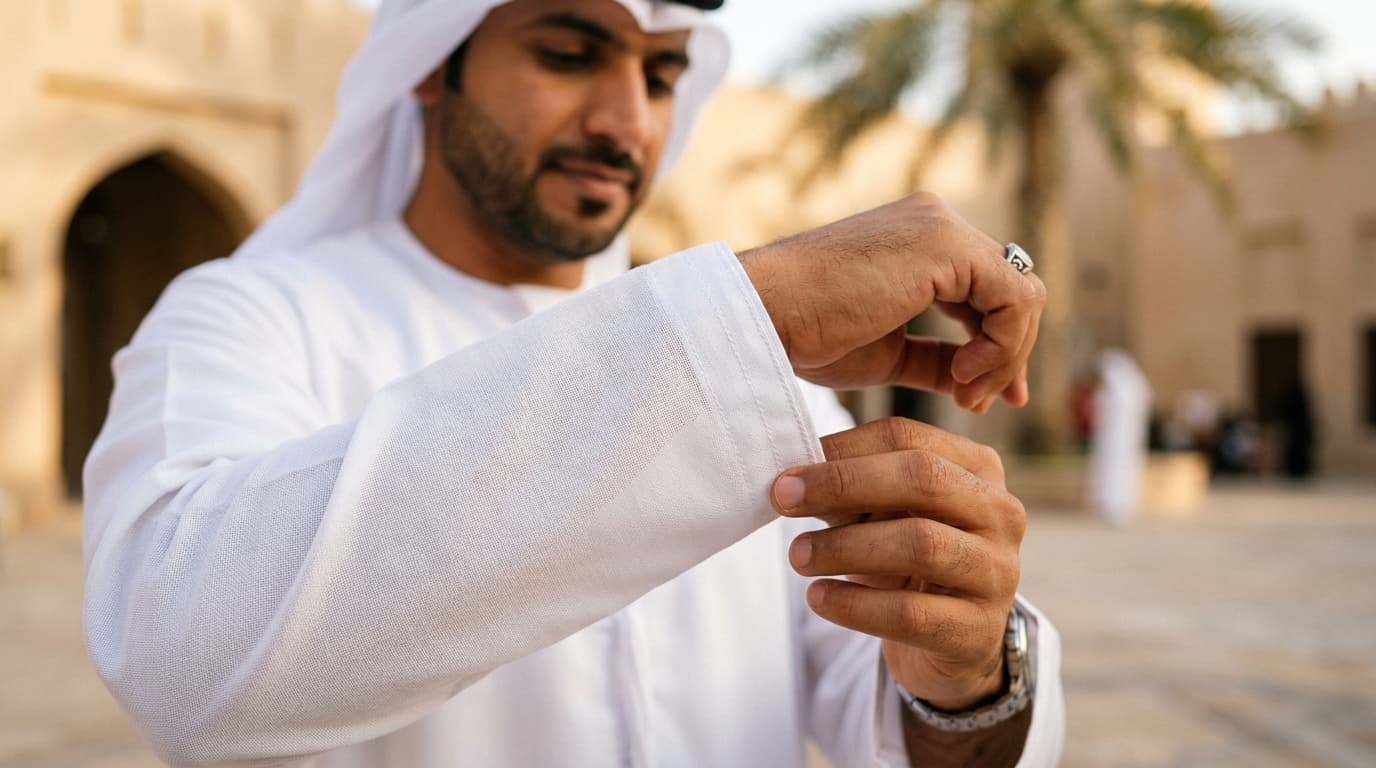
Best Emirati Kandora Fabrics to Choose This Summer
Shabab Al Yola Teams
Table of Contents
Table of Contents
The Ultimate Guide to Summer Kandura Fabrics in the UAE
Key Takeaways
- Japanese Cotton is the #1 recommended fabric for summer due to its ultra-lightweight, breathable, and sweat-absorbent qualities.
- Linen and Linen-Cotton blends excel in peak summer months (June–August) for casual and outdoor wear.
- Cotton-Polyester blends offer the best balance of comfort and low maintenance for daily office and work wear.
- Avoid heavy synthetics and thick embroidery when temperatures exceed 40°C.
- TOYOBO (Japanese Supima cotton) is the most trusted premium label among Emirati tailors.
Why Fabric Choice Matters in UAE Summer
Summer in the United Arab Emirates is not a mild inconvenience; it is one of the hottest and most humid seasons on the planet. Between May and September, temperatures in Dubai, Abu Dhabi, and Sharjah regularly exceed 40°C (104°F), with relative humidity often climbing above 80% along the coastal regions.
For Emirati men, the Kandora remains the primary daily garment. Choosing the right fabric is a functional decision that determines:
- Breathability: Does the fabric allow air to circulate?
- Moisture Management: Does it absorb perspiration and dry quickly?
- UV Protection: Does the tight weave deflect the intense desert sun?
- Wrinkle Resistance: Does it maintain a crisp, dignified appearance?
- Durability: Does it hold up to frequent summer washing?
Top 6 Best Kandora Fabrics for UAE’s Summer
1. Japanese Cotton (TOYOBO) — The Gold Standard
Widely regarded as the ultimate summer fabric, TOYOBO is woven from Supima cotton, offering a premium finish engineered by advanced Japanese textile technology.
- Best for: Daily wear, professional settings, formal occasions, mosque attendance.
- Price range: AED 80–200 per meter (unstitched).
Why it dominates:
- Ultra-lightweight: Typically 100–130 gsm.
- Superior Absorption: Absorbs up to 27x its weight in moisture.
- Lustrous Finish: Provides a subtle sheen that elevates the look.
- Wrinkle Resistance: Outperforms standard cotton throughout the day.
2. Pure Egyptian / Supima Cotton
Natural cotton breathes in a way no synthetic can replicate, making it the backbone of Kandora tradition.
- Best for: All-day comfort, sensitive skin, traditional daily wear.
- Key Properties: Hypoallergenic, no static cling, and natural moisture wicking.
3. Linen and Linen-Cotton Blends
Linen’s hollow fiber structure makes it arguably the most naturally cooling fabric available.
- Best for: Peak summer heat (June–August), outdoor settings, casual gatherings.
- Pro-Tip: Pure linen wrinkles easily; choose a Linen-Cotton blend (50/50) for a neater, formal appearance.
4. Cotton-Polyester Blends
Usually a 65/35 mix, these are built for the demanding professional who needs to look sharp for 10+ hours.
- Best for: Office wear, frequent travelers, low maintenance.
- Advantage: Exceptional wrinkle resistance and color fastness (stays bright white longer).
5. Poly-Viscose (Wash & Wear)
A budget-friendly synthetic blend that has a massive following for its sheer practicality.
- Best for: Everyday errands, younger buyers, casual use.
- Note: Best reserved for air-conditioned environments as it lacks the natural "breathability" of cotton in 43°C+ heat.
6. Performance / Moisture-Wicking Synthetics
Modern tech borrowed from athletic wear, engineered specifically for high-heat conditions.
- Best for: Active lifestyles and heavy perspirers.
- Features: Active moisture transport and built-in UPF 40–50+ sun protection.
Fabric Comparison Table
Fabric | Breathability | Moisture Wicking | Wrinkle Resistance | Price (AED/m) | Best Season Use |
|---|---|---|---|---|---|
Japanese Cotton (TOYOBO) | ⭐⭐⭐⭐⭐ | ⭐⭐⭐⭐⭐ | ⭐⭐⭐⭐ | 80–200 | Year-round / Peak summer |
Pure Egyptian Cotton | ⭐⭐⭐⭐⭐ | ⭐⭐⭐⭐ | ⭐⭐ | 50–120 | Year-round / Peak summer |
Linen (Pure) | ⭐⭐⭐⭐⭐ | ⭐⭐⭐⭐⭐ | ⭐ | 60–150 | June–August peak |
Linen-Cotton Blend | ⭐⭐⭐⭐⭐ | ⭐⭐⭐⭐ | ⭐⭐⭐ | 60–130 | May–September |
Cotton-Polyester Blend | ⭐⭐⭐ | ⭐⭐⭐ | ⭐⭐⭐⭐⭐ | 40–90 | Year-round / Office |
Poly-Viscose (W&W) | ⭐⭐⭐ | ⭐⭐⭐ | ⭐⭐⭐⭐⭐ | 25–60 | Year-round / Casual |
Performance Synthetic | ⭐⭐⭐⭐ | ⭐⭐⭐⭐⭐ | ⭐⭐⭐⭐ | 100–250 | Active / Outdoor |
What to Avoid in Summer Kandoras
- Heavy Embroidery: Traps heat against the skin.
- Dark Colors: Navy and Black absorb solar radiation; stick to white.
- 100% Polyester: Creates a hot, clammy microclimate.
- Winter Wool: Entirely unsuitable for temperatures above 30°C.
- Thick Undershirts: Use thin cotton instead of thick synthetics.
Frequently Asked Questions
Q: What is the difference between a Kandora and a Thobe? Both refer to the same garment. "Kandora" is the term used in the UAE and Oman, while "Thobe" is used in Saudi Arabia.
Q: How much fabric is needed? Approximately 3.5 meters for a standard adult, depending on height and build.
Q: Which color is best? White is the gold standard for summer as it reflects sunlight. Off-white and cream are also popular.