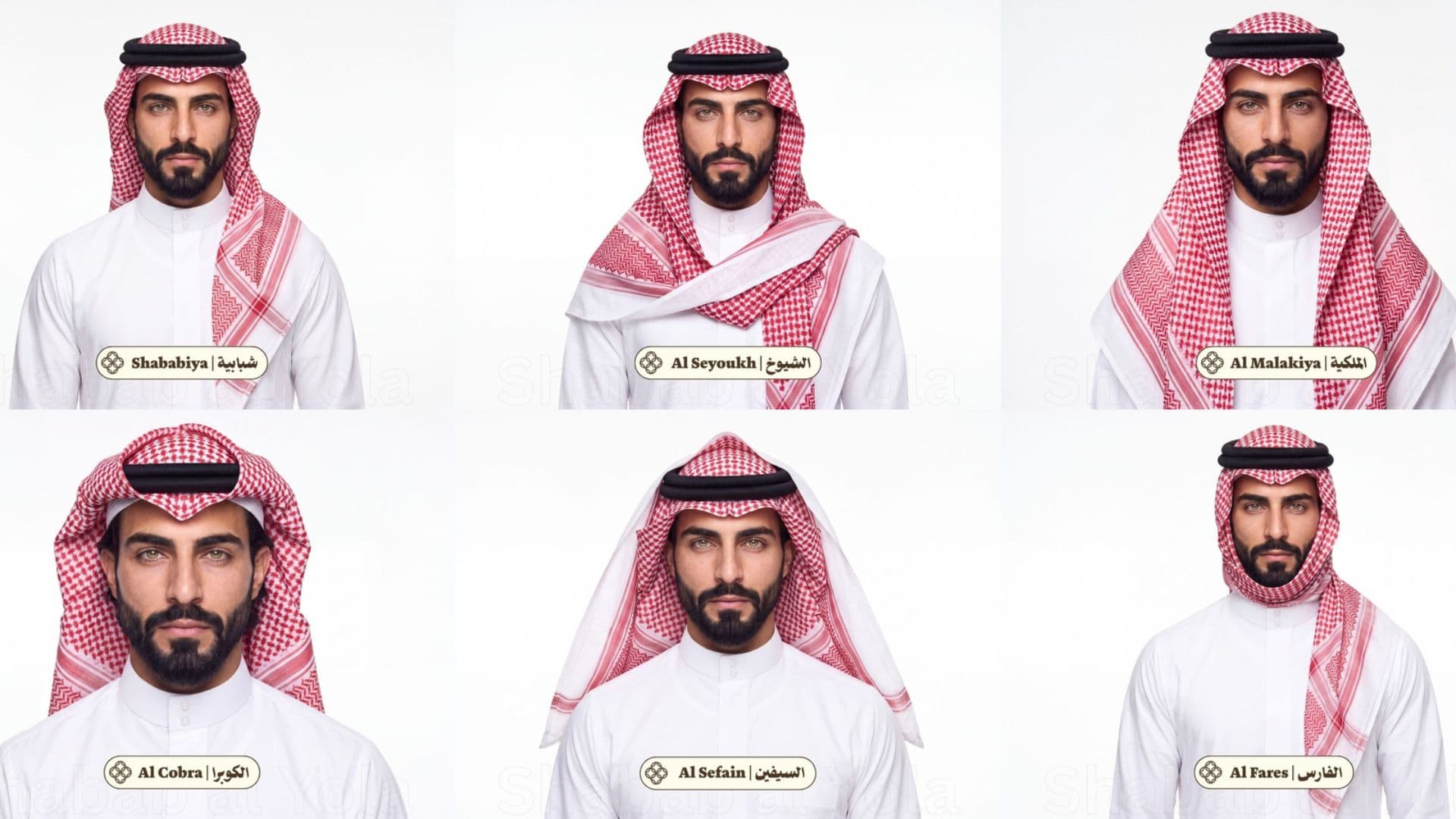
8 Different Ways to Style a Shemagh
Imtiaz Ahmed - Head of Tailoring Team
Mr. Imtiaz Ahmed is working as a head of tailoring department at Shabab Al Yola. Over nearly two decades, he has worked with local clients across the Gulf and international customers who expect Gulf-standard tailoring delivered to their door. His hands-on experience covers every major regional style, including Emirati, Saudi, Qatari, Kuwaiti, and Omani cuts, along with the fine details that separate a well-made thobe from a great one. At Shahbab Al Yola, Imtiaz personally oversees the construction of every regional silhouette the brand produces. He knows Gulf garment-making inside out and brings that knowledge into every piece the brand produces.
Table of Contents
Table of Contents
There are eight popular ways to style a shemagh. They are Al Malakiya, Al Cobra, Shababiya, Al Seyoukh, Al Fares, Al Sefain, Al Amaliya and Al Fanya. All eight use the same shemagh and the same black agal. Each style changes how the ends fall and how the front of the shemagh sits.
The Base Steps to Make Every Style
All eight styles start the same way. Complete the following base steps, before making a style:
- Put on a taqiyah that fits your head and covers your hair.
- Iron the shemagh so the folds look crisp.
- Fold the shemagh in half diagonally to make a triangle
- Place the triangle on your head with the folded edge at the front. Centre it so both sides match.
- Shape the front fold into a neat point above the forehead. Keep it clear of your eyes.
- Set the agal on top of your head. Keep it high, because an agal that sits too low covers the marzam.
The 8 Shemagh Styles Everyone Should Know
We have explained all of eight shemagh styles, their look, and the steps to make that style. Each style carries a different vibe, so read carefully.
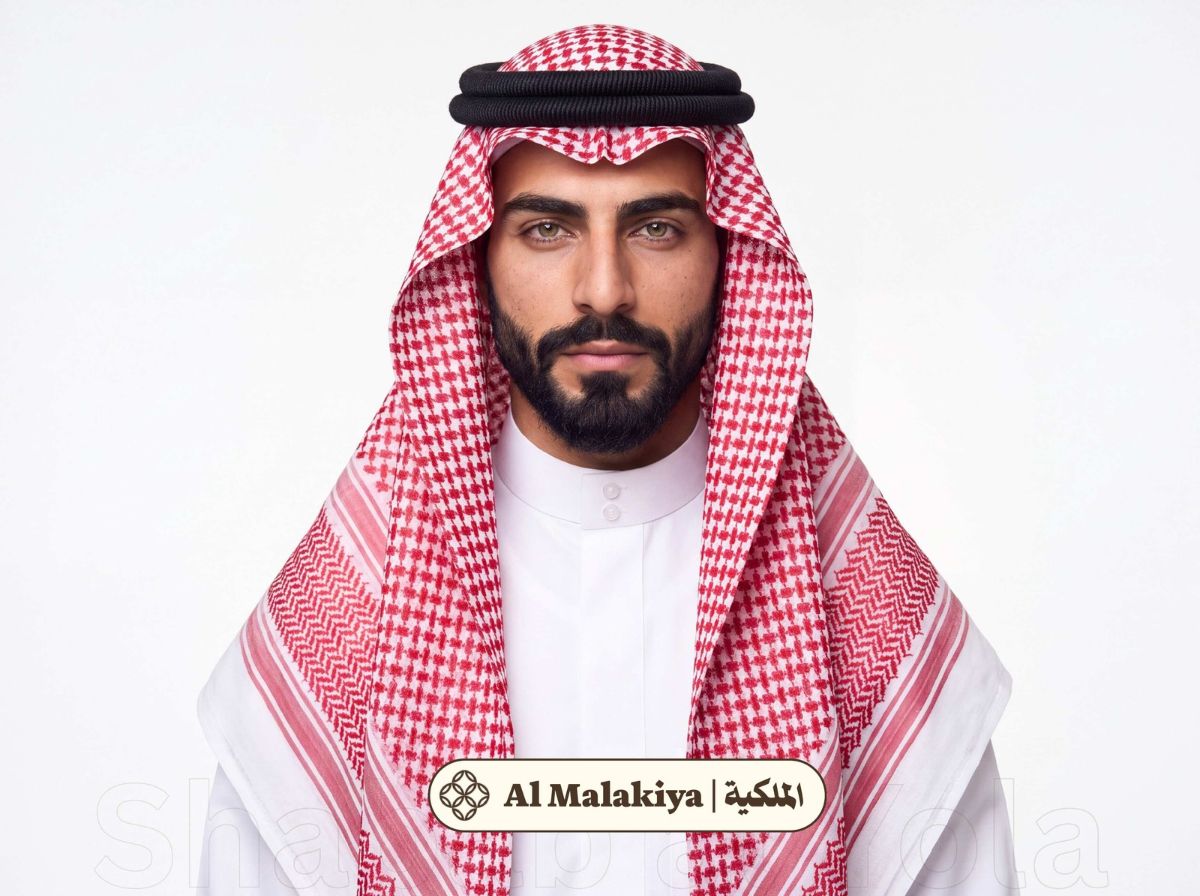
1- Al Malakiya (The Royal)
In this style, both ends of the shemagh fall straight down the front and cover the shoulders. The two sides match, so the style looks wide and balanced. The pattern and the borders show clearly on the chest.
How to make it?
- Bring one end forward over the shoulder on the same side.
- Bring the other end forward over the opposite shoulder.
- Let both ends fall straight down on the chest. Open them slightly so the pattern shows.
- Check in a mirror that both sides are the same length.
When to wear Al Malakiya?
Al Malakiya gives a formal and grand look. You can pick Al Malakiya style for weddings, national celebrations and other formal events. It also works well for Eid gatherings.
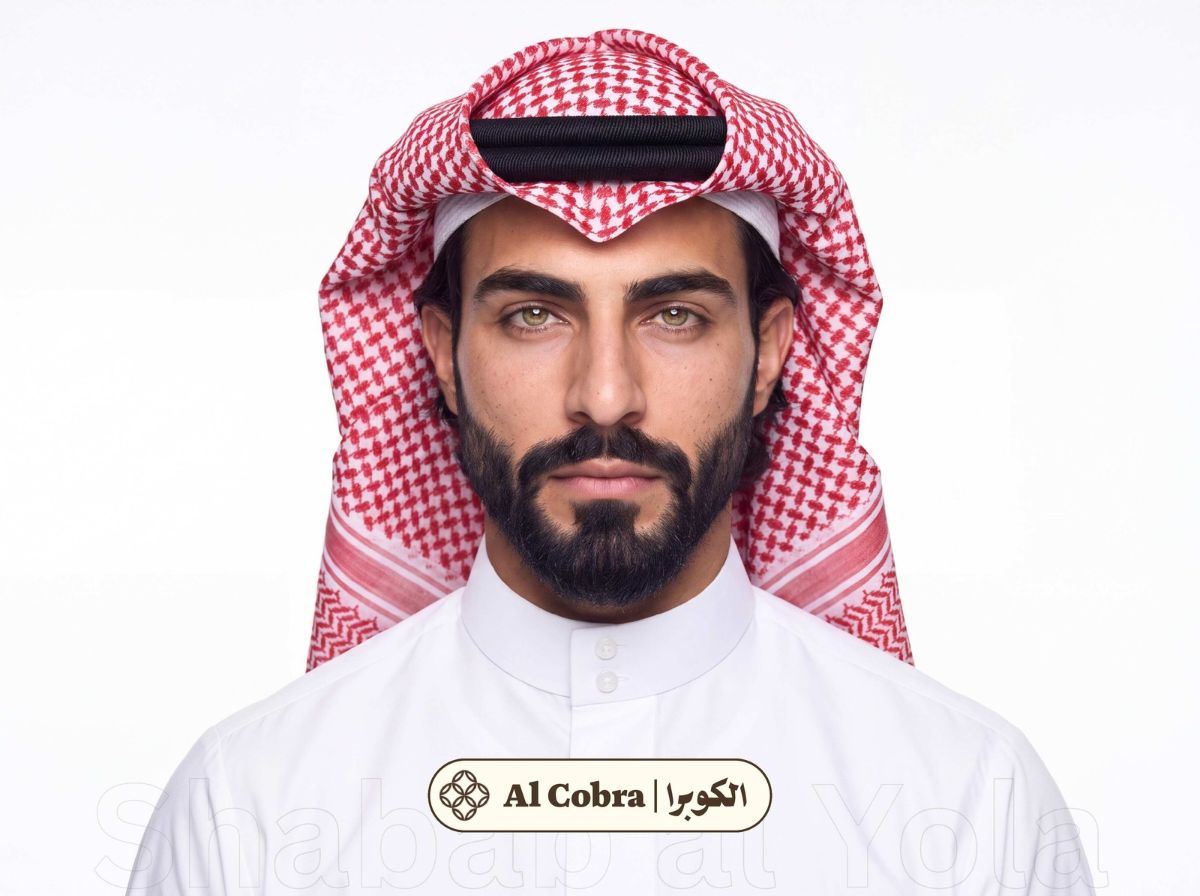
2- Al Cobra (The Cobra)
In Al-Cobra style, the shemagh is held firmly around the head and neck. The front fold stands up in a peak, and the fabric spreads behind the ears. No long ends hang on the chest, and the agal sits across the top of the head.
How to Make it?
- Apply a little starch to the front and the sides of the shemagh and iron it. Starch
- keeps the fabric firm, which this style needs.
- Lift the front fold so it forms a clear peak above your forehead.
- Draw both sides back around your head and neck, close to the ears.
- Set the agal on top to hold the shape.
When to Wear Al Cobra?
Al Cobra is a bold style. You can style it for short gatherings, photos and festive outings. The close wrap limits how easily you can turn your head, so it is less comfortable for long days.
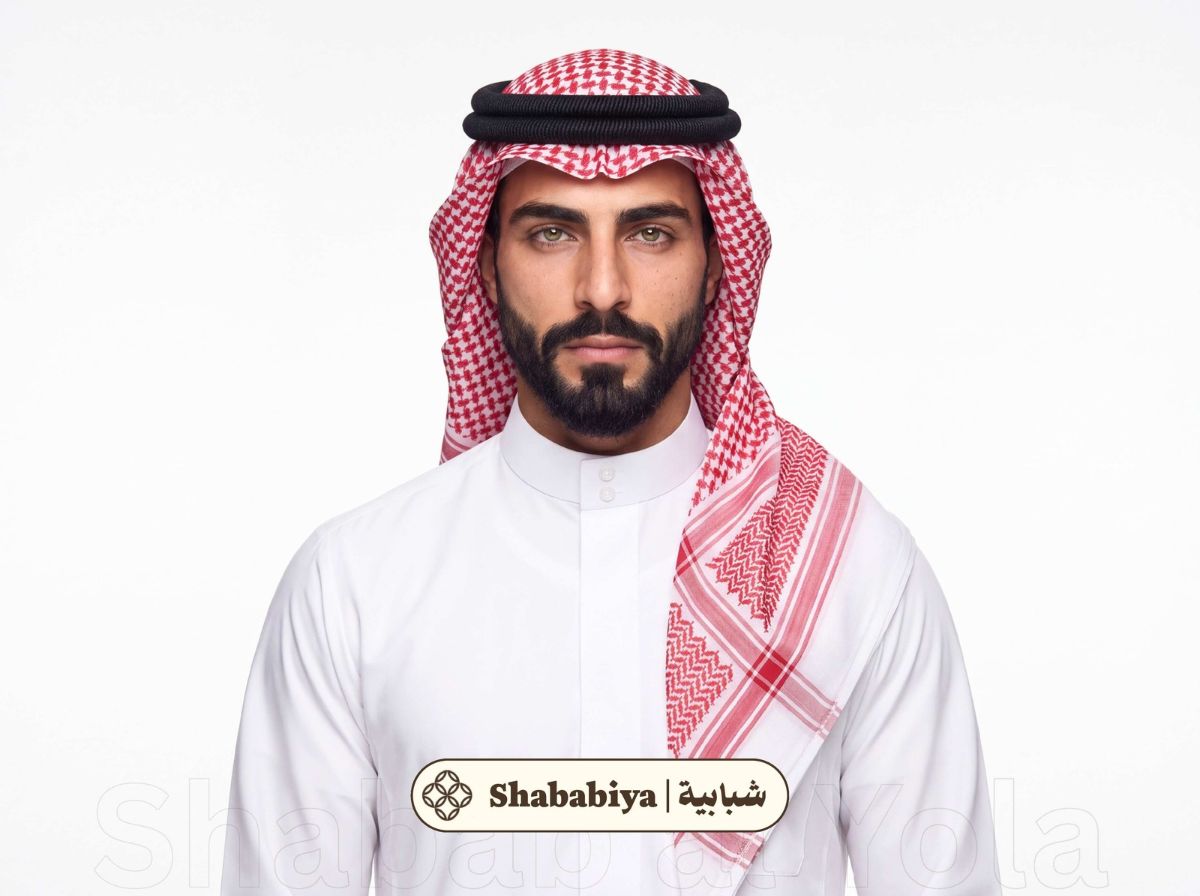
3- Shababiya (The Youthful)
In Shababiya, one end of the shemagh is opened out flat on the front of one shoulder, and the other end stays behind. Only a small part of the back end shows. The final look you get is decent and neat.
How to Make it?
- Pull one end forward over your shoulder.
- Open the front end slightly so the pattern and the border show on the chest.
- Leave the other end behind your other shoulder.
When to Wear Shababiya?
The name means youthful. This style is quick to make, so you can wear your shemagh in "Shababiya" style at university, casual meetups with friends, and you can also wear it everyday.
4- Al Seyoukh (The Sheikhs)
In this style, one end of the shemagh crosses the neck and sits over the opposite shoulder. It forms a diagonal band over the chest. The other end of shemagh hangs on the other side.
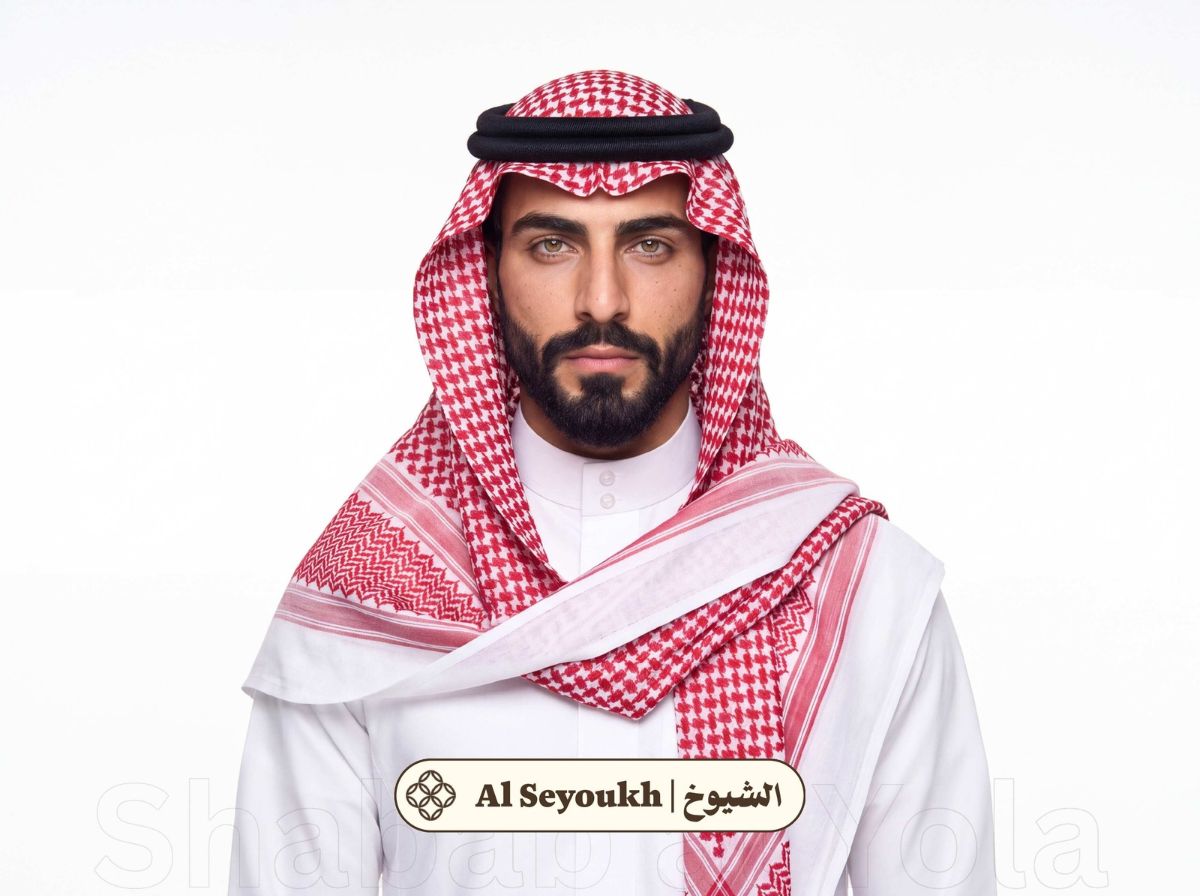
How to Make it?
- Take one end of the shemagh.
- Throw it across your neck and over the opposite shoulder.
- Leave the other end to hang naturally.
- Smooth the layers so the border lines run neatly.
When to wear it?
Saudi fashion guides describe this as an official style and one of the easiest to make. It suits work, meetings and daily wear.
5- Al Fares (The Knight)
The shemagh wraps close around the lower face and neck. The sides are drawn in under the jaw, and the long end rests on one shoulder. The name means the knight, and the covered neck is said to recall the dress of old horse riders.
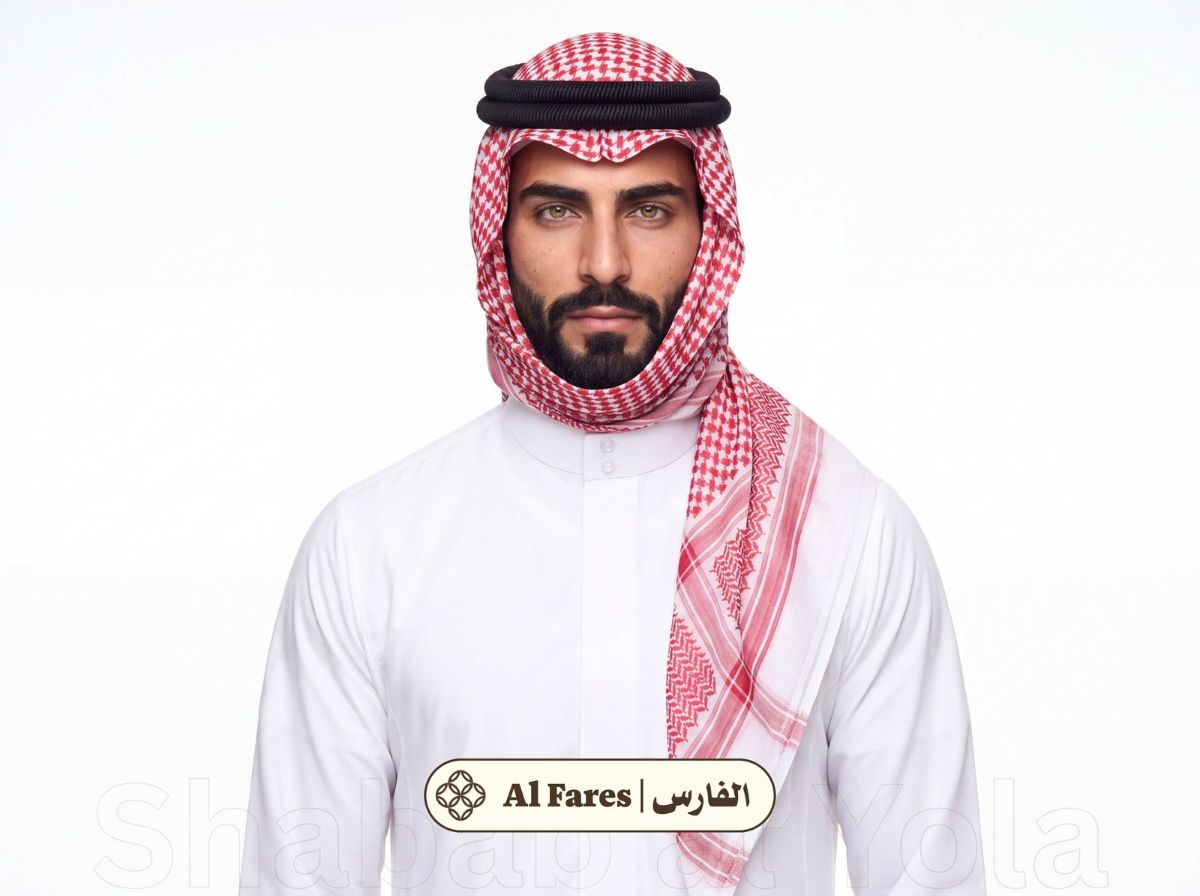
How to Make Al Fares?
- Draw one side of the shemagh across the front of your neck to the opposite side.
- Tuck it snugly under your jaw so the neck is covered.
- Bring the other side over your shoulder and let the end fall.
When to Wear it?
Because it covers the neck, you can wear Al Fares during cool days, evenings and outdoor events. The extra cover also helps against wind and dust.
6- Al Sefain (The Two Swords)
In Al Sefain, Both sides of the shemagh spread wide over the shoulders and lie flat. The white borders open out on each side like two blades, which is how the style gets its name.
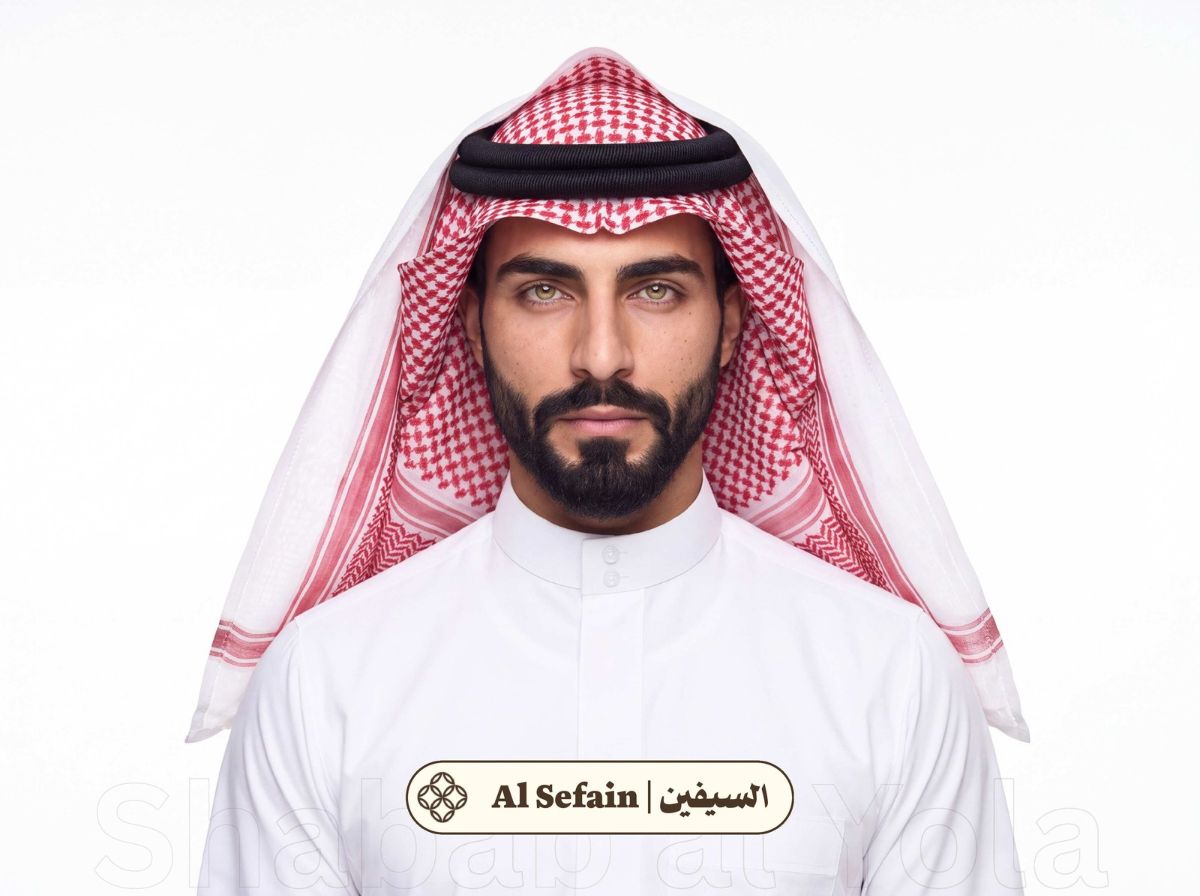
How to Make Al Sefain?
- Open both ends of the shemagh fully.
- Bring each end forward over its own shoulder.
- Spread them wide and smooth them flat so the borders show.
- Check that both sides are even.
When to Wear it?
Al Sefain gives a dignified and formal look, so you can style it on formal gatherings and special occasions.
6- Al Amaliya (The Practical)
This is one of the simplest style. In this style, both ends of shemagh move behind the shoulders. The face and neck stay clear, and very little cloth hangs in front.
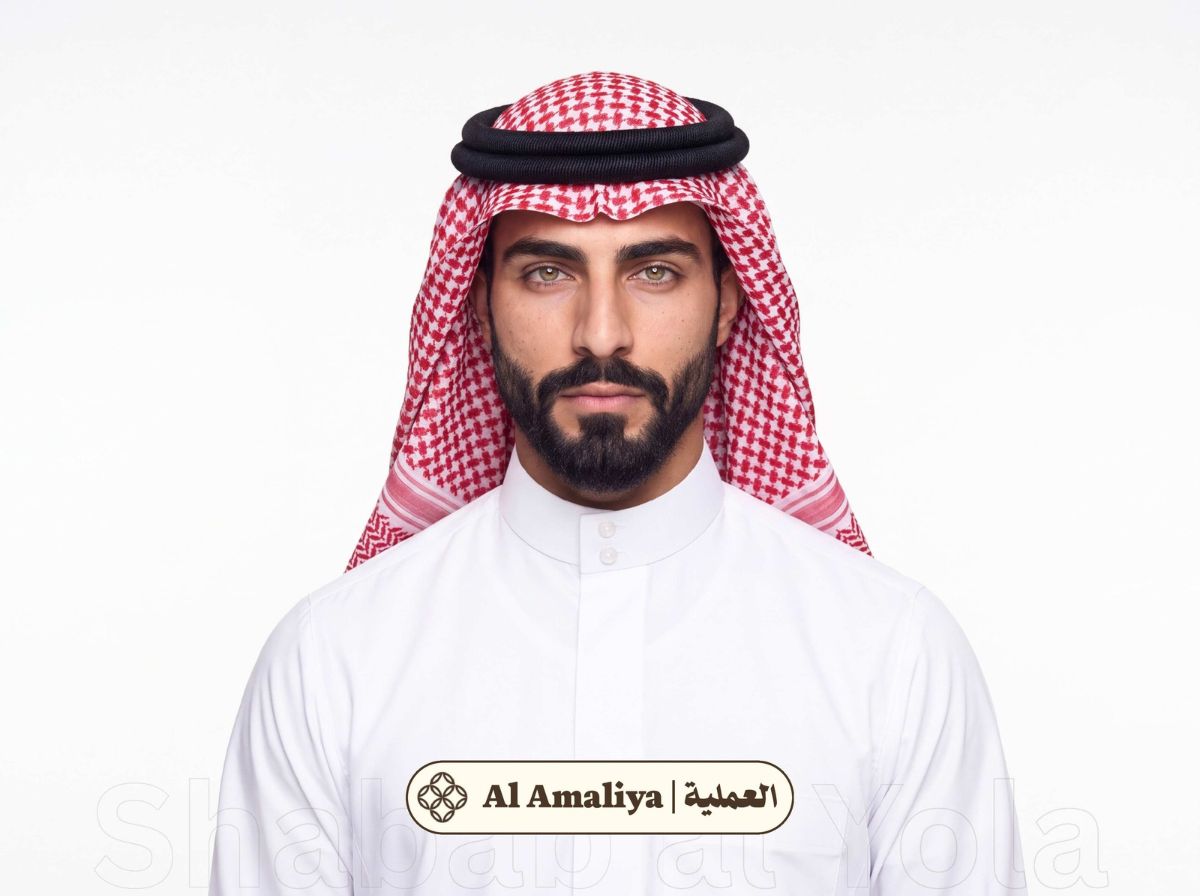
How to Make Al Amaliya?
- Pull one end back over its shoulder.
- Pull the other end back over the opposite shoulder.
- Let both ends rest behind you and smooth the cloth at the back.
When to Wear it?
Amaliya means the practical style. It lets you move and turn your head freely, so it could be styled during working days, errands and long hours.
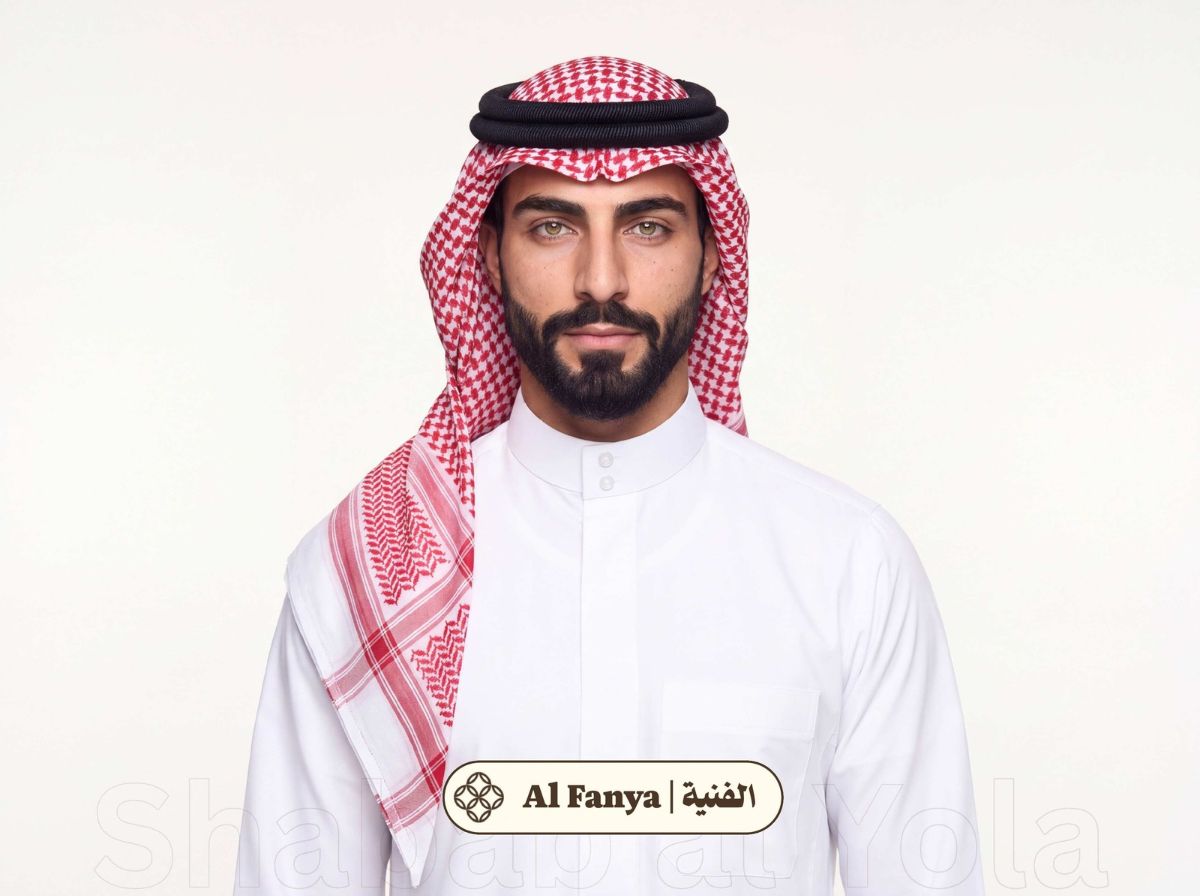
8- Al Fanya (The Artistic)
In this style, one end of the shemagh is brought forward over one shoulder and folded into a narrow band. It lies diagonally across the chest, and the striped border runs along it. The other end stays behind. The name means artistic, and the neat fold is what gives the style its polished look.
How to Make Al Amaliya?
- Bring one end forward over your shoulder.
- Fold it lengthwise into a narrow band.
- Lay the band diagonally across your chest so the border shows.
- Leave the other end behind your other shoulder.
When to Wear it?
Al Fanya can be worn during social visits, evening gatherings and photo session, when you want a decent look.
How to Choose the Right Shemagh Style?
- Think about movement. Al Amaliya and Al Seyoukh leave your head and neck free. Al Cobra and Al Fares wrap closer, so they limit movement more.
- Think about the ocassion. Al Malakiya and Al Sefain suit formal events. Al Amaliya and Shababiya suit your daily routine.
- Think about the weather. Al Fares covers the neck, so it feels better on a cool day.
- Think about your time. Al Seyoukh and Al Amaliya take only a minute. Al Cobra needs ironing and starch, so give it extra time.
- Practise first and try a new style at home in front of a mirror before a big event.
Frequently Asked Questions
1- What is the easiest way to style a shemagh?
Al Seyoukh is one of the easiest styles, since you only throw one end across the shoulder. Al Amaliya is also easy, because you pull both ends back.
2- Which shemagh style is best for work?
Al Amaliya is a good choice for work. It keeps your face and neck clear and lets you turn your head freely. Al Seyoukh also suits work and official settings.
3- Which shemagh style is best for weddings?
Al Malakiya and Al Sefain give a formal look that suits weddings and other special occasions.
4- Can I wear a shemagh without an agal?
Some people do during casual gathering. For formal occasions, the agal is part of the full look.