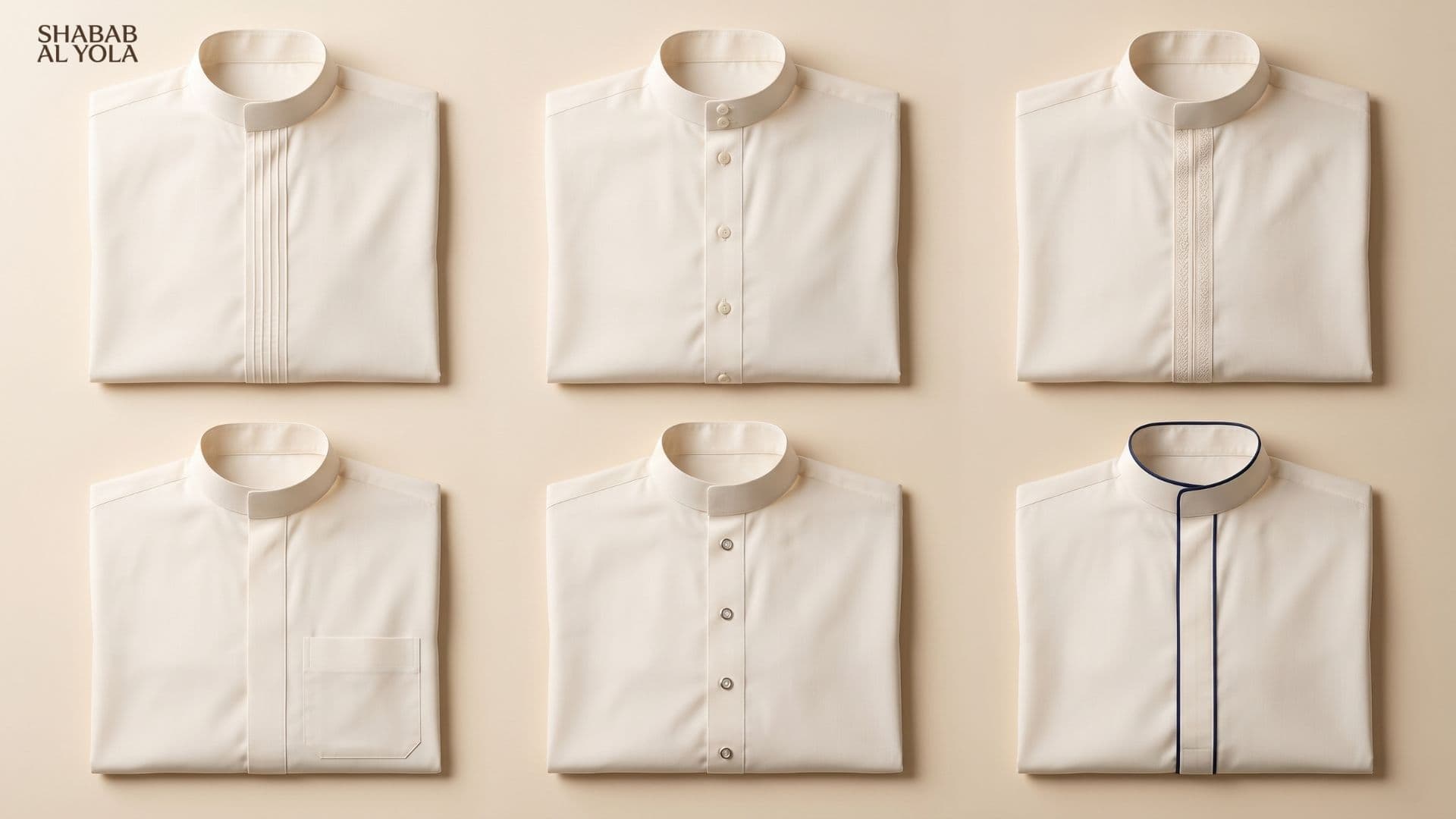
What is a Placket on a Thobe? Types, Styles, and Tips From Expert Tailors
Imtiaz Ahmed - Head of Tailoring Team
Mr. Imtiaz Ahmed is working as a head of tailoring department at Shabab Al Yola. Over nearly two decades, he has worked with local clients across the Gulf and international customers who expect Gulf-standard tailoring delivered to their door. His hands-on experience covers every major regional style, including Emirati, Saudi, Qatari, Kuwaiti, and Omani cuts, along with the fine details that separate a well-made thobe from a great one. At Shahbab Al Yola, Imtiaz personally oversees the construction of every regional silhouette the brand produces. He knows Gulf garment-making inside out and brings that knowledge into every piece the brand produces.
Table of Contents
Table of Contents
Have you noticed that every thobe has a different front style? Some have buttons you can see, some hide them under a fold of fabric, and some have embroidery instead. These small differences change the whole look of the thobe. They all come from one thing called the placket.
What Is a Placket on a Thobe?
Placket is the strip of fabric on the front of your thobe. It starts at the collar and runs down the chest. This is where you open and close the thobe.
On a classic Saudi thobe, Qatari thobe, and Kuwaiti dishdasha, this strip usually has four or five buttons. Today you can see many more styles. Some plackets hide the buttons. Some use a zipper. Some have embroidery or fine stitch work. Now let's jump in:
What are the Types of Thobe Plackets?
A placket has many types and designs that you can choose from. People in the Gulf prefer simple buttoned placket, either with visible buttons or hidden below the placket. Some men prefer zipper placket for their ease in opening and closing, while others like embroidered ones.
Below are the types of plackets you can choose from:
- Button plackets
- Hidden zipper plackets
- Decorative placket
Two of them has their own sub-types which we will discuss in detail.
1- Button Plackets
Buttoned placket is the most common among plackets. It has a row of buttons like the front of a standard shirt. There are three main button styles.
a) Placket With Buttons
This is the classic style. The buttons are placed on top of the placket where everyone can see them. Each button goes through a buttonhole. A buttonhole is the small stitched slit that holds the button in place. Usually four to five buttons are placed on a single placket but you can choose to add more if you want.
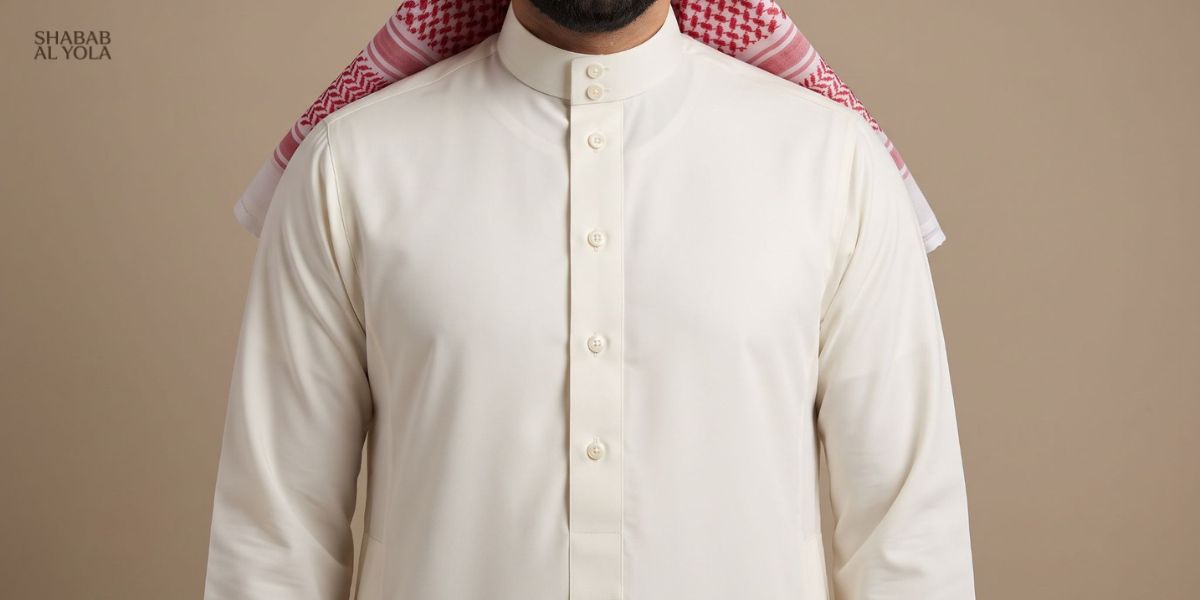
Many men like this style for daily wear and work. It is easy to open and close. You can pick plain buttons for a simple look. You can also pick shiny or metal buttons for a stylish front look.
b) Placket With Hidden Buttons
In this style, the buttons are still there but hidden. An extra fold of fabric covers the buttons. Tailors call this a "concealed placket" or a "fly front".
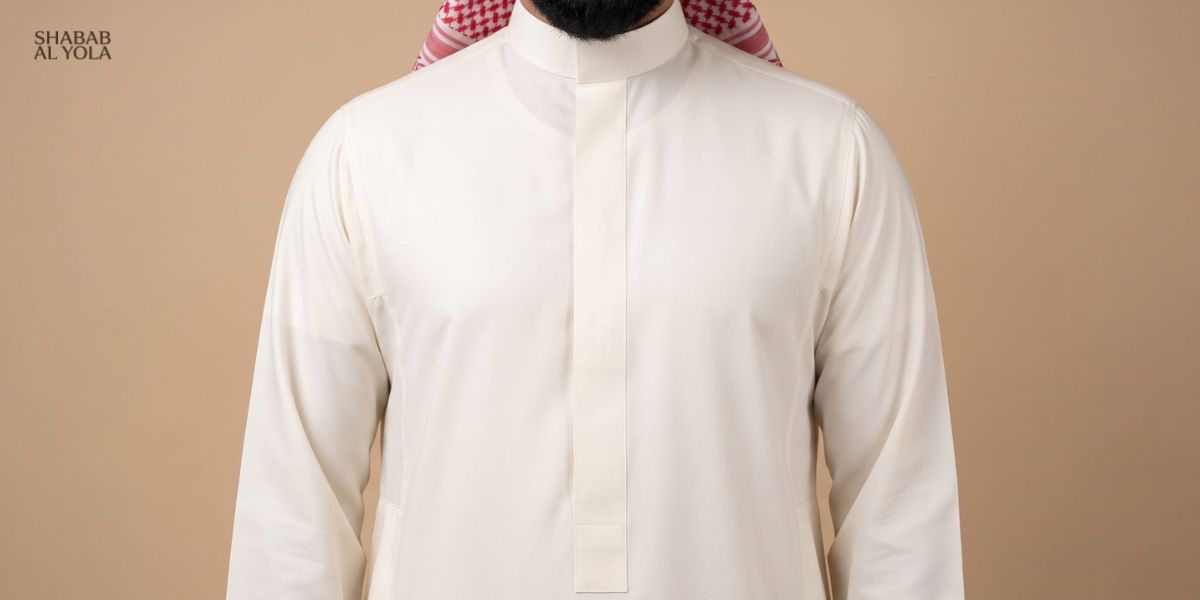
The front of the thobe looks clean and decent from top to bottom. This gives your thobe a neat and formal look. Many men choose it for Jummah, Eid, weddings and office wear.
c) Placket With Press Studs
A press stud is a small metal button made of two parts. You push the two parts together and they click close. Some people call them "snap buttons".
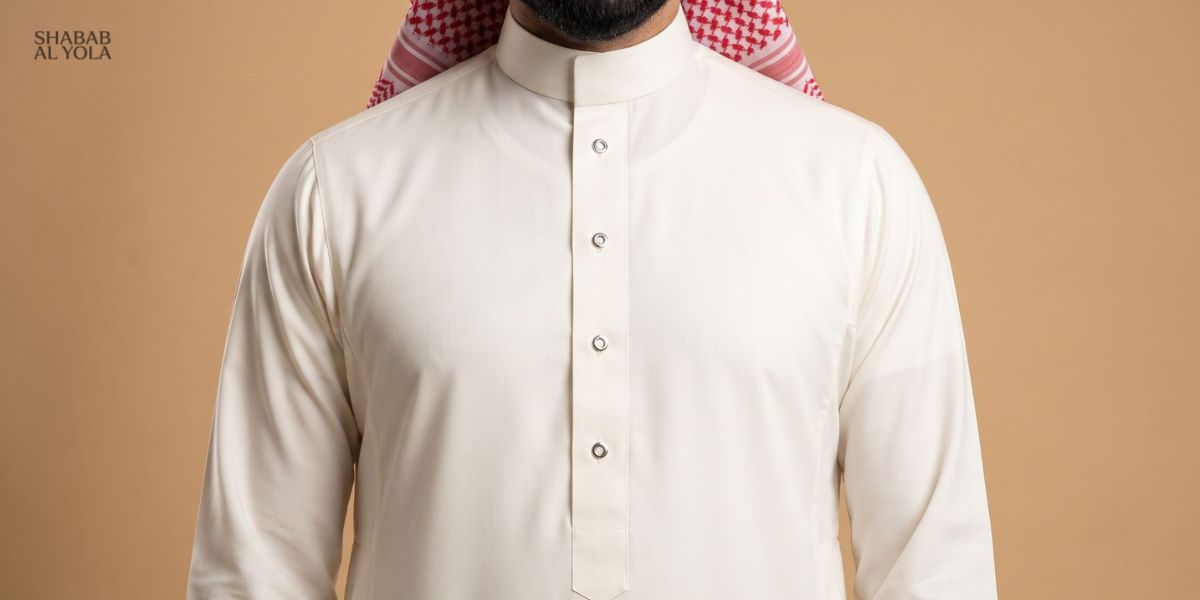
Press studs open and close very fast. You do not need to push anything through a buttonhole. Some thobes show the studs on the outside. Others hide the studs under the placket for a cleaner look.
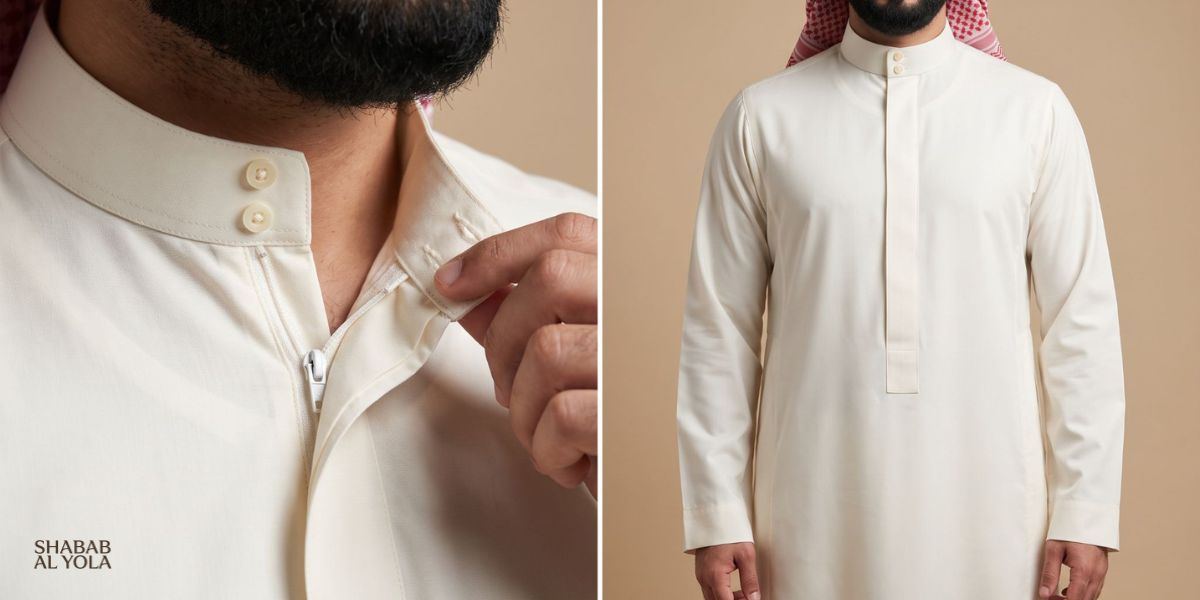
2- Hidden Zipper Plackets
This style of placket is also called an "invisible zip" or a "concealed zip". The zipper sits under a flap of fabric. From the front, you only see a clean strip.
You get the fast closing of a zip with the formal look of a hidden placket. It suits men who want a simple front with no buttons at all. Many modern thobes now come with this zipper placket.
3- Decorative Plackets
Some plackets are made to be noticed. These styles gives a design to the front of the thobe that you can choose for an event like a wedding. Let's discuss some decorative placket styles.
a) Embroidered Placket
An embroidered placket has thread designs stitched along the strip. The design can be lines, small patterns or Arabic-style motifs.
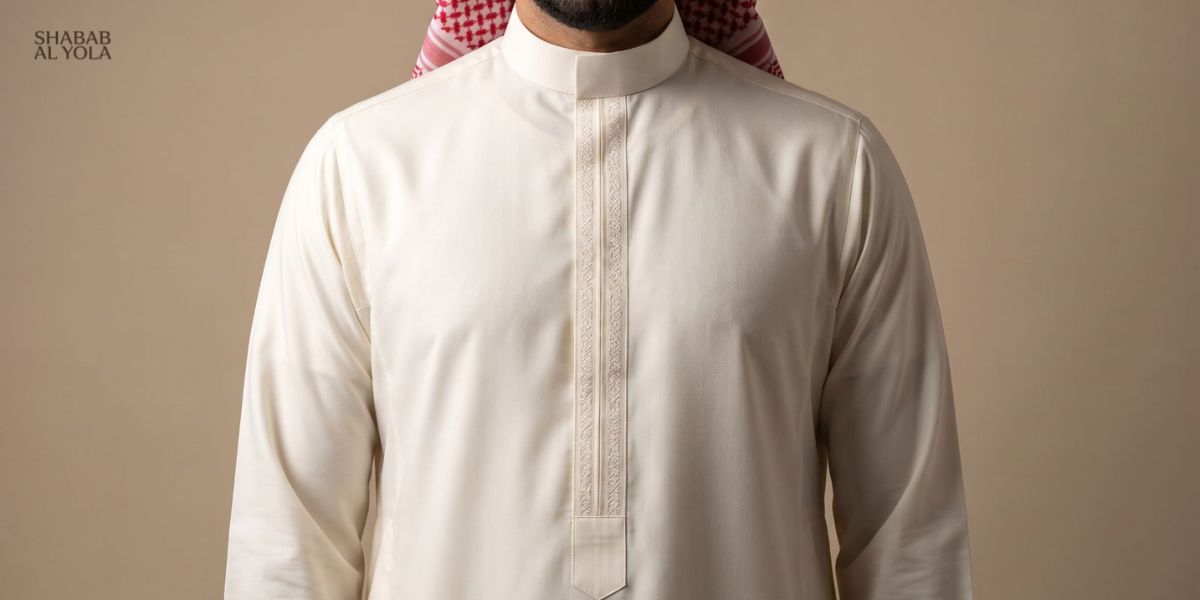
Many men pick white thread on a white thobe. This is called tone-on-tone embroidery. It looks classy. Some prefer gold, grey, or black to add contrast and give it a different look. Embroidered plackets are very popular for Eid, Nikkah, and other special events.
b) Pin Tuck Placket
Pin tucks are very thin folds of fabric. Each fold is stitched down in a straight line. On a thobe, these lines run next to the placket on one or both sides.
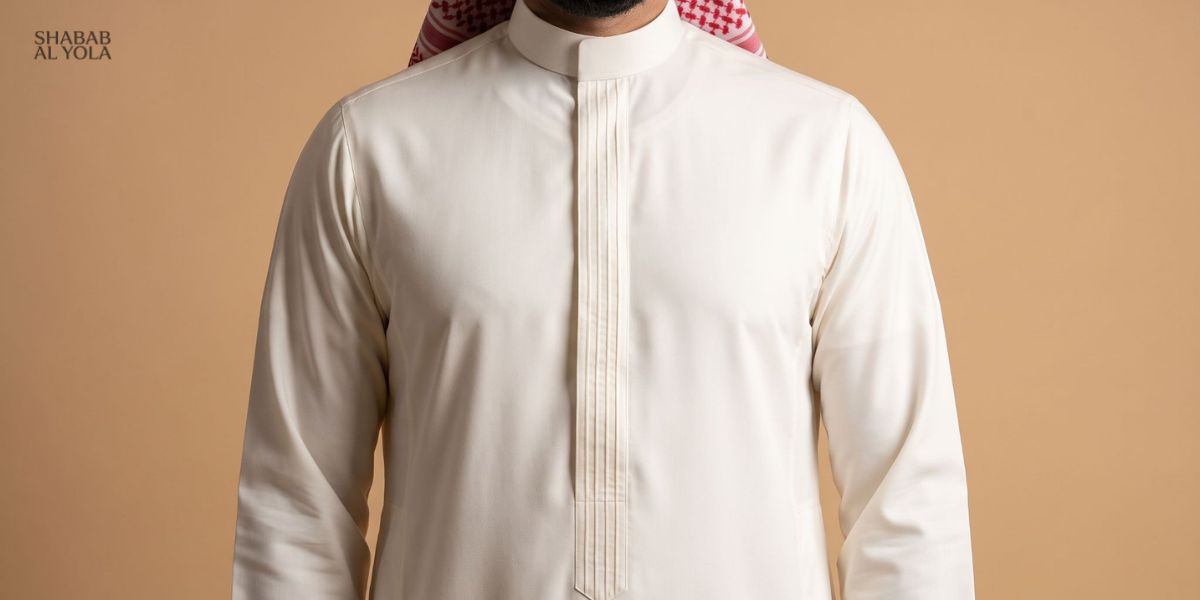
Pin tucks add texture to the thobe and the front looks detailed but still simple. This style looks better on white and light coloured thobes.
c) Placket With Contrast Piping
Piping is a thin cord of fabric sewn along the edge of the placket. It is often in a different colour from the thobe. A white thobe with grey or navy piping is a common example.
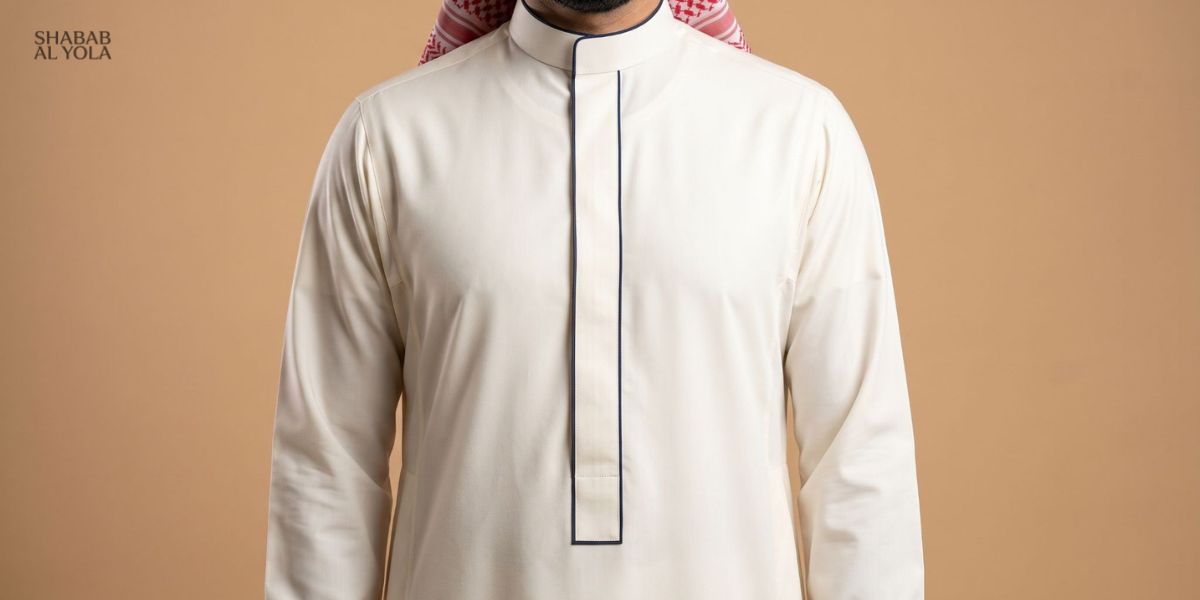
Piping gives the placket a sharp outline. It is a small touch that makes the thobe look neat and finished.
What are Different Shapes of Placket End?
The bottom tip of the placket also has its own style. This end shape may not be noticeable but it still affects how the finished placket looks.
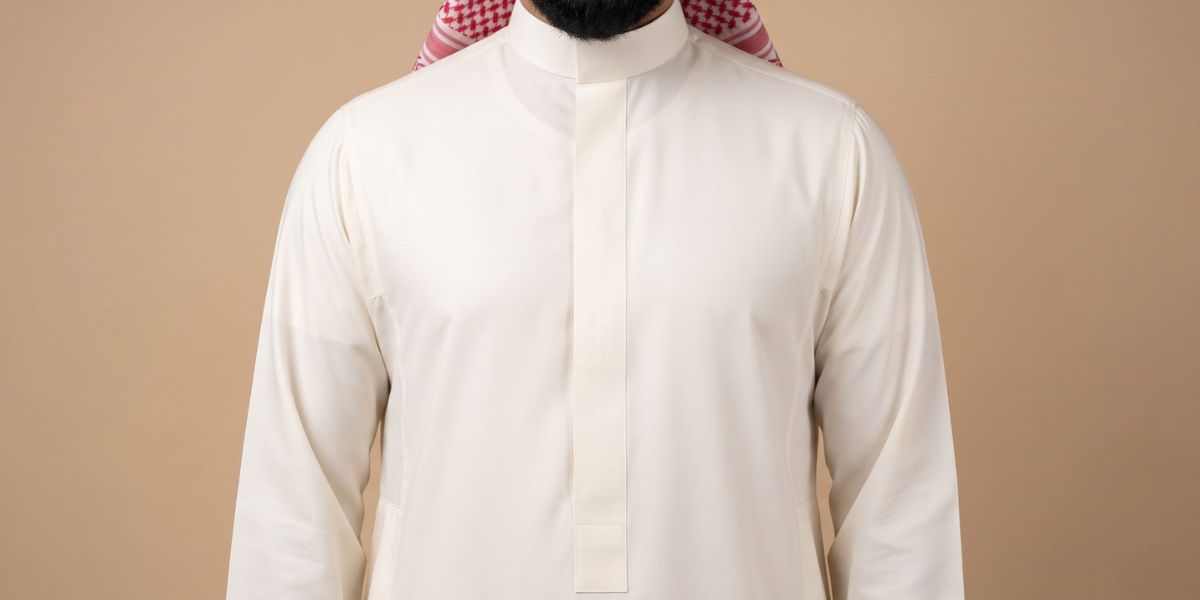
a) Square End Placket
The placket ends in a flat, straight line. This is the most traditional shape on a Saudi thobe. It looks simple and formal. It goes well with almost every fabric and colour.
b) V-Shaped or Pointed End Placket
The placket ends in a point, like the letter V. Some brands make a short and wide point. Others make a long and sharp point.
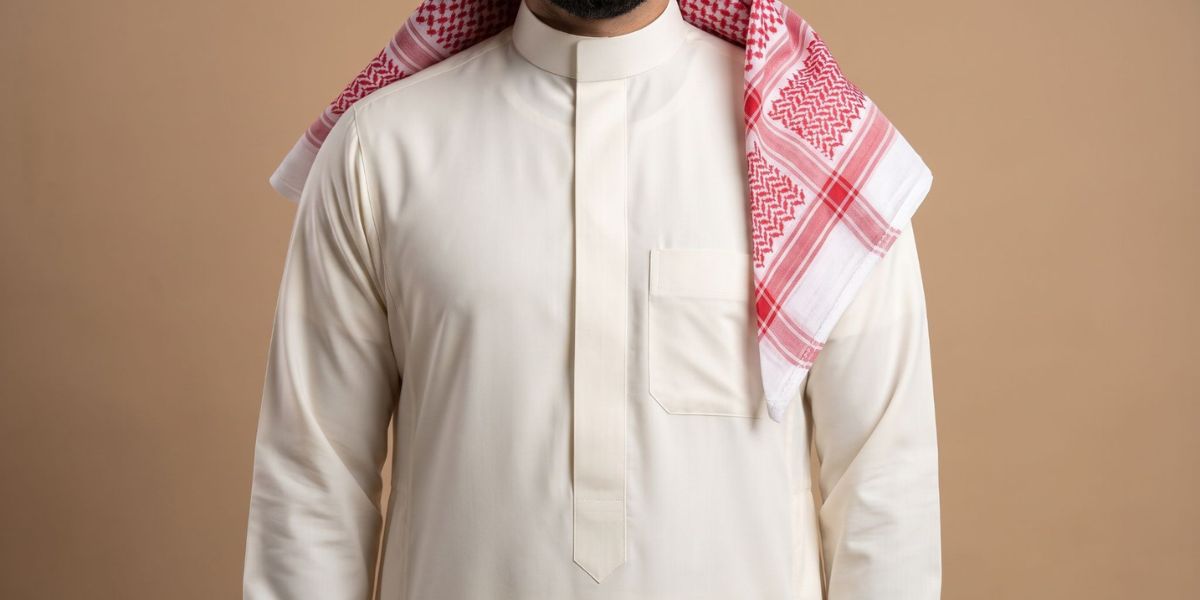
The pointed end draws the eye down the front. It gives the thobe a sharper and more stylish look. Many modern thobes use this shape. For men with shorter height, this shape can make the front look longer and more balanced.
Threee Most Used Plackets on Thobes
There are many placket styles available. Still, three types are worn more than the rest. These are the hidden button placket, zipper placket and the button placket.
- Hidden button placket
- Zipper placket
- Button placket
These three styles work for daily wear, office days, Jummah and Eid. They also go well with every common thobe collar.
How to Pick the Right Placket for Your Thobe?
Think about where you will wear the thobe. Then pick the placket that fits that day. This simple table can help.
Pocket Type | Pocket Look | Best For |
Open Buttons | Classic and Simple | Daily wear and Work |
Hidden Buttons | Formal | Daily wear and Formal Events |
Press Studs | Neat | Daily wear and Work |
Hidden Zipper | Clean and Minimal | Daily wear and Formal Ocassions |
Embroidered | Rich and Festive Look | Eid, Nikah, Weddings |
Pin Tuck | Textured but Plain Look | Formal Events and Jummah |
Contrast Piping | Sharp Outline | Casual Gatherings |
How to Check If a Placket is Well Made?
- A good placket lies flat to the chest. It does not bubble, wave or curl at the edges.
- The placket should go in a straight line from the collar down. A twisted or slanted placket is a sign of poor cutting.
- Look at the topstitch line. The stitches should be small, tight and the same size all the way down.
- The buttonholes should be clean. Good buttonholes are stitched have no loose threads. The buttons should pass through easily but stay closed.
- On a hidden button placket, you should not see the buttons peeking out when you move.
- The placket end should be strong. Check the bottom tip of the placket. It should be stitched firmly with no gaps.
- Gently press the placket with your fingers. The interlining should keep it firm, so it doesn’t feel thin or loose.
Where to Get a Custom Placket Style?
At Shabab Al Yola, you can get a custom placket style just as you want. You can connect with our team to get a custom placket when you are ordering a thobe.
At Shabab Al Yola, the placket is one of the first things we focus on. We cut each strip along the grain of fabric and add firm lining inside. Our tailors finish it with small and even stitches and check every thobe by hand before it leaves the workshop.
Frequently Asked Questions
1- What is a placket on a thobe?
It is the strip of fabric on the front of the thobe where it opens and closes. It holds the buttons or the zipper.
2- What is the difference between a button and a hidden button Placket?
On a button placket you can see the buttons. On a hidden button placket, a fabric flap covers them for a smoother front.
3- Is a zipper placket good for daily wear?
Yes. A zipper placket is quick to open and close, so it works well for busy days and travel.
4- Which placket looks the most formal?
The hidden button placket looks the most formal. Its smooth front suits Jummah, Eid, weddings and office wear.
5- Which placket goes best with a banded collar?
A hidden button placket or zipper suits a banded collar best. Both keep the front clean and simple.
6- How do I care for my thobe placket?
Close the buttons or zip before washing. Iron the placket flat on a medium heat to keep its shape.
7- What placket styles does Shabab Al Yola offer?
Shabab Al Yola offers button, hidden button, and zipper plackets. Each one is made with care by our tailors.