How to Take Accurate Kandura, Thobe, or Dishdasha Measurements at Home
Imtiaz Ahmed - Head of Tailoring Team
Mr. Imtiaz Ahmed is working as a head of tailoring department at Shabab Al Yola. Over nearly two decades, he has worked with local clients across the Gulf and international customers who expect Gulf-standard tailoring delivered to their door. His hands-on experience covers every major regional style, including Emirati, Saudi, Qatari, Kuwaiti, and Omani cuts, along with the fine details that separate a well-made thobe from a great one. At Shahbab Al Yola, Imtiaz personally oversees the construction of every regional silhouette the brand produces. He knows Gulf garment-making inside out and brings that knowledge into every piece the brand produces.
Table of Contents
Table of Contents
Buying a kandura or thobe online can feel like a guessing game. You pick a size from a chart and hope it fits. Sometimes it does. Sometimes the sleeves sit too short, or the length stops above your ankle instead of at it.
The good news is that you can measure yourself at home with normal tools. You do not need any special training. You just need a soft tape measure, a few minutes, and a bit of patience.
As a master tailor and head of tailoring team at Shabab Al Yola, I'll walks you through every measurement you need for a kandura, thobe, or dishdasha. The steps here come from the same process used by our tailors at Shabab Al Yola, who have been fitting customers in UAE and around the world since 2009.
What You Will Need Before You Start
- A soft, flexible tape measure. A rigid metal tape will not bend around your body the way you need it to.
- A notepad or phone, to record your body measurements.
- A well fitted kandura, thobe, or shirt you already own. It is compulsory as it gives a reference point if a number feels off.
- A second person to help, if possible. Some measurements are easier with an extra pair of hands.
Video Guide - How to Measure Yourself For Kandura, Thobe, and Dishdasha
In this video, Mr. Javed Akhtar demonstrated the steps to take your measurements at home. This is easiest and shortest demo. There are some other measurements involved for extra precision and fit, but if you have zero knowledge go for the method explained in the following tutorial.
How to Prepare Before You Measure
A few small habits before you pick up the tape measure will change how accurate your numbers turn out.
- Wear light, close fitting clothing while you measure. A thick jumper or jacket will throw off your numbers by a fair margin.
- Stand up straight in your normal, relaxed posture. Do not puff your chest out or pull your shoulders back further than usual. The tape should show your natural shape, not a posed one.
- Keep your arms resting by your sides. Raised or stretched arms change the shape of your chest, shoulder, and back.
- Measure each area twice. If the two numbers do not match, take a third measurement and use the number that appears twice. This one habit catches most small mistakes.
Detailed Measurements to Take
Follow these steps in order. Take your time with each one, and do not rush past the small details.
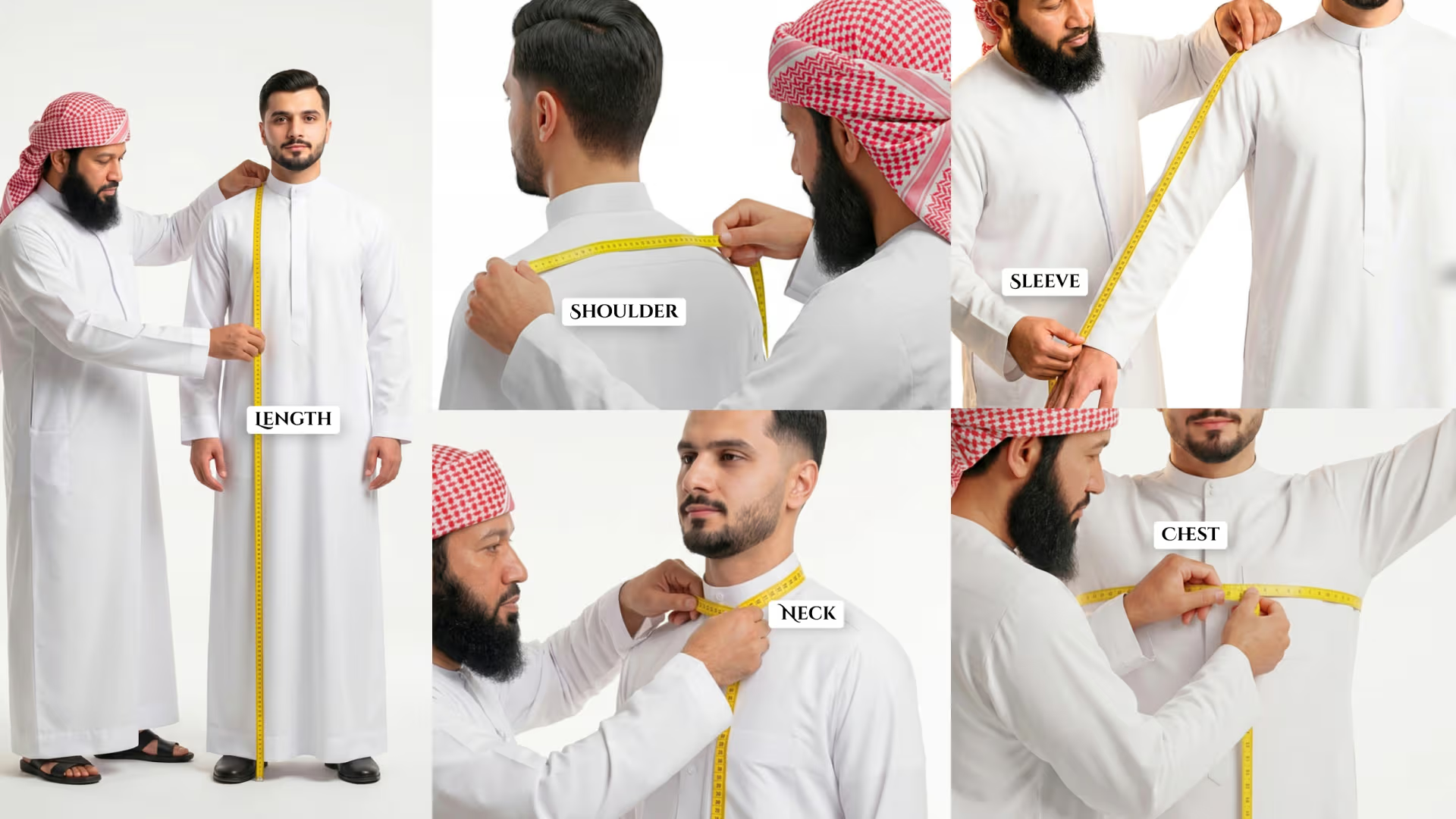
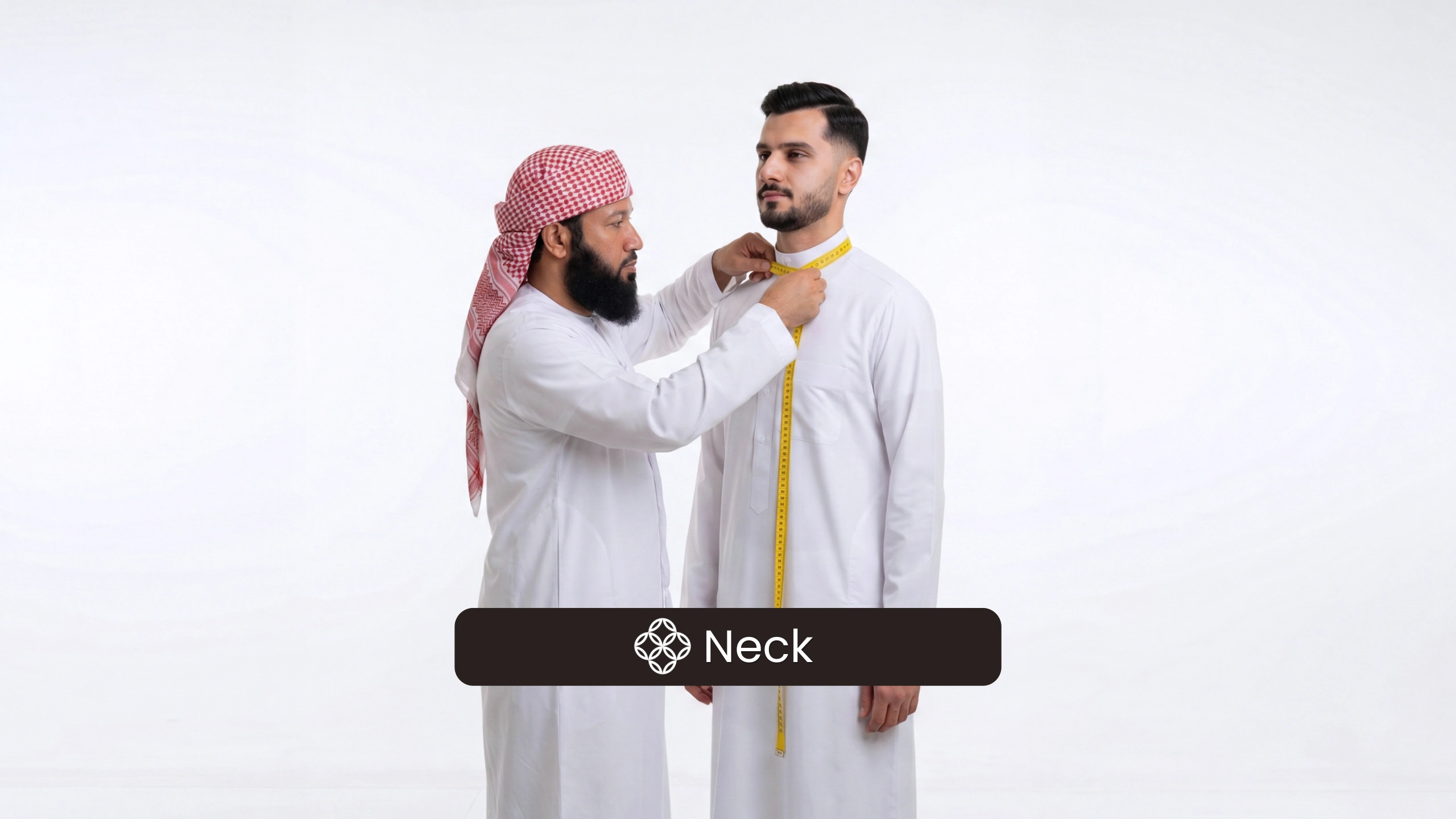
1- Neck
Wrap the tape measure around the base of your neck, where a collar would normally sit. Leave room for one finger between the tape and your skin. This gives the collar enough room to sit flat without feeling tight when you sit down or turn your head.
2- Shoulder Width
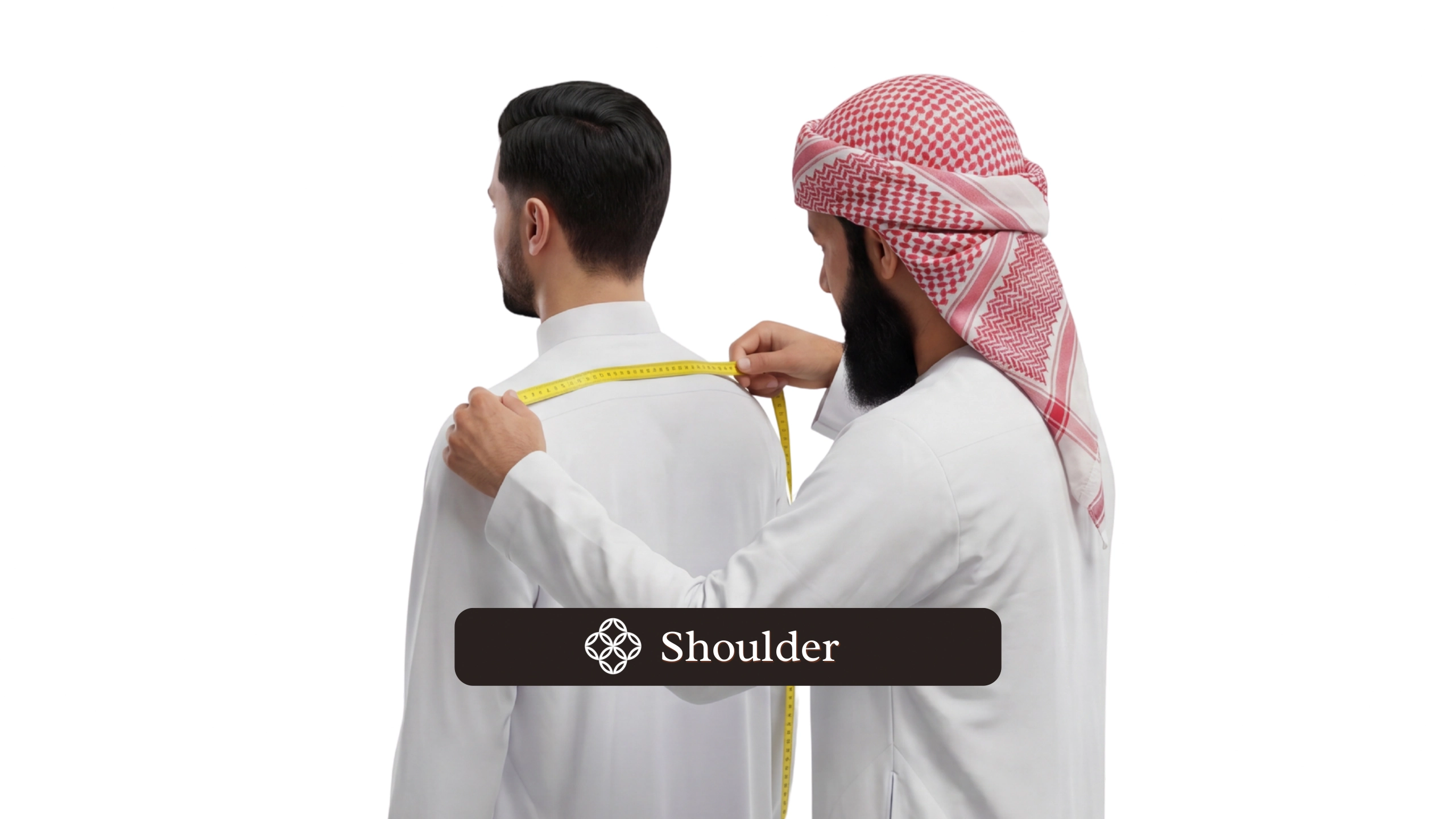
Find the point where your shoulder ends and your arm begins, on both sides. Measure in a straight line from one point to the other, across the top of your back. Keep the tape flat and avoid pulling it along the curve of your shoulders.
3- Chest
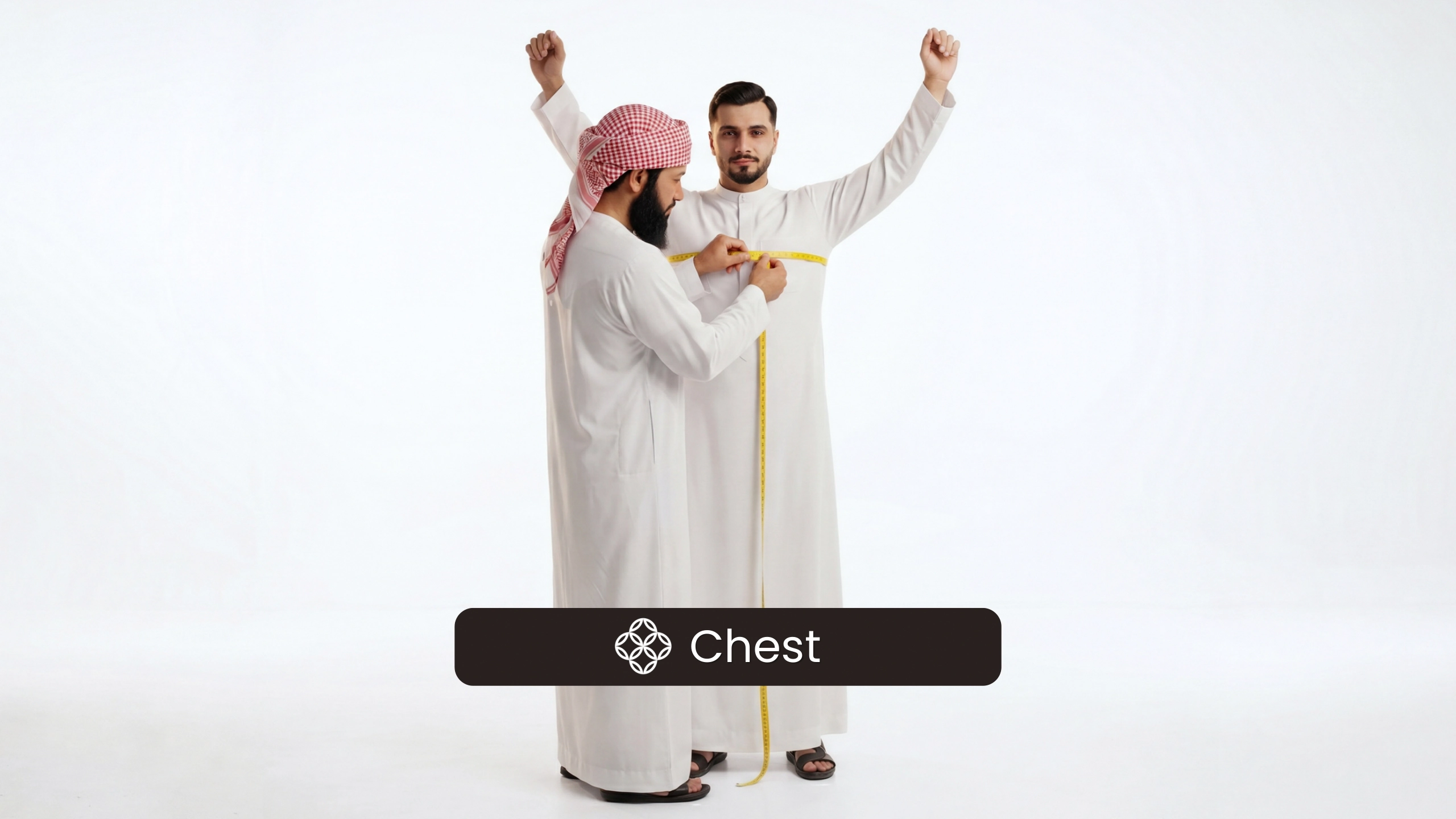
Wrap the tape measure around the fullest part of your chest, usually just under your arms and across your shoulder blades. Keep your arms resting at your sides. Leave room for two fingers between the tape and your body, so the kandura has space to move when you sit, walk, or pray.
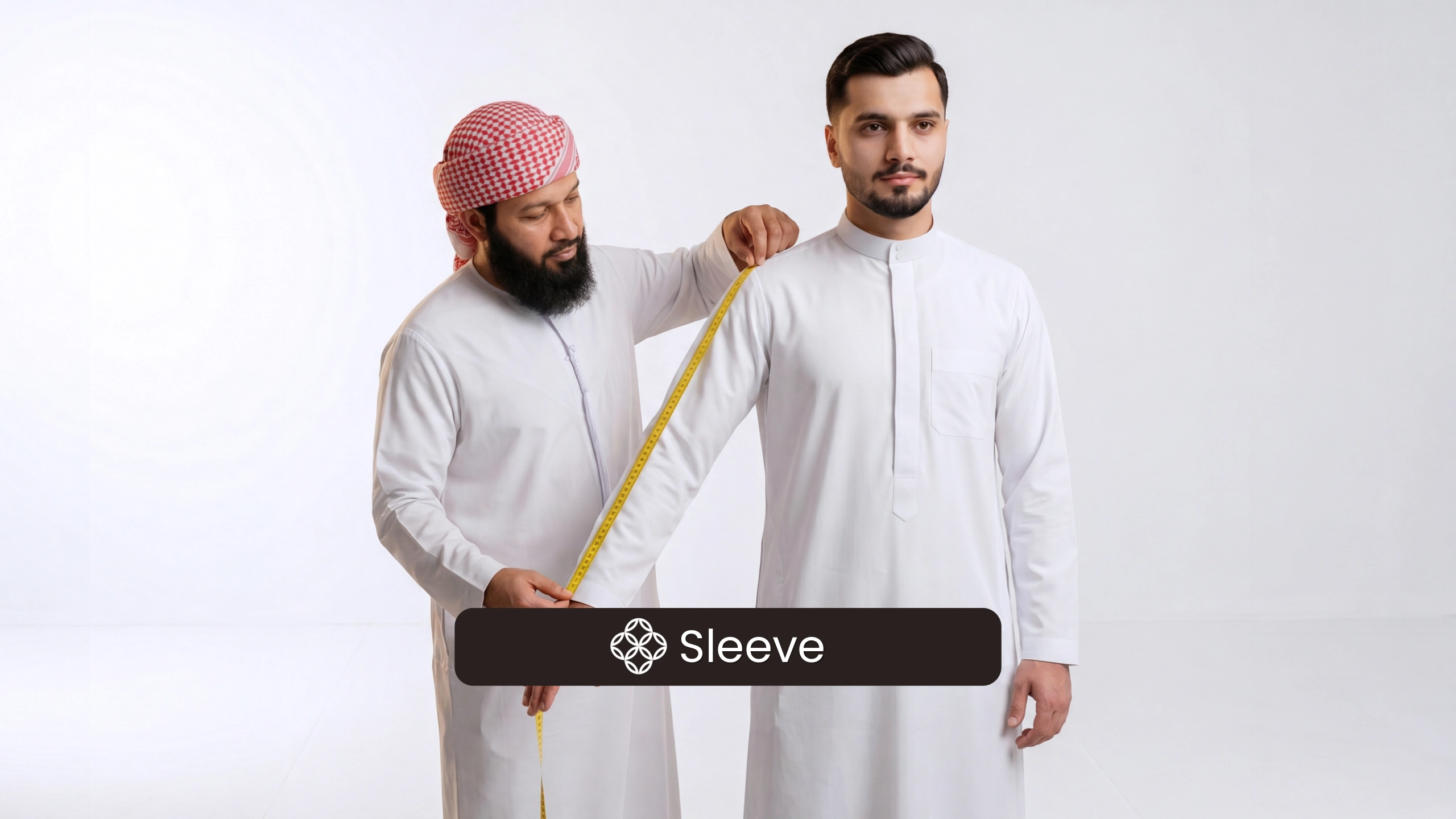
4- Sleeve Length
Start at the same shoulder point you used for the shoulder width measurement. Run the tape down the outside of your arm, past your elbow, and stop at the point on your wrist where you want the cuff to sit. Keep your arm slightly bent, since this is closer to how your arm sits when you walk.
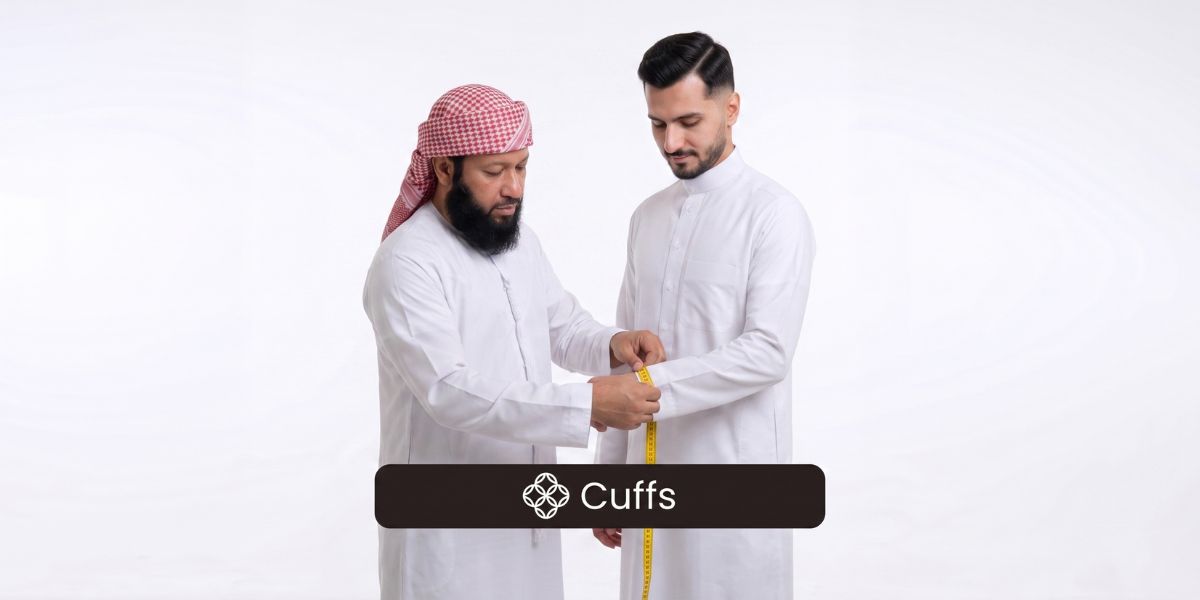
5- Cuff or Wrist
Wrap the tape around your wrist, just above the wrist bone. Leave room for one finger, similar to the neck measurement. This keeps the cuff loose enough to slide a watch or bracelet underneath.
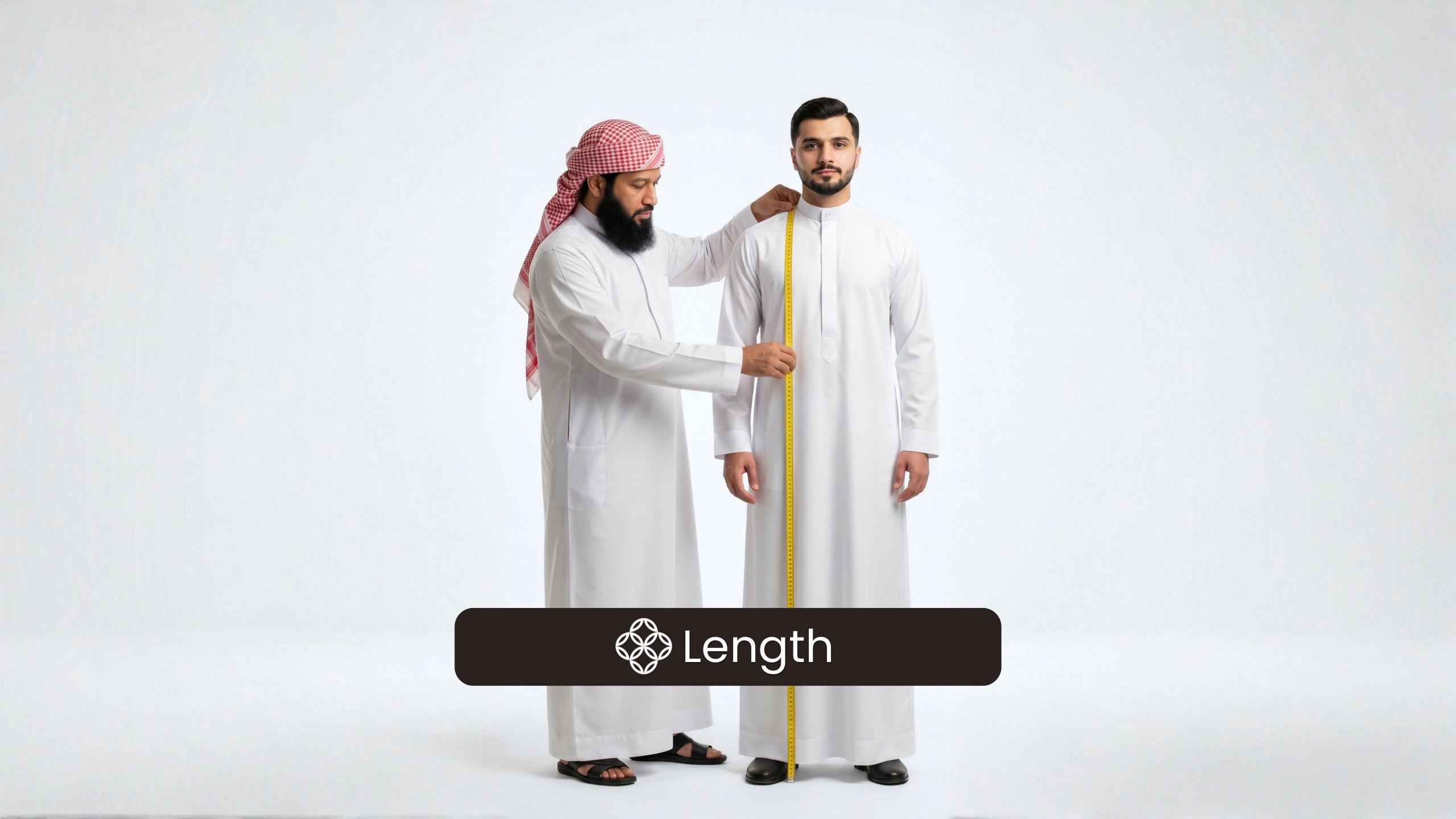
6- Length
This is the measurement that trips up most first time buyers. Start at the same shoulder point used above, and run the tape straight down your front, past your knee, down to your ankle or the top of your foot, depending on how you like to wear it.
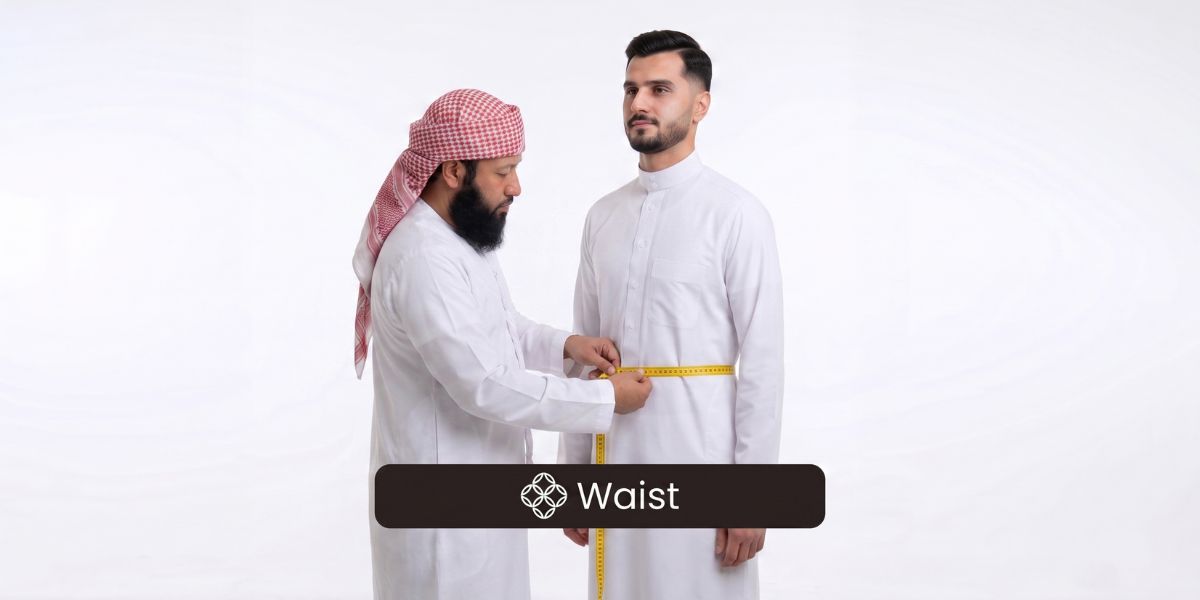
7- Waist
Wrap the tape around your natural waistline, at the narrowest point between your chest and hips. This measurement matters more for looser dishdasha styles that use a fuller cut through the middle.
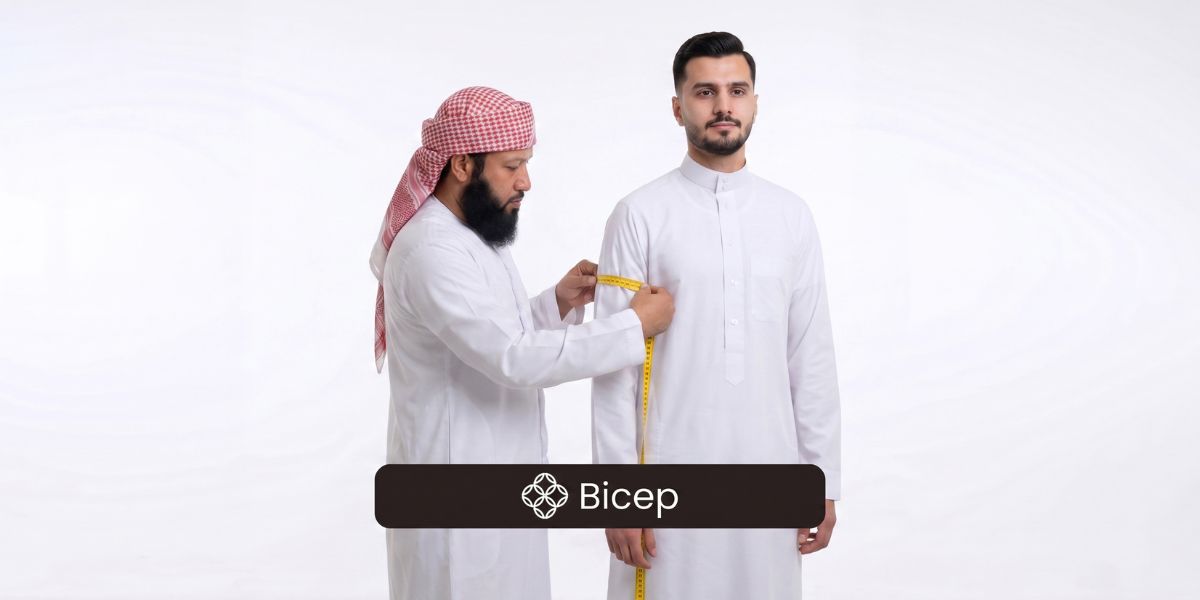
8- Bicep
This one is optional, but useful if you want a closer fit through the arm. Wrap the tape around the fullest part of your upper arm, with your arm relaxed and hanging at your side.
Do You Need Different Measurements For Kandura, Thobe, and Dishdasha?
An Emirati kandura is usually collarless, with a rounded neckline and a small tassel near the front called a tarboosh. A Saudi thobe and Kuwaiti dishdasha usually has a banded collar and a buttoned front. An Omani dishdasha is also collarless, with its own tassel called a furakha, often lightly scented.
None of this changes how you take the raw body measurements. An expert tailor can use the same measurements for all kandura, thobe, and dishdasha styles. Just take your measurements the way I demonstrated and send us if you have any confusion. We are ready to help you 24/7 without charging you a dirham.
Turn Your Measurements Into an Order
Once you have your numbers written down, you have two paths forward.
- The first is choosing a ready sized kandura or thobe from a size chart. Most size charts group people into bands such as small, medium, or large, based on chest and length. This works well if your measurements sit close to the middle of a size band.
- The second path is a custom, made to measure order, where each number you took is used to cut the garment for you specifically. This suits people whose measurements fall between standard sizes, or anyone who wants a closer fit through the shoulders or sleeves.
Shabab Al Yola offers both routes. You can check the size chart tool on the website against your own numbers, or submit your measurements directly for a custom order.
Avoid Mistakes While Taking Measurements
A few small errors show up again and again with first time measurements.
- Pulling the tape too tight. This gives you a smaller number than your real size, and the finished kandura ends up too snug.
- Measuring over a thick jacket or jumper. Always measure over light clothing, close to what you would normally wear underneath.
- Standing in an unnatural pose. Slouching or arching your back changes your shoulder and chest numbers.
- Skipping the extra room for movement. A kandura that fits like a second skin looks good in a photo but feels uncomfortable after an hour of sitting or walking.
- Measuring a child once and assuming the number will still work months later. Children grow quickly, so it is worth measuring again closer to when the order is placed, rather than using an old number.
- Trusting a single measurement. As mentioned earlier, measure twice and use the number that repeats.
Frequently Asked Questions
1- What is the standard length for Kandura, thobe, and Dishdasha?
There is no single standard length. It depends on your height and personal preference. Most men wear their kandura at full length, reaching the ankle or the top of the foot.
2- How much extra room should I add for comfort?
A small amount, usually enough for one or two fingers to fit between the tape and your body, depending on the measurement. This gives the fabric room to move without looking loose.
3- How do I measure a child for a kandura or thobe?
The same steps apply, though children move around more, so it helps to have a second person hold the tape steady. Measure again closer to the order date, since children can grow noticeably in just a few months.
4- Can I use my regular shirt size to measure for a kandura?
Not directly. A kandura is worn at full length and sits differently through the body than a shirt does. It is worth taking fresh measurements rather than guessing from a shirt size.
5- Should I take my kandura/thobe measurement again if my weight has changed?
Yes. Even a small change in weight can shift your chest and waist numbers enough to affect the fit.