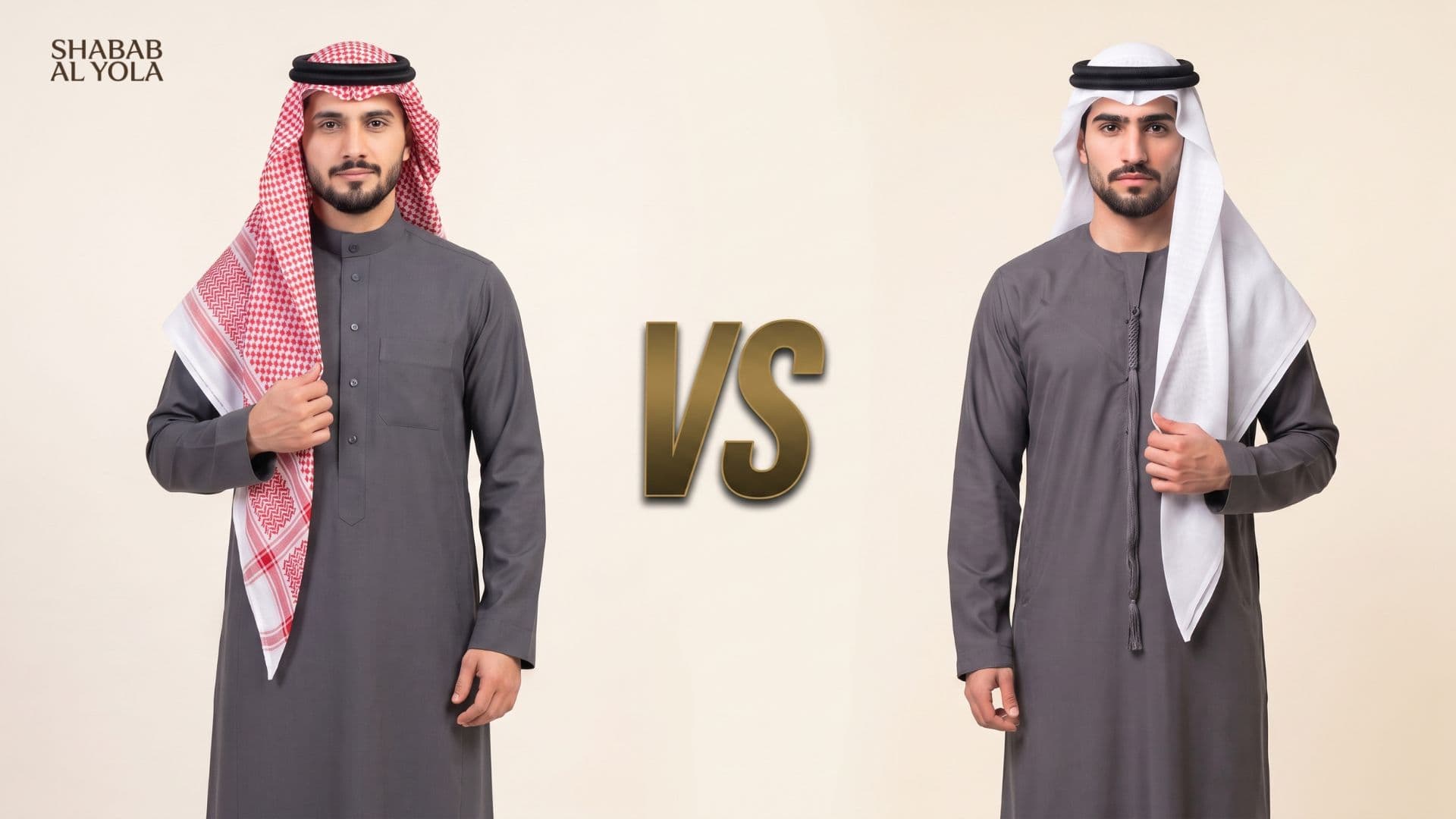
What is the Difference Between Saudi Thobe and Emirati Kandura?
Imtiaz Ahmed - Head of Tailoring Team
Mr. Imtiaz Ahmed is working as a head of tailoring department at Shabab Al Yola. Over nearly two decades, he has worked with local clients across the Gulf and international customers who expect Gulf-standard tailoring delivered to their door. His hands-on experience covers every major regional style, including Emirati, Saudi, Qatari, Kuwaiti, and Omani cuts, along with the fine details that separate a well-made thobe from a great one. At Shahbab Al Yola, Imtiaz personally oversees the construction of every regional silhouette the brand produces. He knows Gulf garment-making inside out and brings that knowledge into every piece the brand produces.
Table of Contents
Table of Contents
Walk into any mall in Riyadh or Dubai, and you will see men in long white dress. A new person might think they are all the same, but Gulf locals can tell where a man comes from in a few seconds. The reason lies in the small details of their dress.
People in Gulf countries used to wear clothes that protect them against extreme heat and blowing sand in the desert. Over time, each Gulf country shaped the thobe in its own way. Today, Saudi Arabia and the UAE each have a style that people recognize easily.
Let's look at each garment in detail. Then we will compare them.
What is a Saudi thobe?
Saudi men call their traditional dress "thobe" (some people spell it thawb). So when people say "Saudi kandura," they usually mean the Saudi thobe. Men across the Kingdom of Saudi Arabia wear it, because it is their traditional men's outfit.
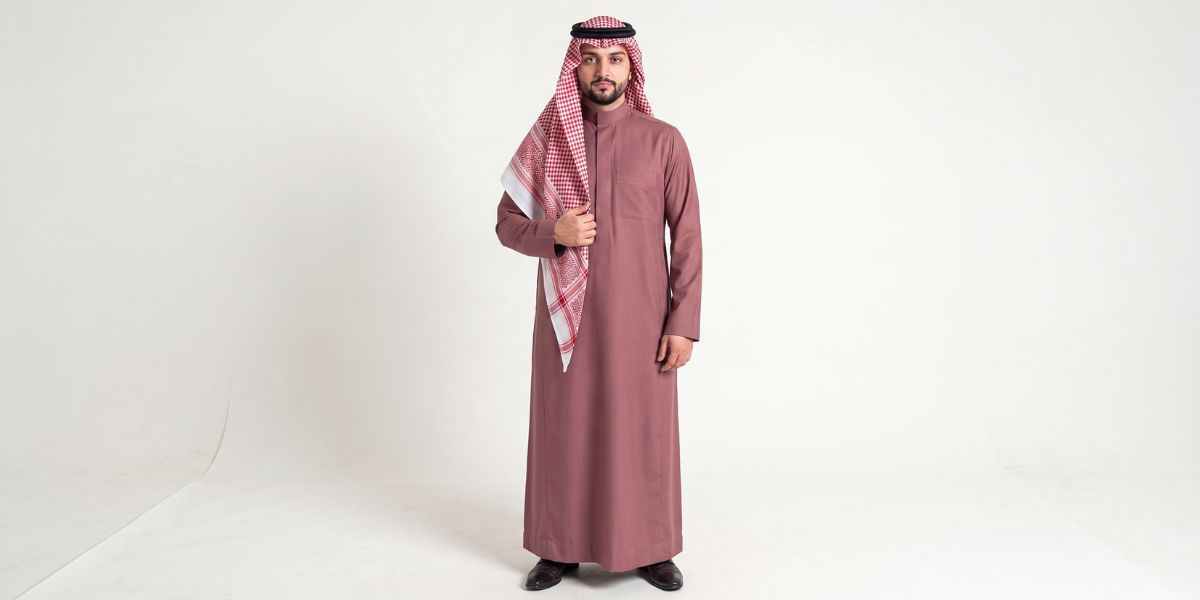
Men in Saudi Arabia have to wear a thobe everywhere, no matter they are in office, family gathering, offering prayer, or attending an event. The Saudi thobe looks a lot like a long dress shirt with a banded collar. Now let's see some of its key features:
- Collar: Most men wear either a classic collar or a banded collar. You can choose the collar style on your own.
- Front: A vertical strip runs down the middle of the chest with four or five buttons, sometimes these buttons are hidden. Tailors call this strip a placket.
- Pockets: A Saudi thobe has three pockets. Two pockets are on each side of the thobe, and the third is designed on the front, left side of the chest. Saudi men loves to keep a pen in that chest pocket.
- Cuffs: Saudi thobes usually have rounded cuffs with no buttons. But more than 50% of Saudi men wear cuffed sleeves. This varies from person to person. You can choose your cuff styles according to your preference.
- Colors: Saudi men mostly wear white thobes, and switch to darker shades in winter. Grey, brown, and navy thobes are the most favourite colors of people in the cooler months.
- Headwear: Saudi men pick "Shemagh" as their primary headwear with black Agal that keeps the shemagh in place.
What is an Emirati Kandura?
Emiratis call their long robe "Kandura". Men in the UAE wear this style the most. It is the national dress of UAE and carries great pride and value for Emirati men.
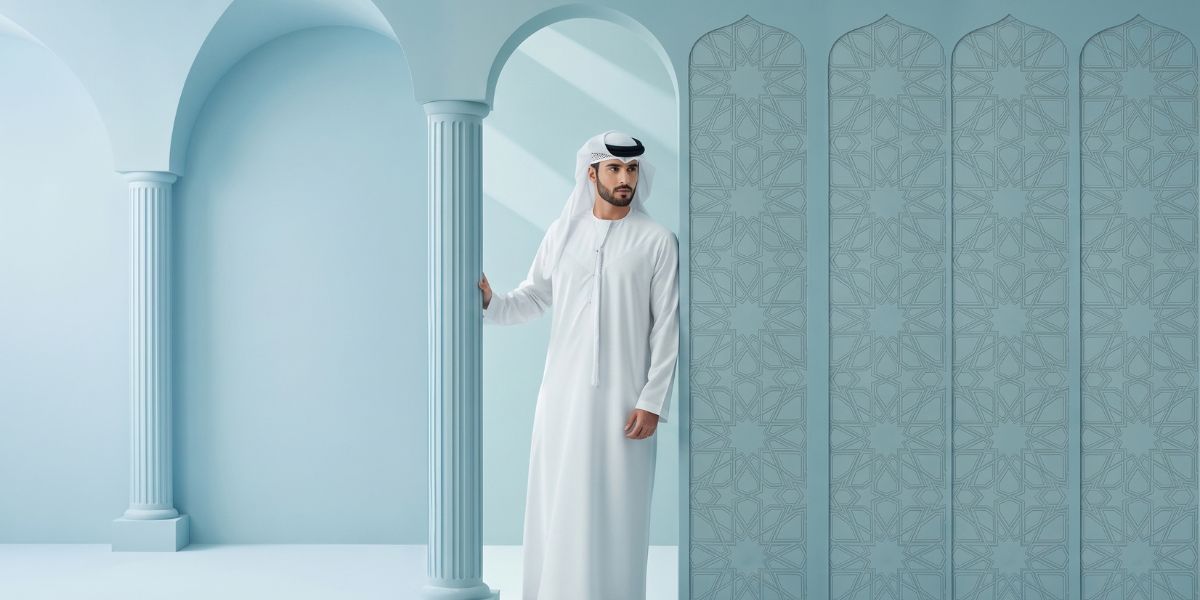
Emiratis wear the kandura almost everywhere. They wear it to work, to the mosque, to family visits, and to the national events. Emiratis see the kandura as a living link to their heritage and identity.
The Emirati kandura has a simpler look than the Saudi thobe. Let's have a look at its key features:
- Neckline: The classic Emirati kandura has no collar. The neck is rounded and have a stitching line around it.
- Tassel: A long tassel hangs from the neckline down the chest. Emirati call it tarboosh. Some men even add perfume to the tassel so it gives off a nice scent throughout the day.
- Buttons: Kanduras has a triangle-shaped stitching lines on the chest. Small ball-shaped cotton buttons are stitched on the front.
- Pockets: The kandura has two side pockets only, one on each side of the kandura.
- Cuffs: Emirati kandura has open, rounded sleeves and no cuffs.
- Colors and fabric: People in UAE mostly wear white or light-colored kanduras in summer, while shades like gray, navy blue, and brown are used in winter. Japanese and Korean polyester fabric is used to make a kandura because it is wrinkle resistant and falls nicely on the body. In winter, Emirati men prefer wool.
- Headwear: The classic Emirati headscarf is the white ghutra. Emirati men also wear the red-and-white shemagh sometimes. They secure this ghutra with an agal.
Side by Side Comparison of Saudi Thobe and Kandura
Here is a quick side-by-side comparison table between Saudi thobe and kandura:
Features | Saudi Thobe | Emirati Kandura |
Local Name | Thobe | Kandura |
Countries | Saudi Arabia, UK, USA | UAE |
Collar | Stiff Banded Collar | Collarless |
Tarboosh | None | Yes |
Front | Placket with Hidden or Visible Buttons | Visible Stitching line on front with cotton buttons |
Chest Pocket | Yes | No |
Cuffs | Rounded or Classic Cuffs | Rounded Cuffs with no Buttons |
Headwear | Red and White Shemagh | White Ghutra |
Preffered Shoes | Arabic Na'al | Traditional Sandals |
What is the easiest way to remember the difference between Saudi Thobe and Kandora?
Look at the neck first. A collar indicates that you are looking at a Saudi thobe. A collarless neck with a long tassel points to an Emirati kandura. Make sure the tassel is long, beacause Omani dishdasha also looks like Emirati kandura but it has short tassel.
Both dresses carry great pride and a long history. Each one tells a story about the people who wear it. Once you know the details, you will never see a white thobe the same way again.
Which one Should You Choose?
The right pick depends on the look you like and where you plan to wear it.
- Choose a Saudi thobe if you want a sharp, formal style. The collar, buttoned front, and cufflinks look great at the office, in meetings, and at events. It also suits men who love the feel of a dress shirt. You can add cufflinks to complete your look.
- Choose an Emirati kandura if you prefer a relaxed feel. The open neck and loose cut keep you cool on hot days. The tassel adds a classic touch that people notice right away. It works beautifully for family visits, Friday prayers, and summer evenings. You can also check out our blog “Dressing for Special Occasions as an Emirati Man”.
- Think about fabric too. Light fabrics feel great in summer. Thicker fabrics in darker tones keep you warm in winter. A good fabric also holds its shape and looks fresh for longer.
Many of our clients own both styles. They wear the Saudi thobe for formal days and the Emirati kandura for relaxed days. Having both gives you a fresh look for every part of the week.
Frequently Asked Questions
1- Is a Saudi thobe the same as an Emirati kandura?
No. Both are long, ankle-length dresses, but they differ in design and details. Saudis call theirs a thobe and Emiratis call theirs a kandura. The Saudi thobe looks like a long dress shirt with a collar. The Emirati kandura has no collar and a long tassel at the neck.
2- How can I differentiate between a Saudi thobe and an Emirati kandura?
Look at the neck. A thobe with a collar means a Saudi thobe. An open, collarless neck with a tassel hanging down the chest means an Emirati kandura. This one detail tells you the answer almost every time.
3- Do the sleeves look different on a Saudi thobe and an Emirati kandura?
Yes. A Saudi thobe comes with either open rounded sleeves or shirt-style cuffs, based on what the wearer likes. Many men add cufflinks to the cuffed style. The Emirati kandura has rounded open sleeves.
4- Do Saudi and Emirati men wear the same headwear with their dresses?
No. Saudi men wear red-and-white shemagh while Emirati men usually wear the white ghutra. But both put a black agal on top.
5- Should I buy a Saudi thobe or an Emirati kandura?
Pick a Saudi thobe if you like a neat, shirt-like look for work and formal days. Pick an Emirati kandura if you want a relaxed, airy feel for everyday wear and summer evenings. Many men own both and switch based on the day.
6- Do non-Arabs wear a thobe or kandura?
Yes, many visitors and residents wear them. If you are foreigner, choose your favourite style and wear it confidently.
7- Where can I buy a Saudi Thobe or Emirati Kandura?
You can get both at Shabab Al Yola. It’s one of the most trusted names for traditional menswear in the UAE.