Kuwaiti Dishdasha Vs Omani Dishdasha | What's the Difference
Imtiaz Ahmed - Head of Tailoring Team
Mr. Imtiaz Ahmed is working as a head of tailoring department at Shabab Al Yola. Over nearly two decades, he has worked with local clients across the Gulf and international customers who expect Gulf-standard tailoring delivered to their door. His hands-on experience covers every major regional style, including Emirati, Saudi, Qatari, Kuwaiti, and Omani cuts, along with the fine details that separate a well-made thobe from a great one. At Shahbab Al Yola, Imtiaz personally oversees the construction of every regional silhouette the brand produces. He knows Gulf garment-making inside out and brings that knowledge into every piece the brand produces.
Table of Contents
Table of Contents
Many people see long white robes in Gulf photos and think all styles are the same. They are not. The Kuwaiti Dishdasha and the Omani Dishdasha share a basic shape. Both are ankle length robes with long sleeves. Both suit hot weather. Yet the details are very different.
Before we look at the details it is important to know that both garments serve the same basic purpose. They cover the body. They allow easy movement. They show respect in public spaces. Yet the way each country shapes this basic robe is where the story becomes interesting.
This article will show you the clear differences in design, color, accessories and culture. You will learn how to spot each style. You will also understand why each country wears its version with pride.
What is a Dishdasha?
A dishdasha is a traditional ankle length robe worn by men across the Gulf region. In Kuwait and Oman people call it dishdasha. In the UAE people call it kandora. In Saudi Arabia people call it thobe. But, actually kandura and thobe are different from Dishdasha. Just because Dishdasha is also a long robe, the people of UAE and Saudi Arabia associates it with Kandura and Thobe respectively.
The word dishdasha comes from local Arabic use. It refers to the long flowing garment that covers the body from shoulders to ankles. It has long sleeves that are usually straight and not tight. Some people ask if the dishdasha is only for special days. The answer is no. Men wear it for work, for prayer, for family visits and for formal events. It is an everyday garment that also works for celebrations.
Also Read: Difference Between Thobe, Kandura, and Dishdasha
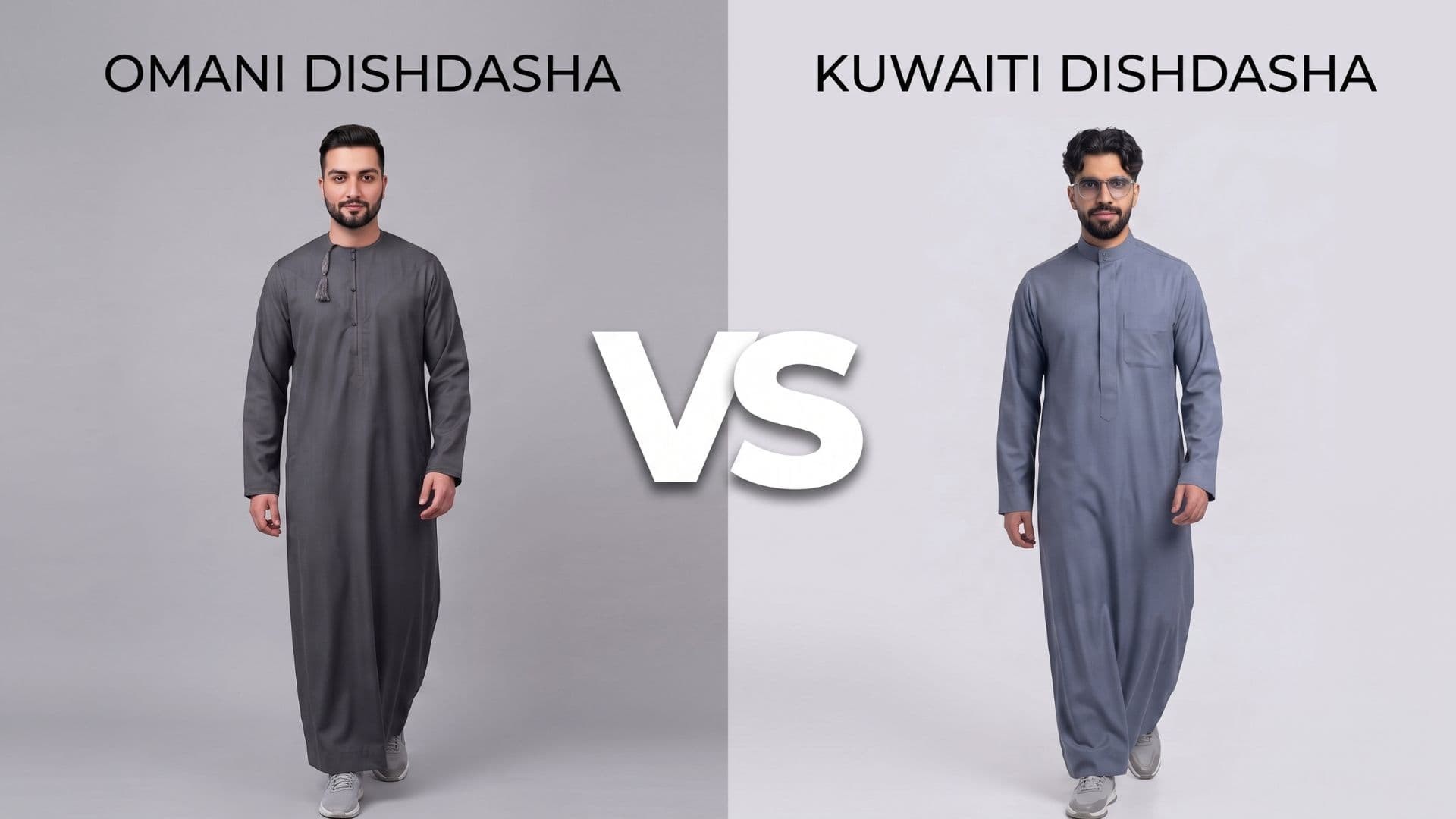
Difference Between Kuwaiti Dishdasha and Omani Dishdasha
Let's discuss the differences between both garments.
- Kuwaiti dishdasha is mostly worn in Kuwait, Saudi Arabia, and UAE. While Omani dishdasha is mostly worn by Omanis.
- Kuwaiti dishdasha has a banded (mandarin) collar, short and low-sitting. While Omani dishdasha is fully collarless with a plain round neckline.
- Kuwaiti dishdasha does not feature a furakha tassel. Omani dishdasha traditionally includes a furakha tassel hanging from the neckline, which is sometimes perfumed.
- Kuwaiti dishdasha is almost always white. Omani dishdasha comes in a wider range of colors including white, cream, brown, beige, and navy.
- Kuwaiti dishdasha typically has no embroidery at the neckline. Omani dishdasha often features tarqeesh embroidery around the collarless neckline opening.
Key Features of Kuwaiti Dishdasha
1- Design and Cut
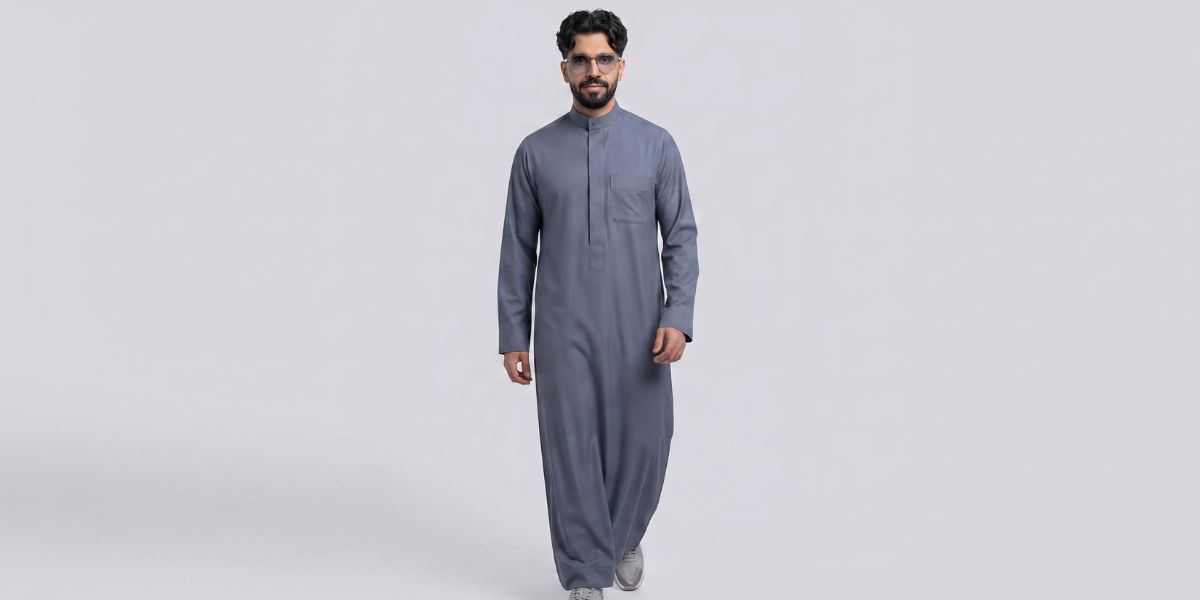
The Kuwaiti dishdasha has a loose straight cut. The body flows freely from the shoulders down. The sleeves are long. There is a small collar at the neck with one or two front buttons. Below the collar you will see a short button placket. A placket is the strip of fabric that holds the buttons. The placket is usually short and simple.
2- Color Choices
White is the most common color. Men wear white almost every day during summer. In winter some men switch to darker shades. Grey, navy blue, brown and beige are popular winter colors. Black is rare for daily wear but may appear in very formal settings.
3- Fabric
For summers, poly-cotton and spun polyester are commonly used as they are wrinkle resistant and provide strog color retention. For winter, imported wool is used to keep the wearer warm.
4- Accessories Worn With it
Most Kuwaiti men wear a ghutra on the head. A ghutra is a square white cloth made of cotton. They hold it in place with an agal. An agal is a black cord that sits on top of the head. For footwear men usually wear leather sandals or formal shoes.
Key Features of Omani Dishdasha
1- Design and Cut
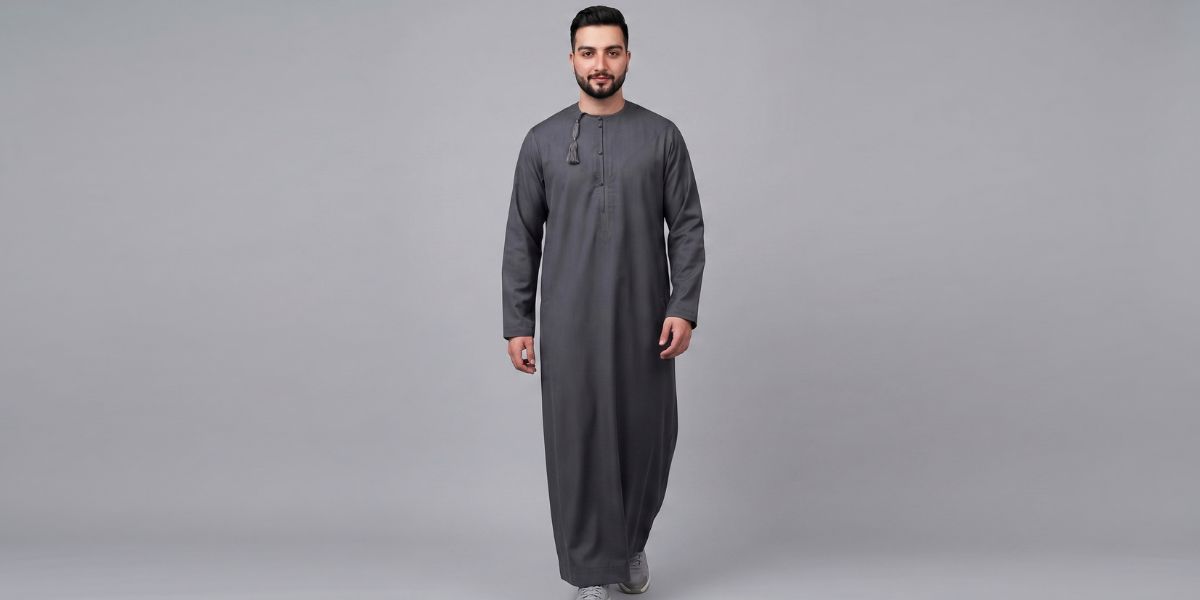
The Omani dishdasha also reaches the ankles and has long sleeves. But the neckline is different. There is no collar at all. The neck is round and open. This creates a softer line around the shoulders. The robe still hangs straight but the top looks more open.
2- Color Choices
Omani men wear white often. But they also wear many other colors. You will see purple, blue, green, cream, brown and grey. The color range is much wider than in Kuwait. Men pick colors based on personal taste or the season. Bright colors are not unusual.
3- Fabric
Poly-cotton is the main fabric for daily use. For special events men might choose a finer cotton or a blend that looks more polished. The fabric needs to hold the shape of the robe well because of the open neck.
4- The Famous Tassel (Furkha)
This is the biggest visual sign of the Omani style. A long tassel hangs from the neckline. This tassel is called furakha. It is often sprayed with traditional perfume or oud. The scent is part of the tradition. The tassel moves gently when a man walks. It is a clear symbol of Omani identity.
5- Accessories Worn With Omani Dishdasha
Headwear in Oman is different from Kuwait. Men wear a kuma or a mussar. A kuma is a round cap with embroidery. A mussar is a wrapped turban made of cloth. For very formal events or national celebrations men wear a khanjar. A khanjar is a curved dagger that hangs from a belt around the waist.
Side by Side Comparison of Kuwaiti and Omani Dishdasha
Look at the points below. You can see the differences quickly.
Feature | Kuwaiti Dishdasha | Omani Dishdasha |
Neckline Style | Small collar with short button placket | Round neckline with no collar |
Headwear | White ghutra secured with black agal | Embroidered kuma cap or wrapped mussar |
Cuff Style | Open cuffs, sometimes French cuffs for formal wear | Simple straight cuffs, sometimes embroidered |
Tassel | No | Small tassel called furakha hanging from the neck |
Formal Accessories | Leather sandals or dress shoes | Khanjar curved dagger during national or formal events |
Can You Wear One Style in the Other Country?
Yes. You can wear either style in either country. But people will notice the difference. A Kuwaiti dishdasha in Oman will look very formal and clean. It will miss the local tassel and headwear. An Omani dishdasha in Kuwait will stand out because of its color and long tassel.
Both countries respect visitors who dress well. If you want to blend in, choose the local style. If you want to show your own background, wearing your home style is also acceptable. There is no strict rule against it. If you travel to Kuwait and wear a white dishdasha with an agal, people will see you as respectful. If you travel to Oman and wear a dishdasha with a kuma, people will welcome you warmly. The key is to wear the robe with neat appearance. Clean clothes and good posture matter more than the exact country of the design.
How to Choose Between the Two
Think about your personal taste. If you like clean white looks and a small collar, the Kuwaiti style fits you. If you enjoy color and a long decorative tassel, the Omani style fits you.
Think about the event too. For very formal business in Kuwait the white dishdasha is best. For cultural festivals in Oman the full outfit with kuma and furakha is perfect. Both styles work well if you wear them with confidence.
Frequently Asked Questions
1- What is the biggest difference between Kuwaiti and Omani Dishdasha?
The biggest difference is the tassel and the collar. Kuwait has a small collar and a small button tassel. Oman has no collar and a long hanging furakha.
2- Why do Omanis wear a tassel?
The tassel is part of tradition. It is often scented with perfume or oud. It is a symbol of Omani identity.
3- What headwear do Kuwaitis wear?
They wear the ghutra and the agal. The ghutra is the white cloth. The agal is the black cord.
4- Do Omanis wear the ghutra?
Not usually. They prefer the kuma or the mussar.
5- Is dishdasha the same as kandora?
The answer is yes as well as no. Kandura is different from Kuwaiti dishdasha because kandura is collarless and has a tassel. While Kuwaiti dishdasha has banded collar and tassel is absent. Emirati kandura and omani dishdasha looks same except the kandura has long tassel and omani dishdasha has small tassel with embroidery along the neckline.
6- Can everyone wear dishdasha?
Yes. Many visitors and residents from other countries wear them. Respect the culture and wear them with confidence.
7- Where to buy authentic Dishdasha online?
Shabab Al Yola has been tailoring Dishdasha with original design and cut from last 17 years. You can place your order online through WhatsApp and we will deliver it to your location. Worldwide shipping is available.