Front Pocket Styles for Thobe and How to Pick the Right One
Imtiaz Ahmed - Head of Tailoring Team
Mr. Imtiaz Ahmed is working as a head of tailoring department at Shabab Al Yola. Over nearly two decades, he has worked with local clients across the Gulf and international customers who expect Gulf-standard tailoring delivered to their door. His hands-on experience covers every major regional style, including Emirati, Saudi, Qatari, Kuwaiti, and Omani cuts, along with the fine details that separate a well-made thobe from a great one. At Shahbab Al Yola, Imtiaz personally oversees the construction of every regional silhouette the brand produces. He knows Gulf garment-making inside out and brings that knowledge into every piece the brand produces.
Table of Contents
Table of Contents
A front pocket is such a small detail on a thobe that most people don’t realize it can be styled, too. A classic thobe has a front pocket on the left side of the chest, but you can style it in different ways. Some men like sharp square corners, while others prefer rounded or cut-corner pockets.
We will discuss the types of front pockets on a thobe, their styling and stitching, the most common style in the Gulf, and how to choose your front pocket style.
7 Best Front Pocket Shapes and Stitching Styles for a Thobe
The shape and stitching of pockets matter a lot since they change the whole look of the thobe. Many shapes are available to choose from. Stitching also plays an important role in the overall look. Clean corners, smooth curves, and straight stitching give the pocket a clean finish.
Below are the types of pockets commonly used on a thobe:
- Square pocket
- Rounded-corner pocket
- Cut-corner or angled pocket
- Pointed bottom
- Single or double stitch line
- Corner reinforcement
- Pen Pocket
Now we will discuss each type in detail.
1- Square Pockets
A square pocket has stitching around its corners that gives it a square or a box-like appearance. It has straight sides and sharp 90-degree corners at the bottom. Many men pick this style because it looks clean, classic, and formal.
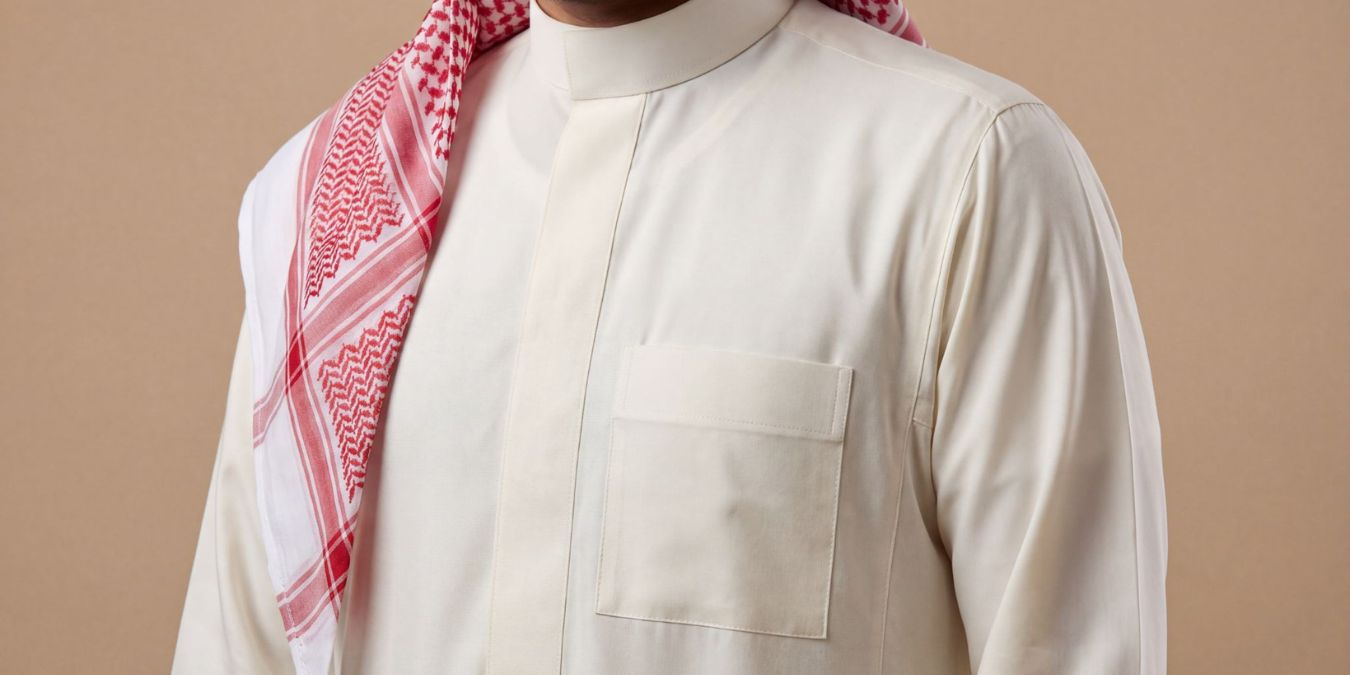
Experienced tailors fold the bottom corners before they stitch them. This method is called mitering. It removes the extra piece of folded fabric so the corner stays sharp instead of thick and rounded. The edges are hidden inside the corner, which helps keep the fabric from wearing out over time.
2- Rounded Corners
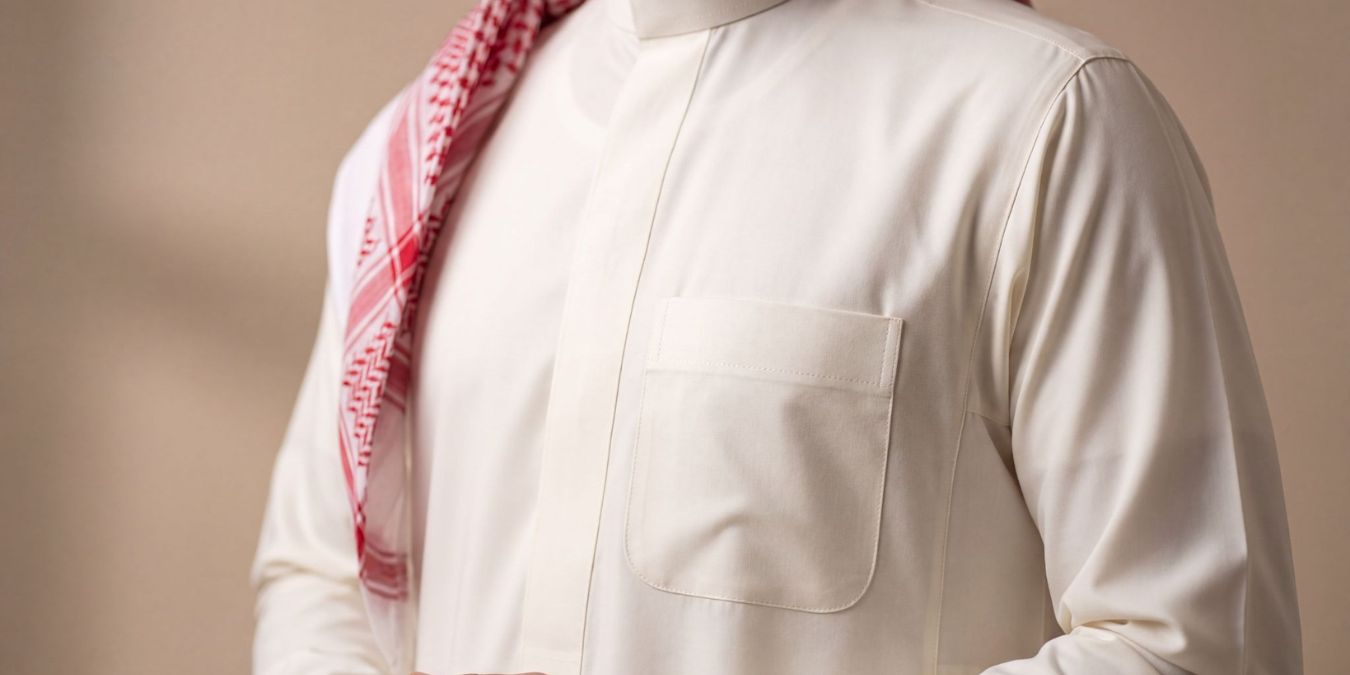
Rounded corners have a soft curve at the bottom of the pocket instead of a sharp corner. This is the standard pocket shape on many dress shirts. It suits both daily and smart wear.
The most important part is keeping the curve smooth and even. A tailor presses the curve before stitching, so both corners match perfectly.
3- Cut-corner or angled pockets
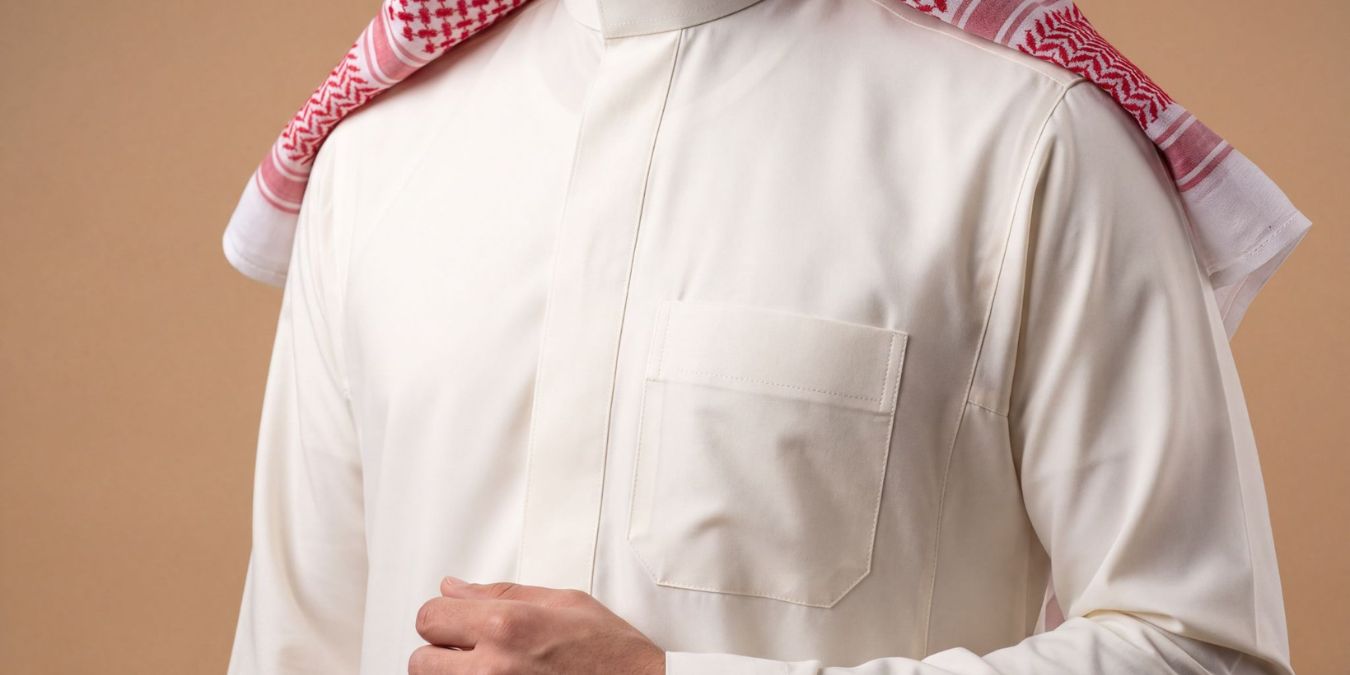
Some men prefer a pocket with its bottom corners cut diagonally. Instead of a sharp square corner, the tailor stitches a short diagonal line across each bottom edge. The pocket looks like a square with its corners trimmed off.
This style sits between square and rounded. It looks a little modern and gives the thobe a classic look. Angled pockets are the most used pocket style in thobes.
4- Pointed bottom pockets
A pointed pocket has a bottom that comes down into a soft point or V shape. It gives the thobe a modern look. It is not used most commonly.
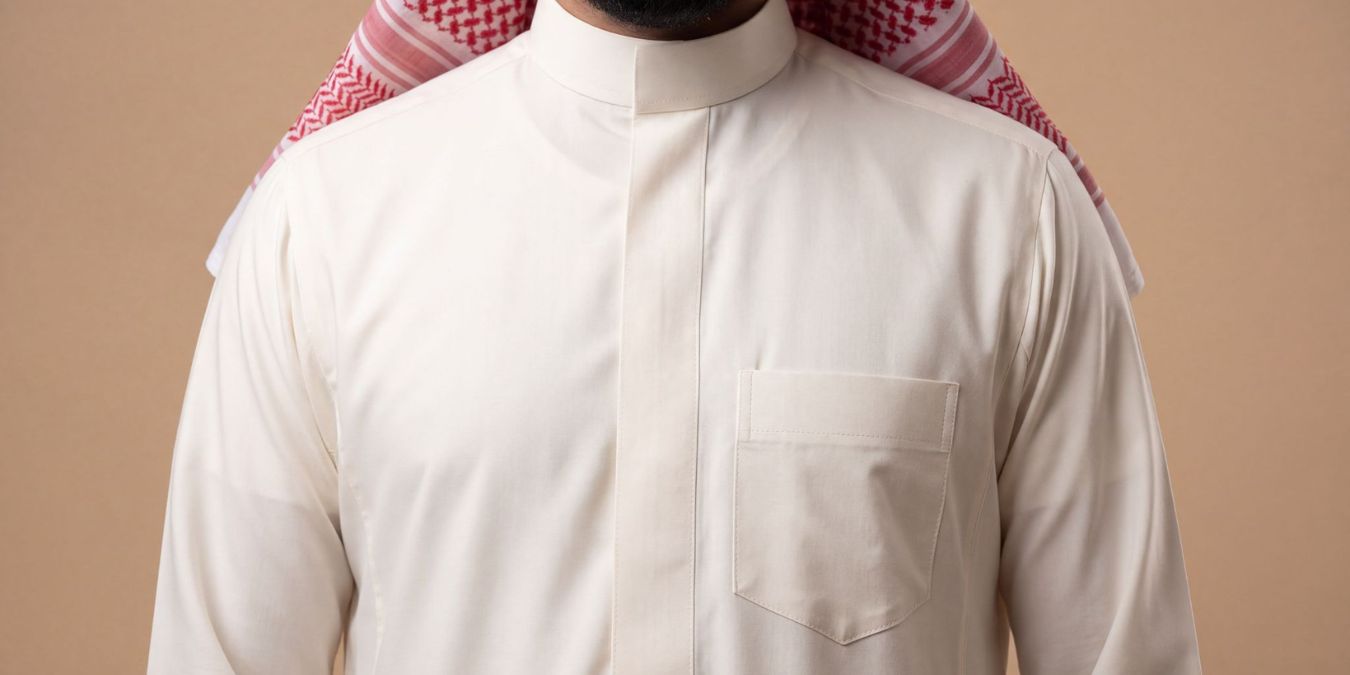
5- Single or double stitch line pockets
Tailors often sew one straight line around the outside of the pocket. This line is called topstitching. Some men ask for a second, inner line of stitching. A double stitch line looks bolder and makes the pocket last longer.
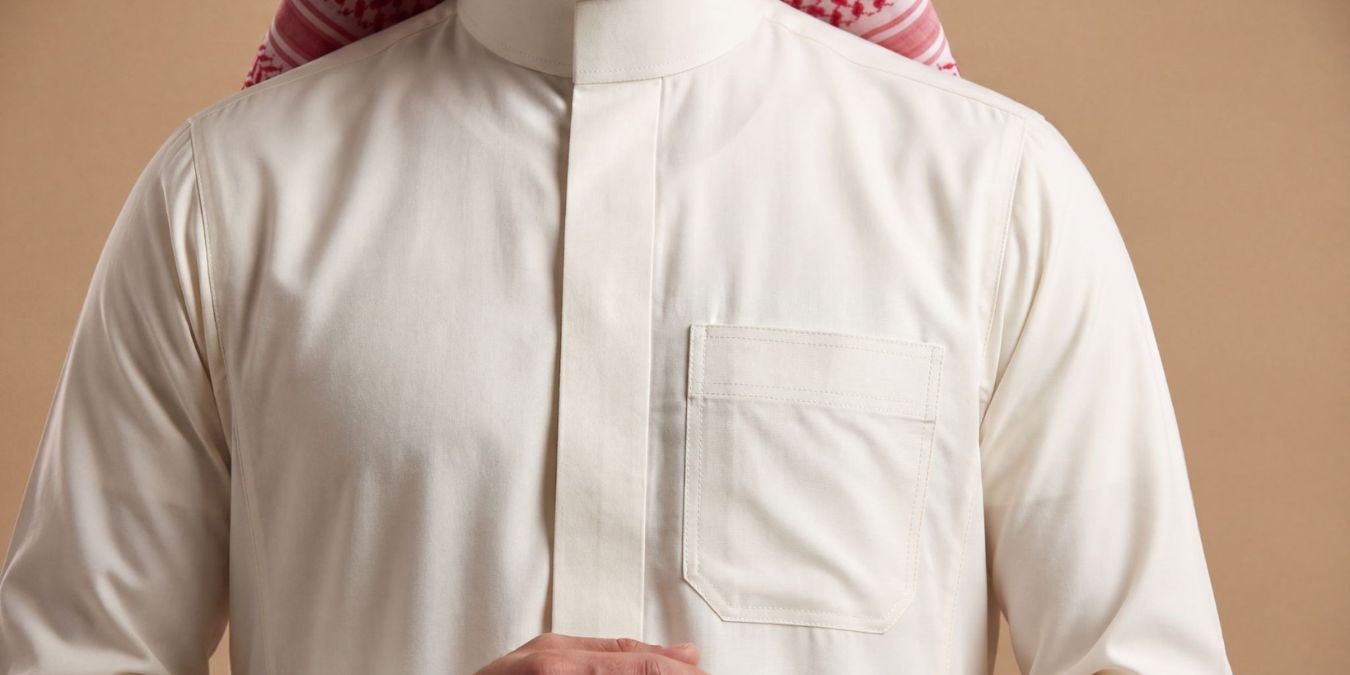
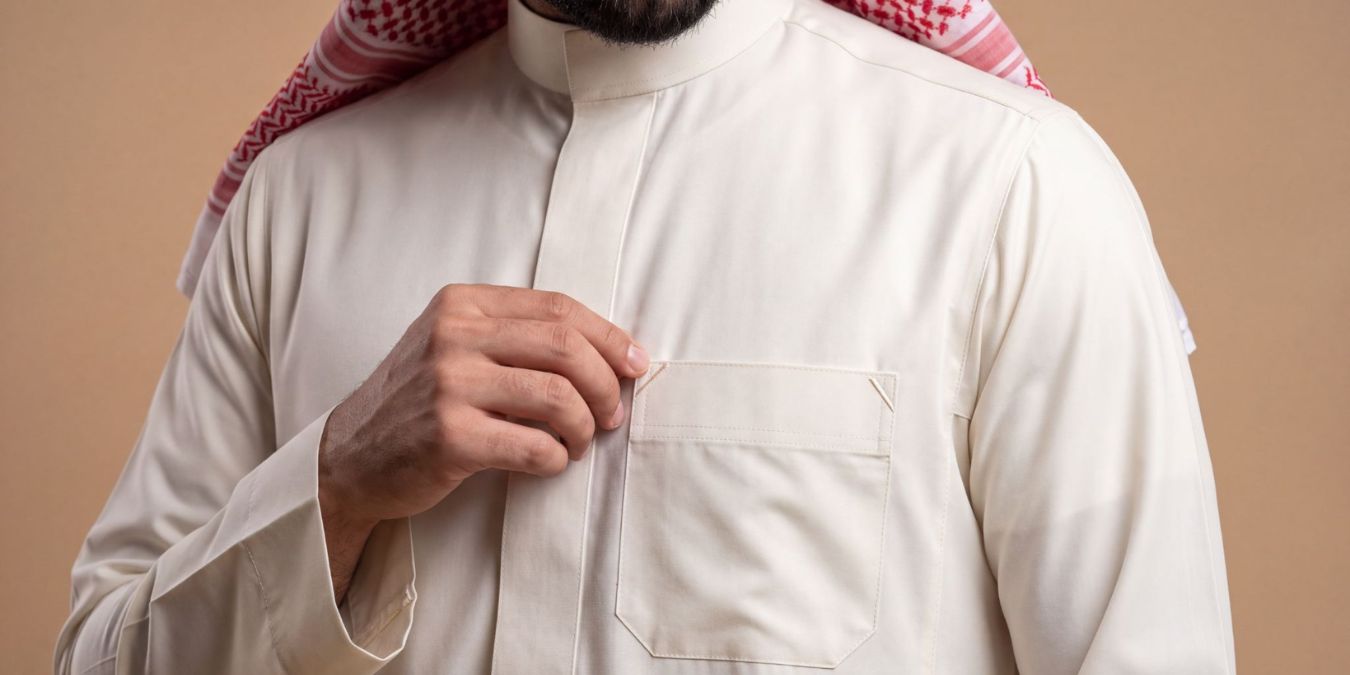
6- Corner reinforcement pockets
You reach into the front pocket throughout the day to grab a pen or other small items. Tailors add extra stitching there to stop the pocket from pulling away.
You may notice small triangles of stitching at the top corners of dress shirt pockets. That is a common way to strengthen them. On a thobe, a small and neat reinforcement in matching thread looks good.
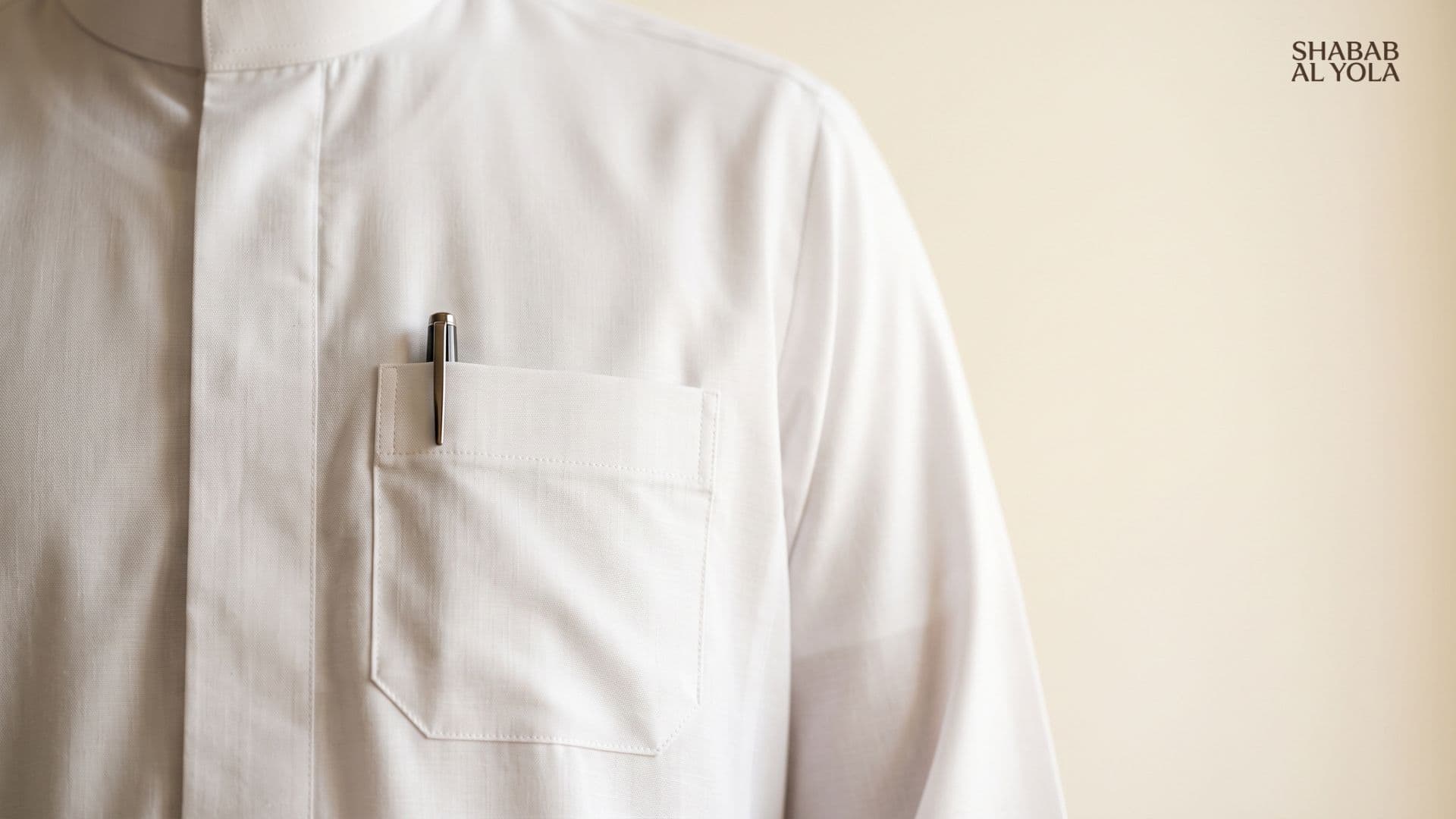
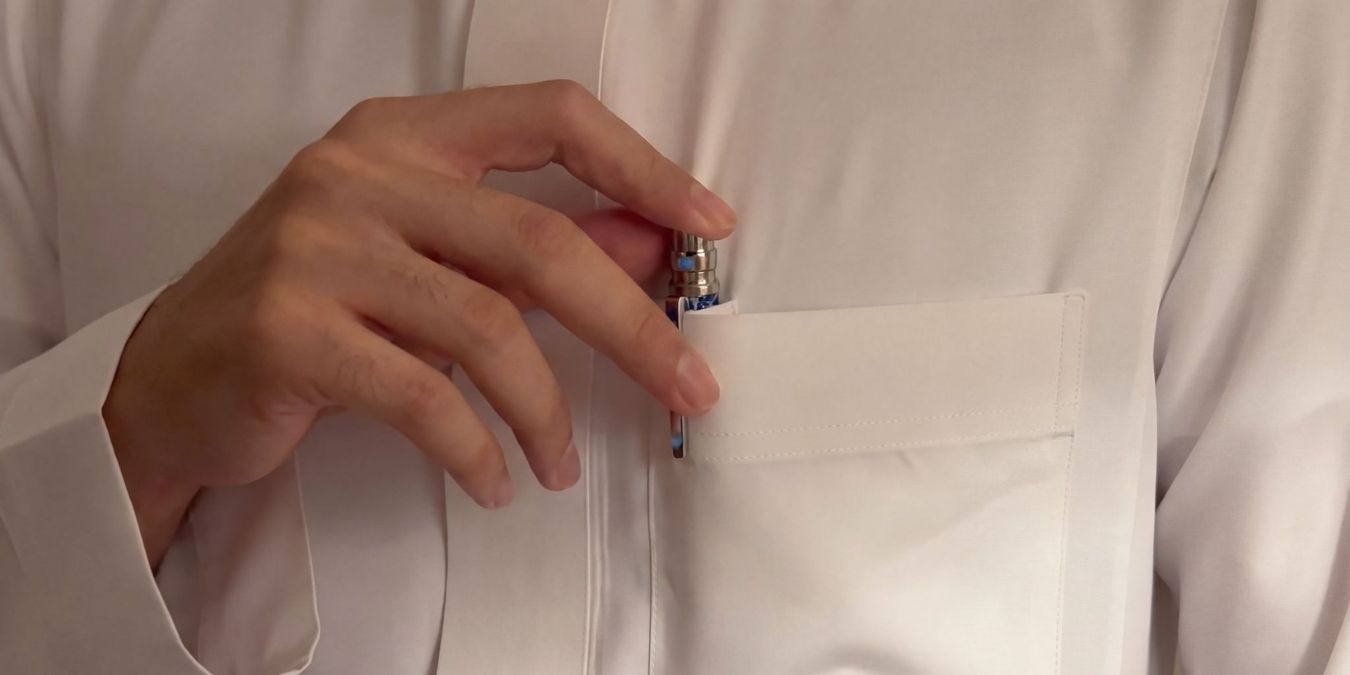
7- Pen Pocket
The pen pocket is a small pocket on the chest of a thobe, usually on the left side. It’s just the right size to hold a pen. It’s a simple and useful detail. The stitching around the pocket is made clean so it doesn’t look like a separate piece.
Why do thobes have a front pocket?
Thobes have a front pocket mainly to hold a pen. Front pocket is one of the details that gives a thobe its classic style. A classic Saudi thobe has three pockets. Two pockets are on each side of the thobe, and one front pocket lies on the left side of the chest.
Front pocket is mostly used to keep a pen, which also looks classic. Gulf men use pens many times a day, from signing papers to filling out forms or taking notes, so they can easily reach for a pen in the pocket.
The front pocket also holds other small things men reach for often, like a slim phone, a business card or an ID card. Heavier items like car keys and wallets go in the two hidden side pockets.
Which front pocket style is the most common on a thobe?
The simple pocket with a cut corner is the most common front pocket on a thobe. It is the standard pocket on the Saudi thobe. You also see it on a Qatari thobe and many ready-made thobes around the world.
Men prefer it for three simple reasons and that are:
- It looks decent and classic.
- It also matches the classic shirt-like front of the Saudi thobe with its collar and buttoned placket.
- It holds a pen or a slim phone without any trouble.
Which pocket style suits your body type?
The right pocket can improve the overall look of your thobe.
- For a slim body structure, a square pocket is a good choice because it gives makes the chest look a little fuller.
- For a person having a broad chest, a rounded-corner pocket softens the look and keeps it balanced.
- For a person with a shorter height, a slightly smaller pocket placed a bit higher keeps the proportions neat.
- Taller person, can choose a cut-corner or pointed bottom pocket adds detail and breaks up the long front.
Which Pocket Looks Best with Your Collar Style?
Your pocket and collar style should look like they belong together.
- Classic shirt collar goes well with a square or rounded-corner pocket as it gives you a traditional look.
- Band or stand-up collar pairs nicely with a cut-corner or pointed bottom pocket for a modern and clean finish.
- Collarless or round neck looks best with no pocket at all.
Where to Get a Custom Pocket Style?
You can get any custom styled front pocket for your thobe at Shabab Al Yola. Our ready-made thobes mostly come with rounded-corner or cut-corner pockets, becasue these two styles look decent on thobes.
If you want a different pocket style, you can choose it with a custom-made thobe. Pick your pocket shape, stitching and reinforcement, and the team will help you get a pocket that matches how you dress and what you carry.
Frequently Asked Questions
1- Which front pocket style is most used with a thobe?
A font pocket with a cut-corner or rounded bottom is most used among different pocket styles for a thobe.
2- Which chest pocket is better, square or rounded corners?
Neither is better. Square corners look sharp and formal, while rounded corners look soft and suit daily wear.
3- Why do some chest pockets have small triangles at the top corners?
These are reinforcement stitches that prevent the pocket from tearing or pulling away with daily use.
4- Which stitching is better for a thobe pocket, single or double stitching?
Single stitching looks clean and minimal, while double stitching looks bolder and lasts longer.
5- Can I keep my phone in my thobe chest pocket?
Only a slim, light phone. Heavier phones can pull the fabric down, so keep them in your side pocket.
6- Can a tailor add a front pocket to an old thobe?
Yes, a tailor can easily stitch a pocket onto an existing thobe using matching fabric.
7- Where can I get a thobe with a custom front pocket?
Visit Shabab Al Yola website, connect with the team on WhatsApp to get a custom pocket style and stitching for your thobe.