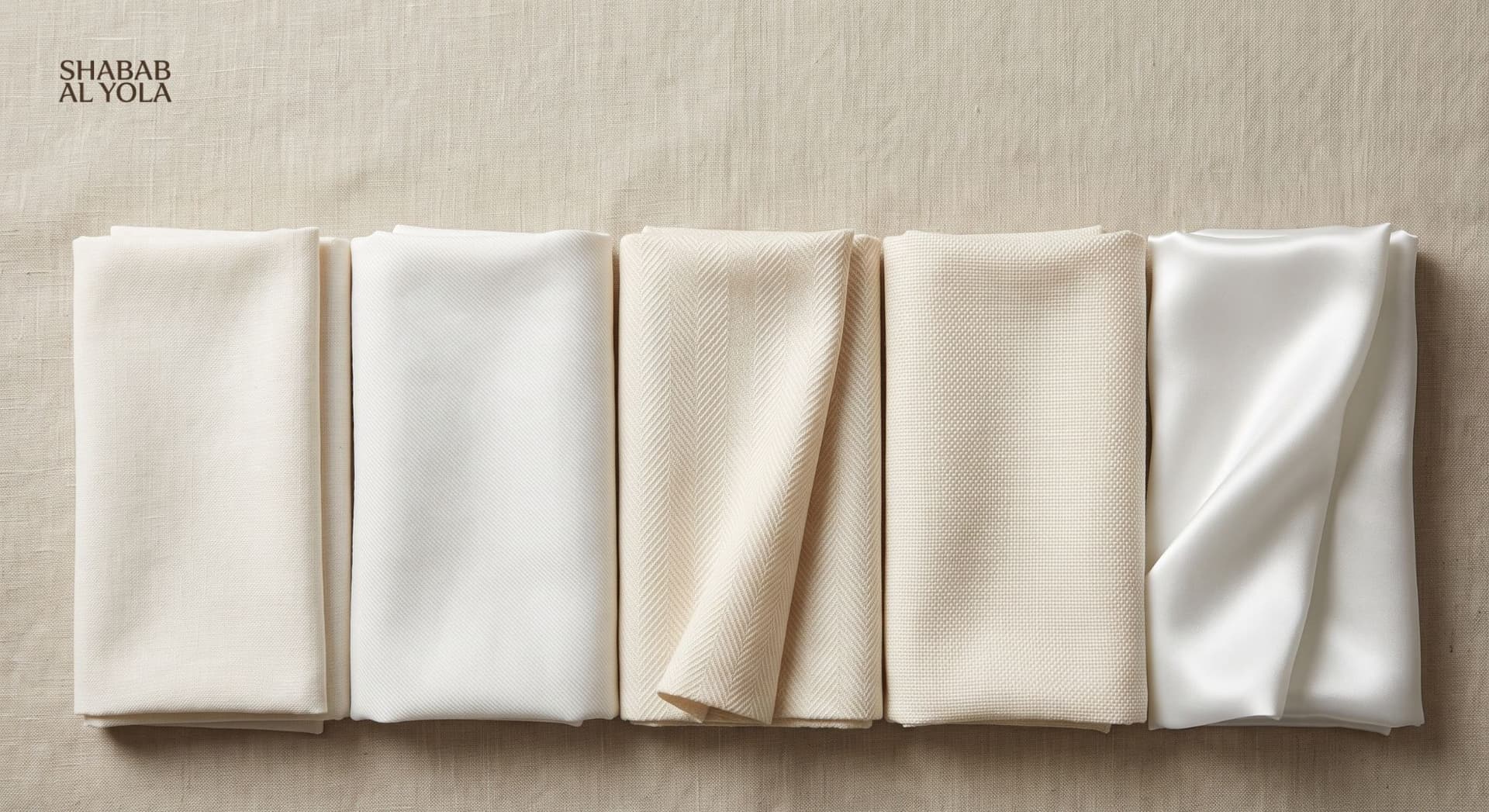
What is Weave? Types of Weave, Identification, and Weave We Prefer at Shabab Al Yola
Syeda Nida - Researcher & KC
Syeda Nida is a content researcher and knowledge curator with 4 years of experience working on projects related to textiles and fashion design. She specializes in researching fabrics, clothing styles, fashion trends, and textile materials. She enjoys collecting useful information from different sources and presenting it in a clear and simple way to help people understand different aspects of fashion and textiles.
Table of Contents
Table of Contents
Have you ever picked up two white kanduras that are both made of same fabric, both the same price, and wondered why one feels completely different from the other? Even though the color, the cut, and even the thread are the same.
The difference lies in their weave pattern, which makes them different from one another.
What Is a Weave?
A weave is simply the pattern in which threads are woven together to form a fabric. These patterns give texture to the fabric.
What is Warp and Weft of Weave?
Every woven fabric has two sets of threads running through it. The vertical ones are called warp yarns, and the horizontal ones are called weft yarns. The pattern made when threads are woven together is called a weave.
The weave can make all the difference in hot weather, as it gives the summer fabric better breathability and allows air to circulate. Some fabrics let air pass through easily, while others leave you sweating after just a short walk. The weave is what really makes a difference.
What are the Types of Weave?
There are many types of weave patterns, the most commonly used weave patterns are listed down below.
- Plain Weave
- Twill Weave (Steep & Fine Twill)
- Satin Weave
- Basket Weave
- Herringbone Weave
- Jacquard Weave
- Dobby Weave
- Pile Weave
- Fine Count Plain Weave
- Oxford Weave
I have explained each type of weave in detail below:
1- Plain Weave
In Plain weave each horizontal thread goes over one vertical thread, then under the next. This pattern is repeated across the fabric, and you will get a flat and even surface that is the same on both sides.
It is the most widely used weave in textile manufacturing for a reason. Plain weave fabrics are firm, they work with almost any fiber. Chiffon, taffeta, muslin, cotton percale, these are all plain weave fabrics, and they do not look much different from each other because of the yarn used in each one.
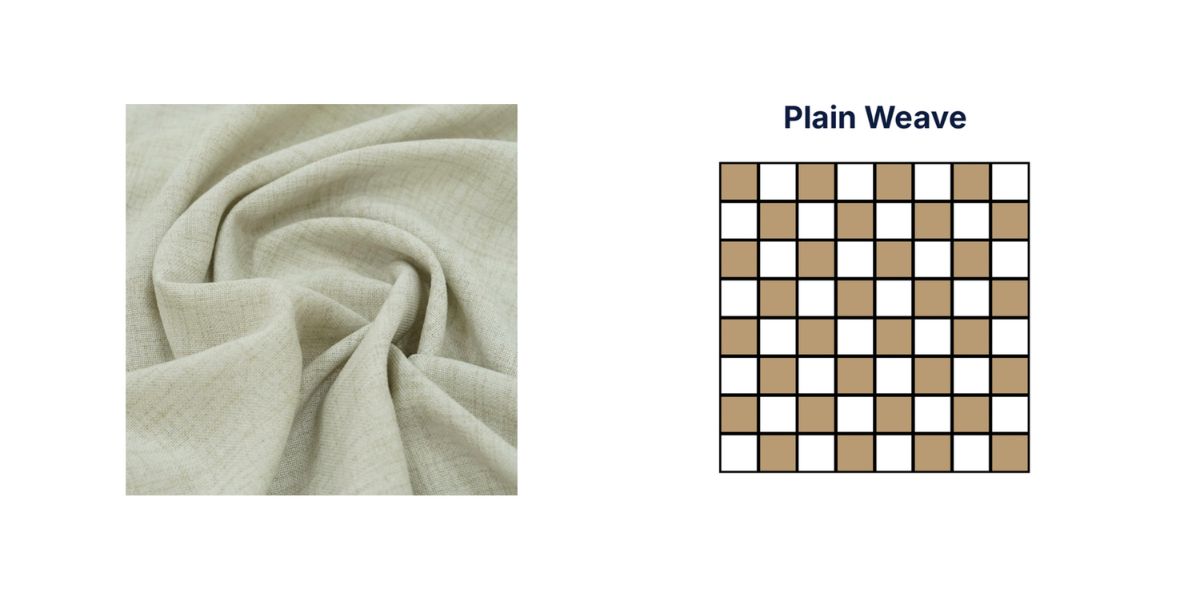
The one thing plain weave does not do well is resisting wrinkles if the thread is not made of synthetic yarn. The tight weaving makes it strong, so it causes creases in fabric. You need to iron the fabric before use.
2- Twill Weave
Twill is the one most people can recognise without knowing its name. If a fabric has diagonal lines running across its surface, it is a twill weave. The diagonal lines appear when the weft thread passes over two or more warp threads, goes under the next, and moves one step along with each new row.
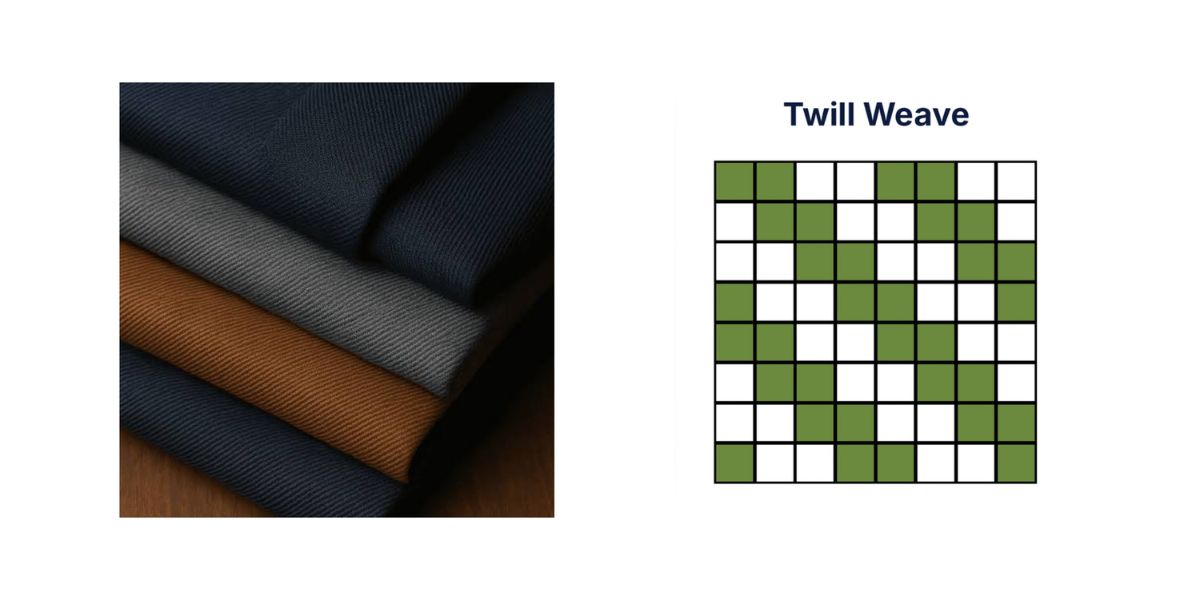
Twill fabrics are heavier and more durable than plain weave. The softness and flexibility of this weave gives a better drape to fabric. Denim, gabardibe, and chino fabrics are all made in a twill weave. Steep and fine twill are two more variations of this weave. Let's see the difference between them.
a) Steep Twill
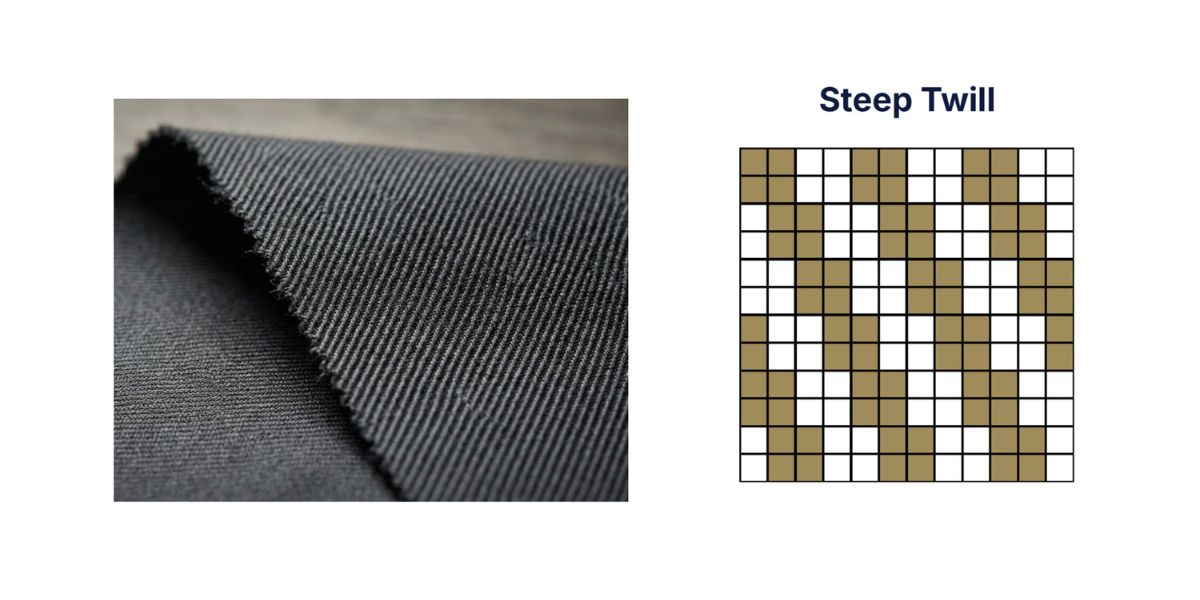
Steep twill is a variation of the twill family. In a standard twill, the diagonal runs at a 45-degree angle. In a steep twill, that angle increases and the diagonal runs more vertically up the surface of the fabric. This results in a more vertical texture rather than the conventional diagonal you see in fabric like denim.
b) Fine Twill
Fine twill follows the same diagonal weave as a standard twill but uses finer, and lighter yarns throughout. You can still see the diagonal pattern, but it is softer.
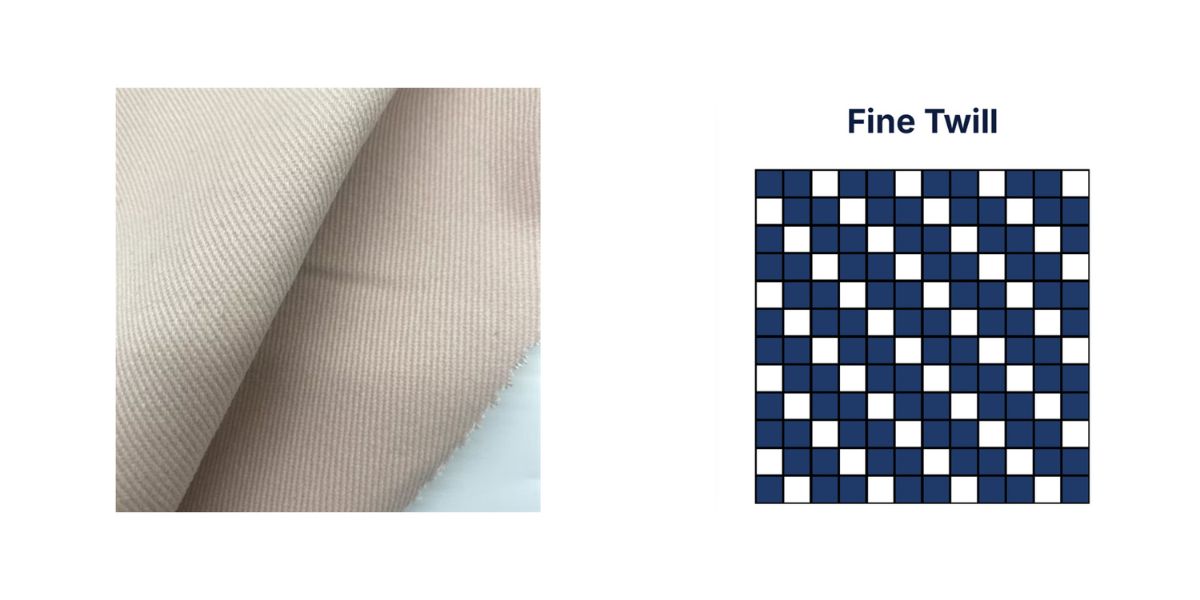
3- Satin Weave
Satin weave is the luxurious one. In a satin weave, the warp thread passes over four or more weft threads before passing under one. These longer sections of thread that lie across the fabric’s surface are called floats.
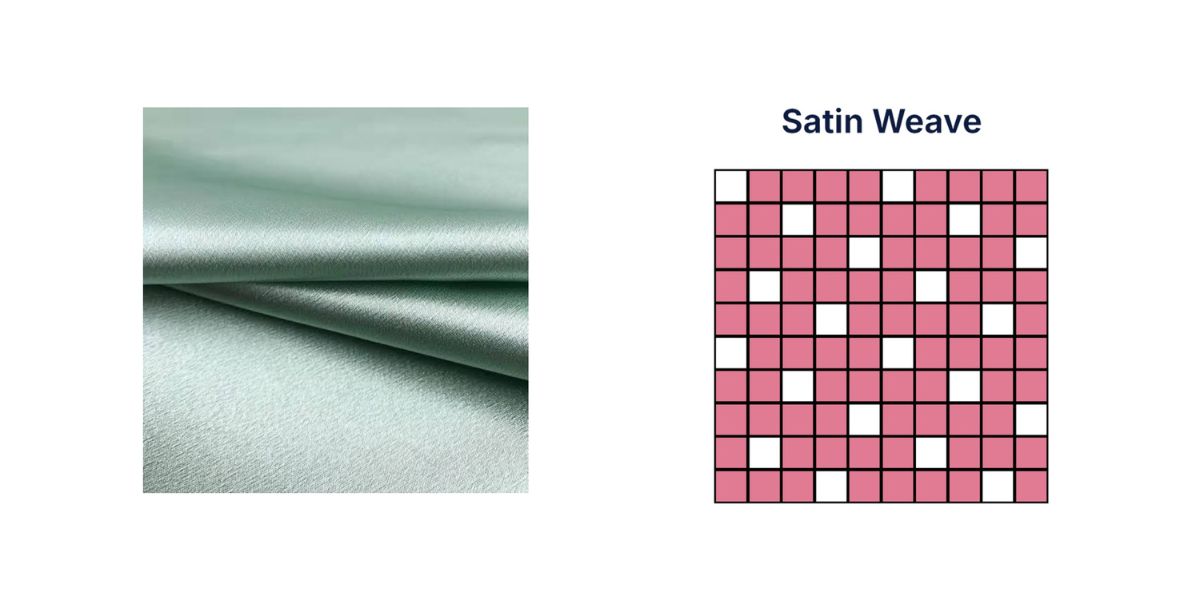
Floats are what give satin that glossy and smooth appearance to the fabric that allows light to hit the surface cleanly without scattering. These floats make satin delicate. This is why it is should be handled carefully.
4- Basket Weave
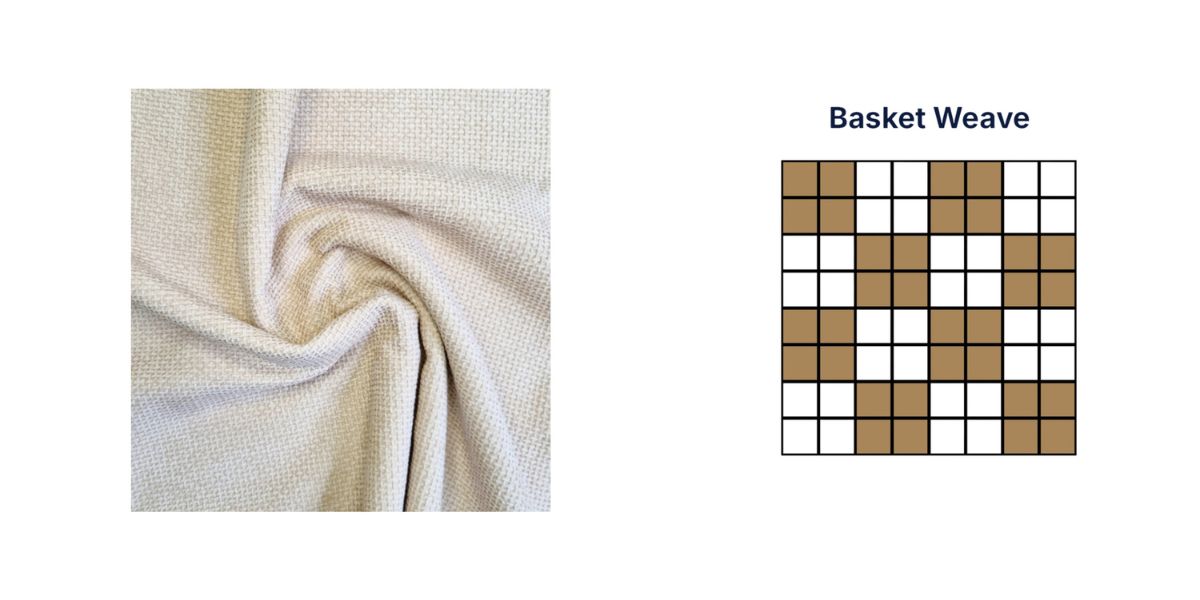
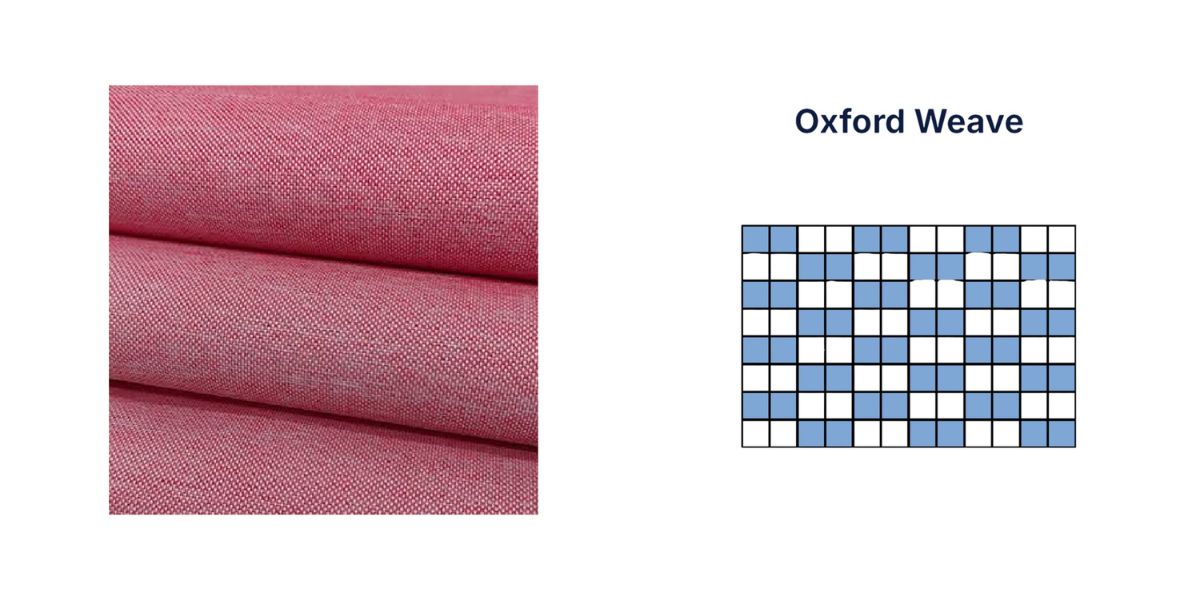
Basket weave is just like a plain weave but in basked weave threads are grouped together. Instead of one thread crossing one thread, two or more threads are paired up and woven as a unit, which makes the surface of fabric softer and gives it a visible grid texture. Oxford cloth is the most familiar basket weave fabric.
5- Herringbone Weave
Herringbone is a twill variation where the diagonal changes direction at regular intervals and create a continuous V-shaped or zigzag pattern across the surface. The name describes it well, as it looks like the bones of a fish.
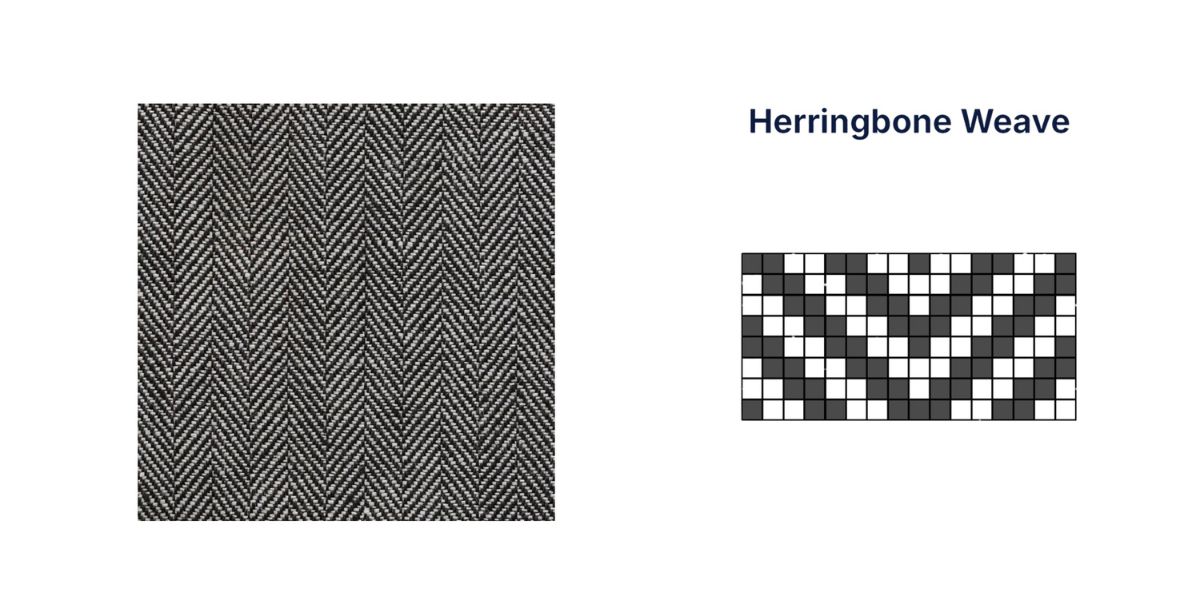
Herringbone is commonly used in suiting fabrics and occasion wear. The reversing diagonal also makes the fabric more dimensionally balanced, which means it holds its shape and drapes cleanly.
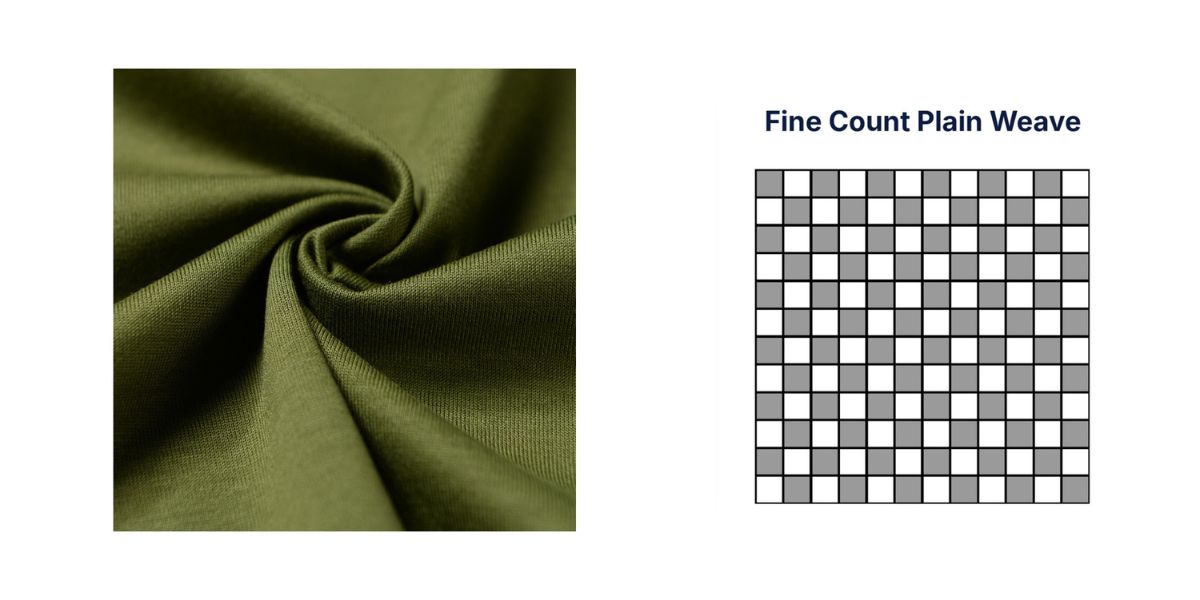
6- Fine Count Plain Weave
Fine count plain weave is plain weave built with a much lighter, finer yarn. The weaving structure is identical, but the yarn used is light in weight, as a result, the fabric becomes thinner and softer. It still has the clean and flat surface of a plain weave. It just feels almost weightless when you put it on.
7- Oxford Weave
Oxford weave is a basket weave where threads are paired and woven together as units rather than individually. That pairing creates a surface that has a soft, slightly raised grid texture and feels noticeably softer and warmer than a flat plain weave.
8- Jacquard Weave
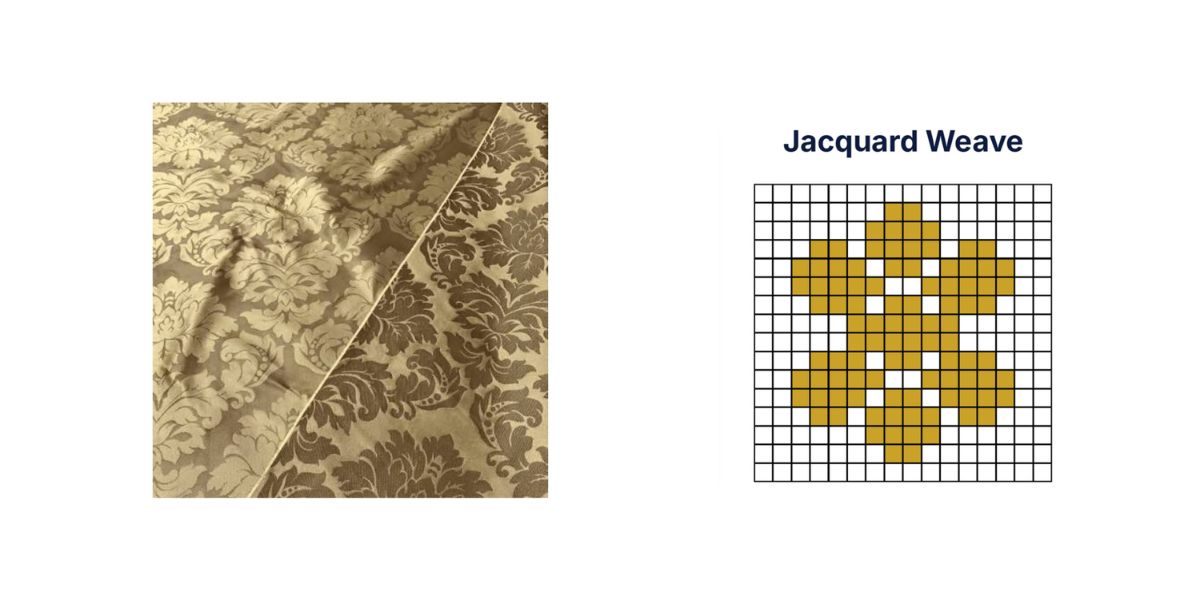
Jacquard weave is in a different category altogether. It uses a specialized loom that controls each warp thread, which makes an extraordinarily complex weave patterns. Florals, brocades, damasks, all of this are made from the Jacquard loom. The pattern is not printed on top. It is the fabric. Jacquard fabrics are durable and wrinkle-resistant. Their rich texture gives them a look that is very hard to recreate through printing or embroidery.
9- Dobby Weave
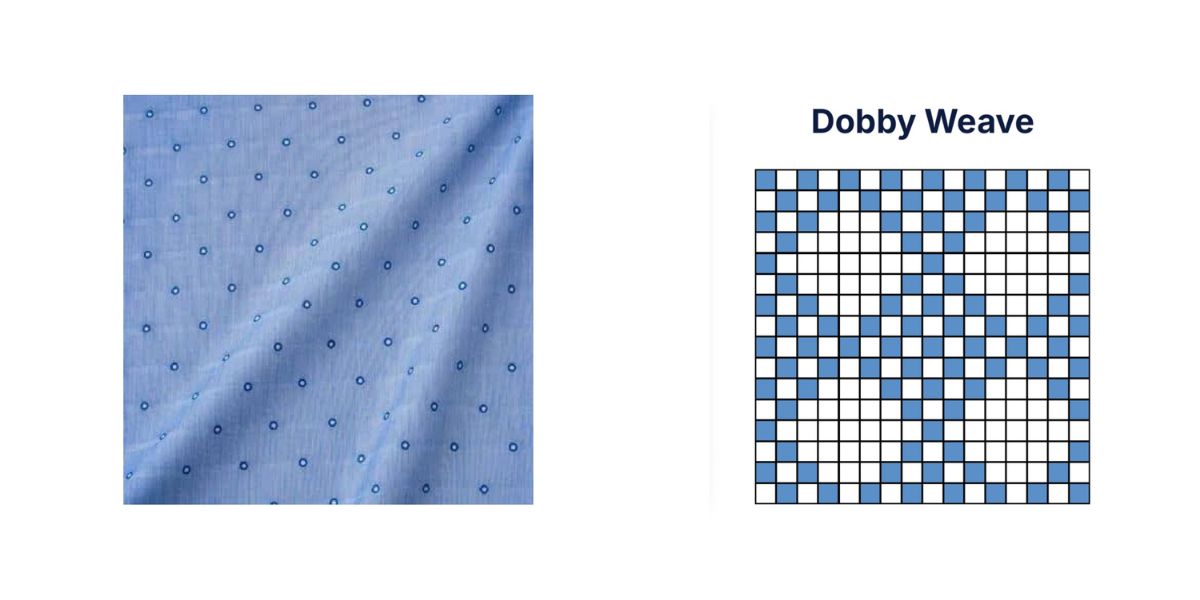
Dobby weave is a simpler version of jacquard weave. It uses a dobby attachment on the loom to create small repeating geometric shapes that are woven into the fabric surface. Dots, tiny diamonds, and simple shapes are common. Dobby fabrics have more visual interest than a flat plain weave but are much lighter than a full jacquard.
10- Pile Weave
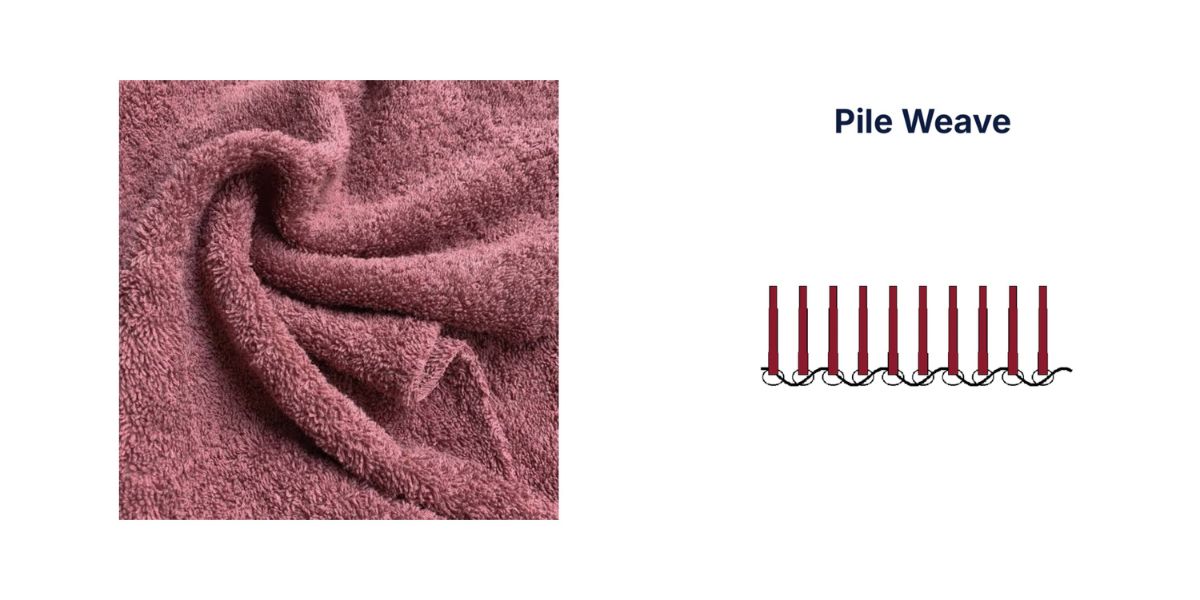
Pile weave creates a raised surface above the base fabric, either from loops or cut fibres. Velvet is the most iconic example. The dense, cut loops in velvet are what give it that deep, soft surface and the way it catches and changes with light. Terry cloth is an uncut pile weave, where the loops stay intact for softness and absorption.
What the Three Most Used Weaves Patterns?
Most of the fabric in the world is made of three basic weave structures. Every other weave type is a variation or a combination of these. Once you know them, it’s much easier to understand why some fabrics feel light and crisp, while others feel soft, smooth, or a little more formal.
These weaves are:
- Plain Weave.
- Twill Weave.
- Satin Weave.
What are the Weave Patterns Used at Shabab Al Yola?
Every kandura, thobe, and dishdasha we make, starts with a choice of weave. We pick each one for a reason. It has to suit the weather, the occasion, and how the garment should feel when you wear it. Here is why we use each weave and when it works best.
1- Plain Weave
We use plain weave more than any other because it is reliable. The colour stays even, it is a better choice for daily wear, and is easy to wash and look after. It keeps its shape in the heat and humidity of the Gulf and stays in good condition after many washes.
Best season to wear: All year round. If you could only own one type of kandura, this would be it.
2- Fine Count Plain Weave
Fine-count plain weave is our choice when we want the fabric to feel as light as possible. It feels soft and almost weightless on the skin, and it lets you move freely without the fabric feeling heavy in the heat.
Best season to wear: June to September, the hottest months of the year. It is also a popular choice for Umrah and Hajj, when you spend long hours outdoors.
3- Steep Twill
We use steep twill because it looks elegant but still stays light. It is also strong, so it lasts well with regular wear.
Best season to wear: March, April, October and November. These months are warm but not too hot, so a fabric with a little more body feels just right.
4- Fine Twill
We use fine twill because it does not crease easily. It stays neat all day without needing an iron, and it drapes nicely on the body. It also gives a little warmth without feeling heavy.
Best season to wear: November to February. It is great for cooler evenings and long formal events.
5- Oxford Weave
We use Oxford weave for comfort. It feels soft, relaxed and a bit warmer than other weaves. Its gentle texture adds interest even in plain colours, and it hides creases well.
Best season to wear: November to February, when evenings get cool enough that lighter fabrics are not quite enough.
6- Twill Weave
We use twill because it is strong and looks rich. Even in white or ivory, it catches the light in a way that gives the colour more depth. It drapes well and keeps its shape from morning to evening.
Best season to wear: Cooler months. It is ideal for meetings, formal occasions and evening gatherings.
7- Herringbone (V Type) Weave
We use herringbone when a kandura needs to stand out. The pattern is woven into the fabric, so it never fades. It also hangs evenly on the body, so the kandura always sits well.
Best season to wear: Winter, and special days like Eid, weddings, National Day and formal evenings.
Why Does the Weave Matter?
The weave affects a fabric in many ways, most of which is not understood when you are shopping.
- Durability: It shows how closely the threads are woven together. More intersections generally mean a tougher, longer-lasting fabric.
- Drape: It is the way a fabric falls and moves on your body, it is also shaped by the weave structure. A tightly woven flat weave drapes differently from a diagonal twill.
- Breathability: It is about how much air can pass through the fabric, and it depends upon how tightly or loosely the threads are woven.
- Appearance: The weave creates the texture of the fabric, whether that is flat and smooth, textured, or patterned.
Two garments in the same cotton, same colour, same cut, will look and feel entirely different if the weave is different. That is how important weave is.
How to Identify Different Weaves?
- You don't need to be a fabric expert to work out what weave you're looking at. Just look closely at the cloth, and it will tell you most of what you need to know.
- If the fabric is smooth and flat, with no pattern or texture, and looks the same on both sides, it's almost certainly a plain weave or fine count plain weave.
- If you can see thin diagonal lines all running the same way, it's a twill. Check how steep those lines are. If they run almost straight up and down, it's a steep twill.
- If the diagonal lines keep switching direction and make a zigzag of V shapes, that's herringbone.
- If you spot a faint checked texture, with the threads looking like they sit in pairs, that's Oxford weave.
- If there's a raised pattern that's clearly woven into the fabric rather than sitting on top of it, you're looking at a jacquard or dobby weave.
The Weave Behind Every Arab Dress We Make
You can't always spot the weave the way you'd spot embroidery or a pattern, but it shapes everything you see and feel. It's in the way your kandura hangs when you're standing still and the way it moves when you walk. It's how it looks at the end of a long day compared to the first thing in the morning. It's even in how the white looks in sunlight versus indoor light.
At Shabab Al Yola, we choose the weave for each dress right at the start, not something we consider later. We want every piece to feel as good as it looks, and the right weave is a big part of getting there.