How to Wash and Care for Your Kandora the Right Way
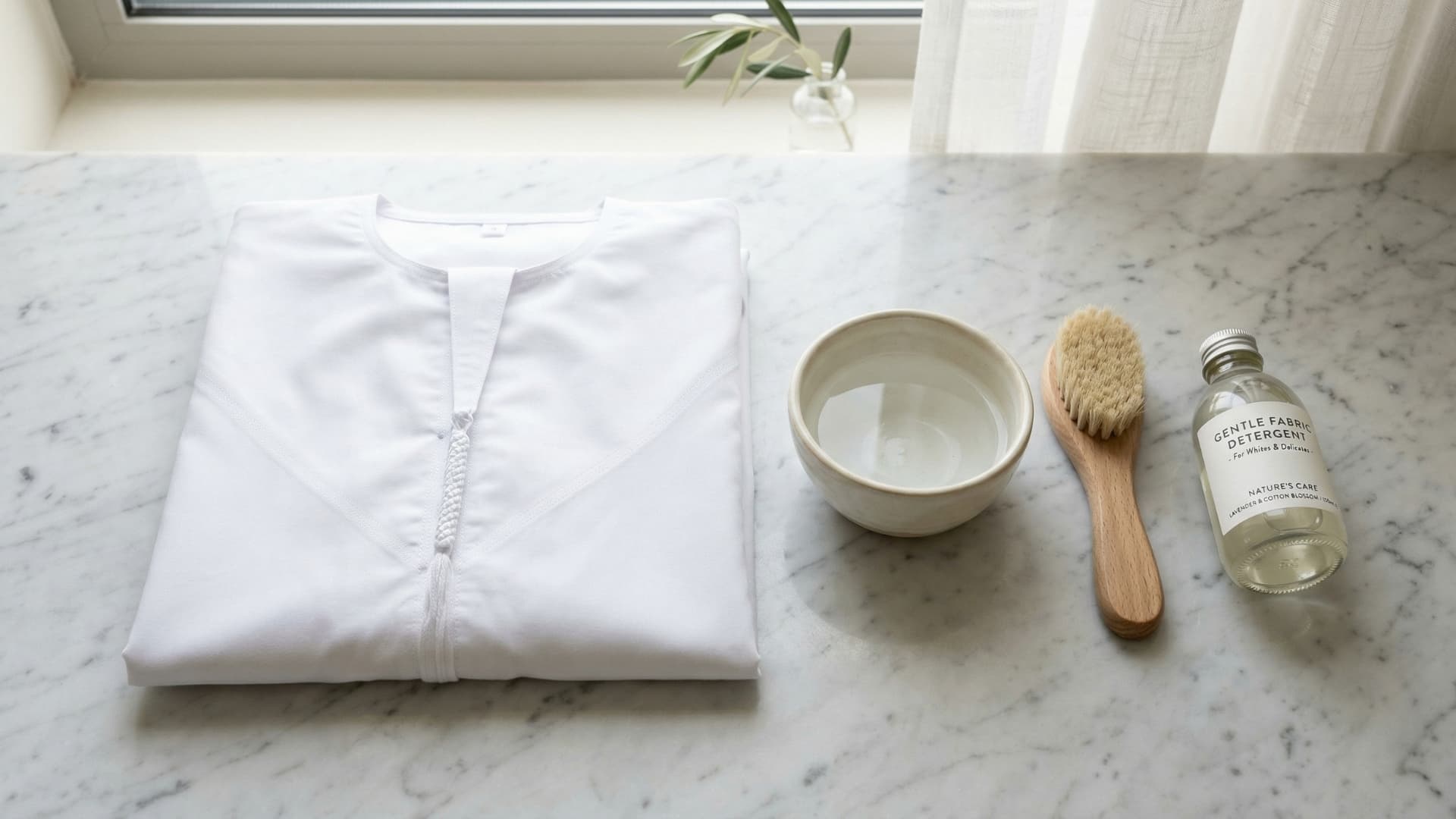
A kandora says a lot about you before you even open your mouth. When it is clean, bright white, and well-pressed, people notice. When it is dull, yellowing, or creased, that gets noticed too.
The problem is most people do not realise how easy it is to slowly damage a good kandora without meaning to. The wrong wash cycle, the wrong detergent, or just drying it badly can take a sharp kandora and turn it into something you do not feel confident wearing anymore.
So let me walk you through how to actually take care of it properly. Washing, drying, ironing, storing, all of it.
Why Your Kandora Needs Special Care
Most clothes are easy to deal with. You wash them, hang them, wear them. A kandora is not like that.
Good kandoras, especially ones made from Japanese fabric or fine cotton, have a weave and finish that reacts badly to heat, harsh detergents, and rough machine cycles. And because the colour is white, every small mistake shows up clearly. A yellow patch, a loose thread, a dull area, you will see all of it.
What most people do not realise is that the damage does not happen all at once. It builds up slowly, wash after wash. One day the kandora just stops looking right and you cannot figure out when it went wrong. Getting the basics right from the start is what keeps a good kandora looking good for years.
Hand Wash or Machine Wash — Which One Should You Choose?
Both can work. But they are not the same, and the right choice depends on your kandora.
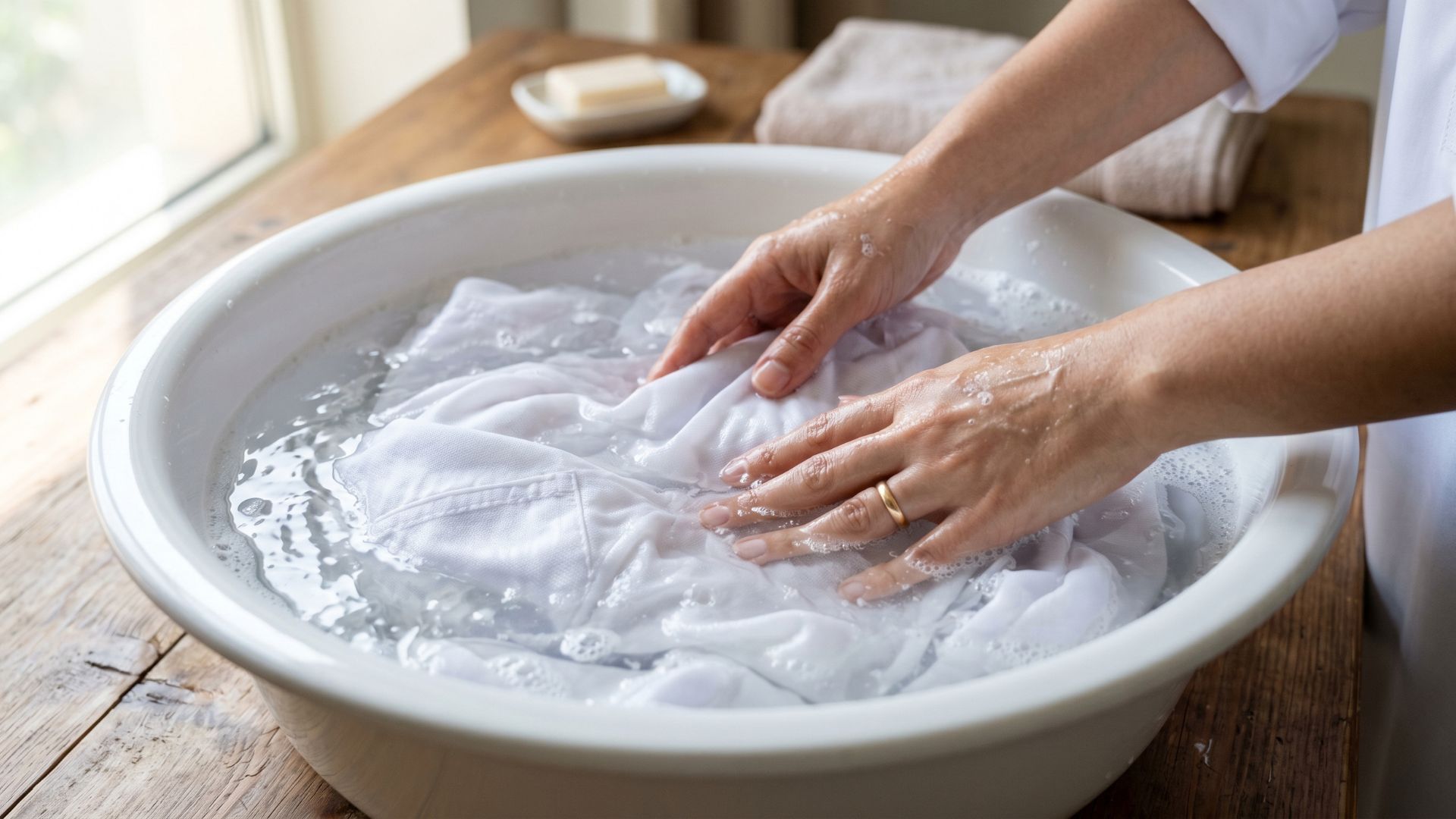
Hand washing is the safer option, especially for kandoras made from premium or delicate fabric. Here is how to do it right:
- Fill a basin with cold or lukewarm water and add a mild detergent
- Gently work the fabric with your hands, do not scrub or twist it
- Give extra attention to the collar, cuffs, and hem as these collect the most sweat and dust, especially in Abu Dhabi's heat
- Rinse until the water runs fully clear
Machine washing is fine for everyday kandoras, but only if you do it properly:
- Use the gentle or delicate cycle only
- Keep the water at 30 degrees or below
- Put the kandora inside a mesh laundry bag so it does not snag or rub against other clothes
- Never wash it with dark or coloured clothes, even slightly damp coloured fabric can transfer onto white material and that stain is not easy to fix
My honest advice is this. If it is a premium kandora or you paid good money for it, wash it by hand. For your regular daily kandoras, the machine works fine as long as you follow those steps.
Are You Using the Right Detergent?
This is where a lot of people go wrong without knowing it. Use a detergent that is made for white or delicate fabrics. Stay away from anything with regular bleach unless the label clearly says it is safe for cotton or fine fabrics. Regular bleach weakens the fabric over time and after repeated use it actually causes yellowing, which is the opposite of what you want.
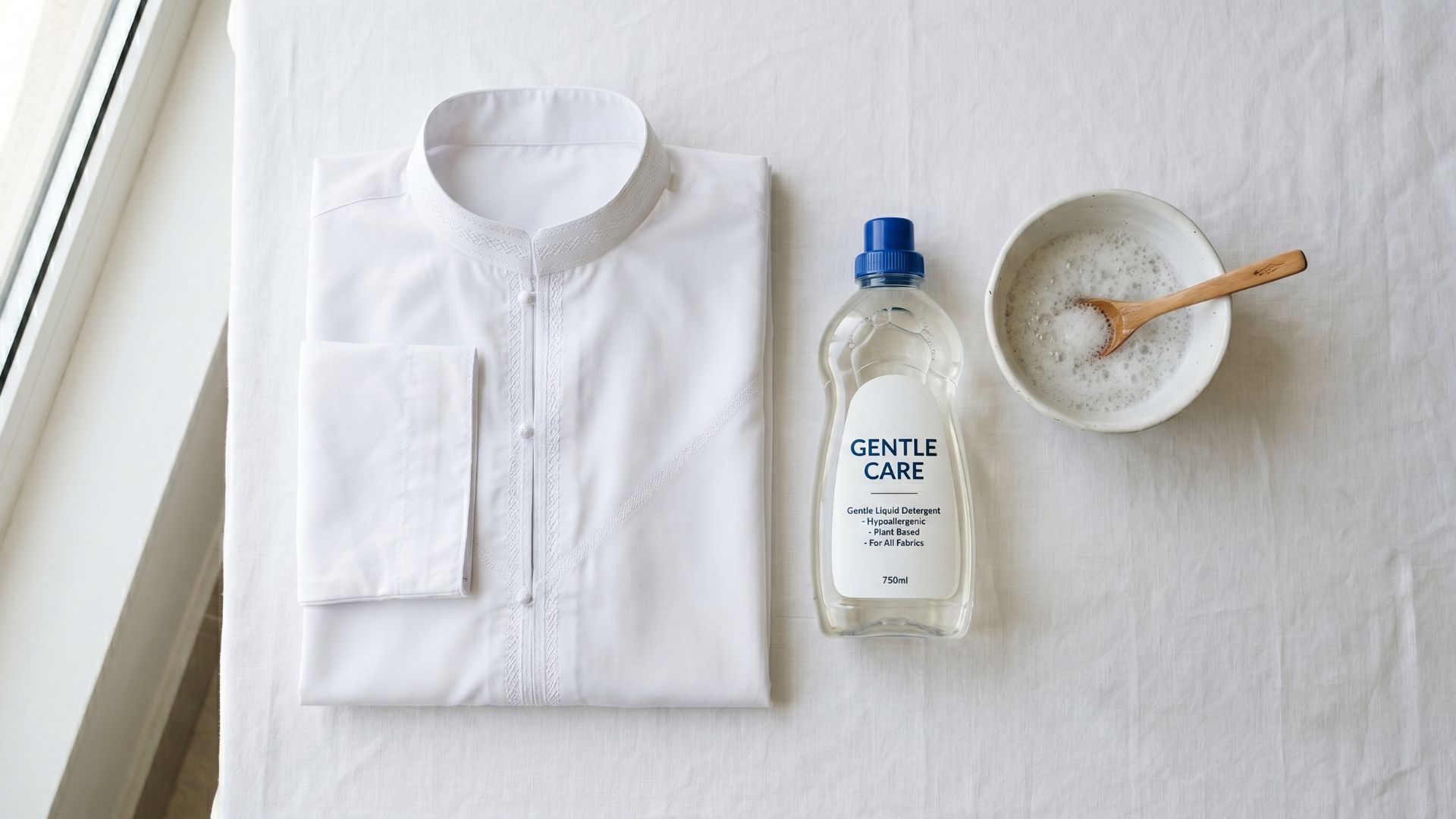
For kandoras made from Japanese fabric or any premium blend, a gentle liquid detergent works better than powder. Liquid dissolves properly and does not leave residue spots on the fabric.
Some detergents have optical brighteners in them that help keep whites looking fresh. Those are fine to use, just check they are fabric safe. And do not overdo the amount. A smaller amount of the right detergent is always better than a large amount of the wrong one.
Why Is Your Kandora Turning Yellow: And How to Fix It
Yellow tones on a white kandora are one of the most common problems and the reason is almost always one of three things. Sweat buildup, the wrong detergent, or washing in hot water.
The good news is you do not need expensive products to fix it. Before washing, soak the kandora in cold water with a small amount of white vinegar for about 30 minutes. Vinegar is gentle on fabric, it breaks down sweat residue, and it naturally brightens whites without causing damage.
You can also add a few tablespoons of baking soda directly into the drum or detergent drawer during your regular wash. It works well on dullness and leaves no smell after rinsing.
How to Dry Your Kandora Without Ruining It
Heat during drying is where a lot of damage happens, and most people do not realise it until it is too late.
Tumble dryers are the biggest problem. The heat shrinks the fabric, changes the shape, and weakens the threads that give the kandora its clean structured drape. Once a kandora loses that shape, ironing alone will not fully bring it back. Avoid them as much as you can.
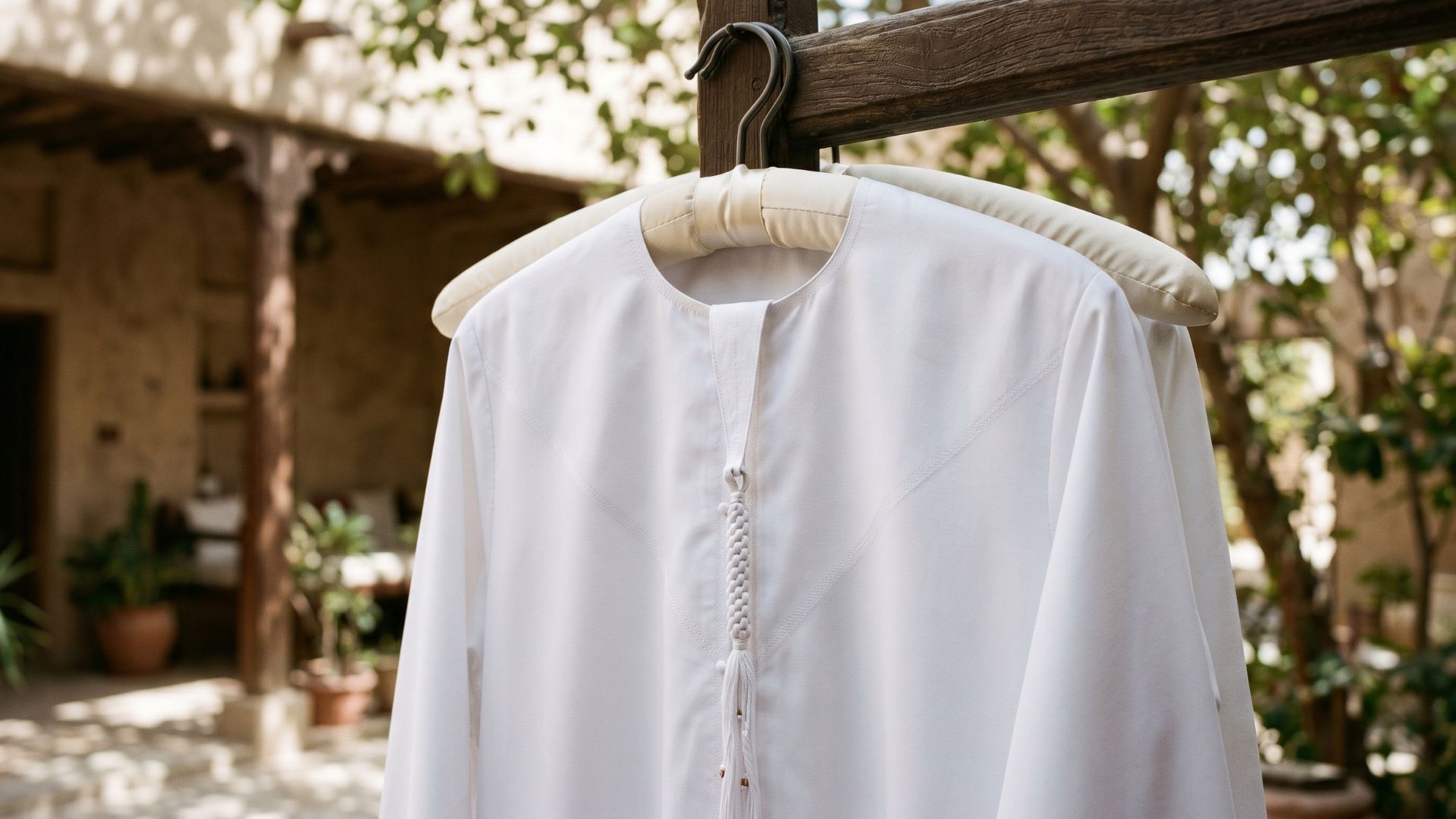
Air drying is always the better option. Here is how to do it properly:
- Hang the kandora on a wide padded hanger right after washing
- Smooth out any folds with your hands before you leave it to dry
- Pick a shaded spot with good airflow, not direct sunlight
- Sun exposure over time fades white fabric and can cause a yellowish tint
If you really have to use a dryer, do not run the full cycle:
- Set it to the lowest heat setting
- Take the kandora out while it is still slightly damp
- Hang it on a hanger to finish drying naturally
That last bit of air drying makes a real difference to how it looks and how long the fabric stays in good shape.
How to Iron Your Kandora and Get That Sharp Finish
A properly ironed kandora changes how you look completely. A rushed one is obvious and people do notice.
Iron it while still slightly damp. Creases come out much more easily and the finish looks cleaner. If you are not sure about the fabric, test on an inner part of the hem first before going over the full garment.
A few things to keep in mind:
- For the chest and back, iron from the inside to avoid a shiny pressed look on the outer surface
- For the collar and cuffs, use a thin pressing cloth between the iron and the fabric
- Use long smooth strokes, do not press back and forth in one spot
Once you are done, hang it on a hanger right away. Even a few minutes lying folded will bring the creases back.
A Good Kandora Is Easier to Care For
One thing most people do not think about is that care starts before the first wash. It starts with the fabric and the stitching.
A kandora made from good fabric holds its shape after washing, irons easily, and keeps its white looking fresh. A poorly made one will give you problems no matter how carefully you wash it.
So if you are putting in the effort, make sure the kandora is worth it from the start. Visit us or talk to our tailor directly for help choosing the right one for your lifestyle in Abu Dhabi.
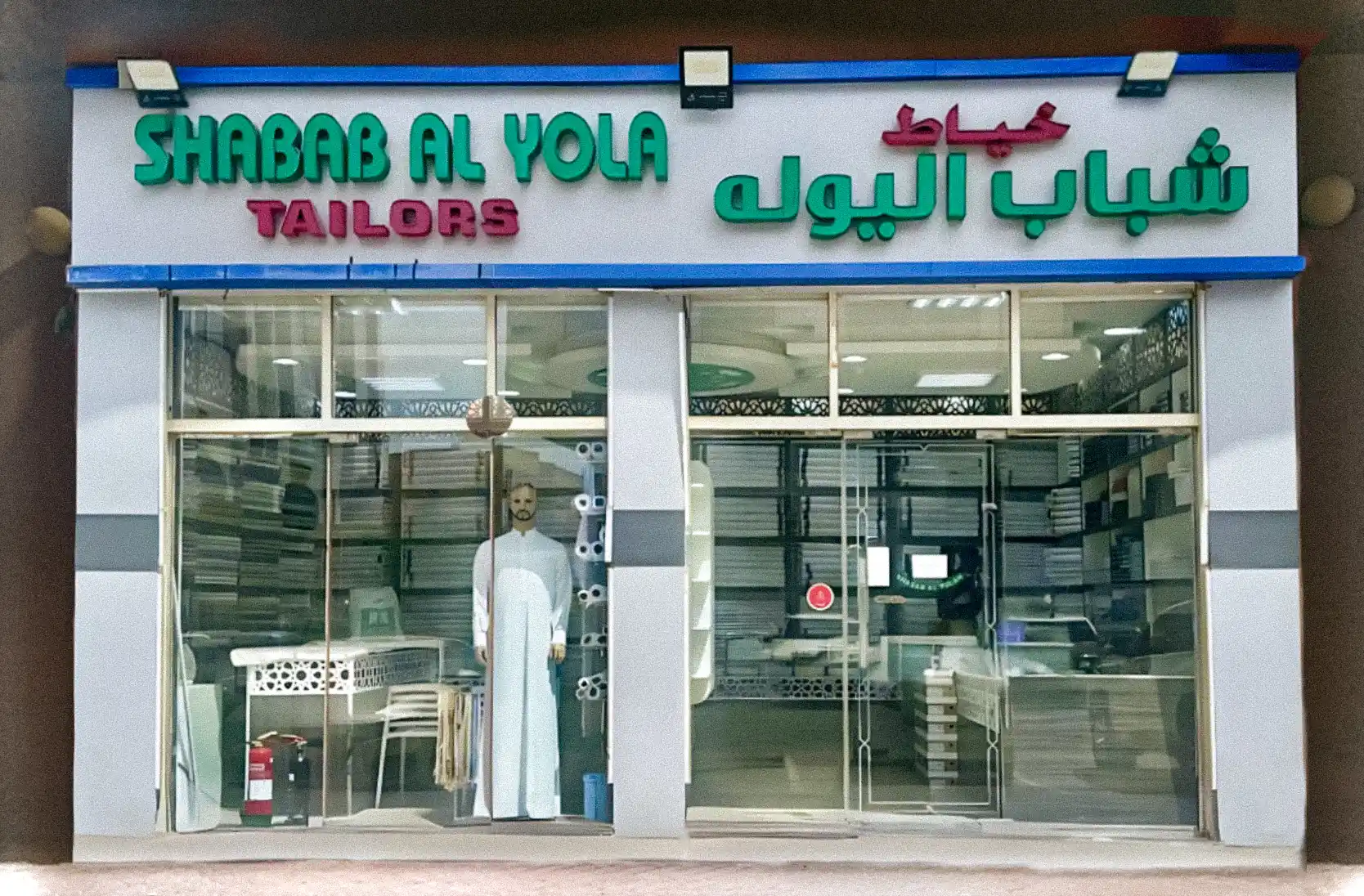
Shabah Al Yola Tailors
شارع هزاع بن زايد, Al Nahyan, E19 02, Abu Dhabi
How to Store Your Kandora and How Often to Wash It
Storing it properly
Always hang your kandoras, never fold them for long periods. Folding creates deep creases that are harder to iron out later. Use a wide wooden or padded hanger so the shoulders keep their shape.
Keep them in a cool dry wardrobe away from sunlight. For longer storage, use a breathable cotton garment bag, not plastic covers as they trap moisture and damage the fabric over time.
Cedar balls in the wardrobe keep insects away naturally without the strong smell that mothballs leave.
How often to wash
In Abu Dhabi's heat, washing after one or two wears is the right approach for daily kandoras. Wearing a thin undershirt underneath helps absorb sweat and extends the time between washes, which also extends the life of the garment.
For kandoras you wear to occasions, wash after each wear. Perfume and food leave traces that settle into the fabric if you leave them too long.
My Final Words:
Taking care of your kandora is not complicated once you know what actually matters. The right detergent, air drying, ironing while damp, hanging instead of folding. These small habits are what keep it looking the way it should every single day.
If you want a kandora that is worth taking care of, start with the right one. Browse the full range of Shabah Al Yola Arabic garments and find kandoras made for daily wear in Abu Dhabi, built with fabrics that hold their shape, their colour, and their comfort wash after wash.
FAQs
Can I wash my kandora in the washing machine?
Yes you can. Use the gentle cycle, keep the water at 30 degrees or below, and use a mesh laundry bag. Do not wash it with coloured clothes.
Why is my white kandora turning yellow?
Usually it is sweat buildup, hot water, or the wrong detergent. Try soaking in cold water with white vinegar before washing and switch to a gentle detergent made for white fabrics.
How do I keep my kandora looking crisp after ironing?
Iron it while slightly damp, use long smooth strokes, and hang it straight after. Do not leave it folded or lying on a surface once you are done.
Is it okay to dry my kandora in the sun in Abu Dhabi?
It is better to avoid direct sunlight. A shaded spot with good airflow works better and protects the white from fading or yellowing over time.
Does wearing an undershirt really help?
Yes it does. It absorbs sweat before it reaches the kandora fabric which means less washing and a longer lasting garment.
How long does a good kandora last with proper care?
With the right habits, a good quality kandora can stay in great condition for several years. The fabric quality matters a lot too. At Shabah Al Yola we choose fabrics specifically for durability and comfort so the kandora holds up properly over time.