What is GSM Value of Fabric Used in Kanduras, Thobes, and Dishdashas
Imtiaz Ahmed - Head of Tailoring Team
Mr. Imtiaz Ahmed is working as a head of tailoring department at Shabab Al Yola. Over nearly two decades, he has worked with local clients across the Gulf and international customers who expect Gulf-standard tailoring delivered to their door. His hands-on experience covers every major regional style, including Emirati, Saudi, Qatari, Kuwaiti, and Omani cuts, along with the fine details that separate a well-made thobe from a great one. At Shahbab Al Yola, Imtiaz personally oversees the construction of every regional silhouette the brand produces. He knows Gulf garment-making inside out and brings that knowledge into every piece the brand produces.
Table of Contents
Table of Contents
GSM stands for grams per square meter. It tells you how much a piece of fabric weighs for every square meter of cloth. In kanduras, thobes, and dishdashas, GSM is one of the main numbers that decides how the garment feels, how it looks, and which season it suits best. A low GSM fabric feels light and airy. A high GSM fabric feels heavier and thicker. Fabrics used in kanduras, dishdashas, and thobes fall between 120 GSM and 200 GSM. The GSM of winter fabric can go higher than that.
What Does GSM Mean in Fabric
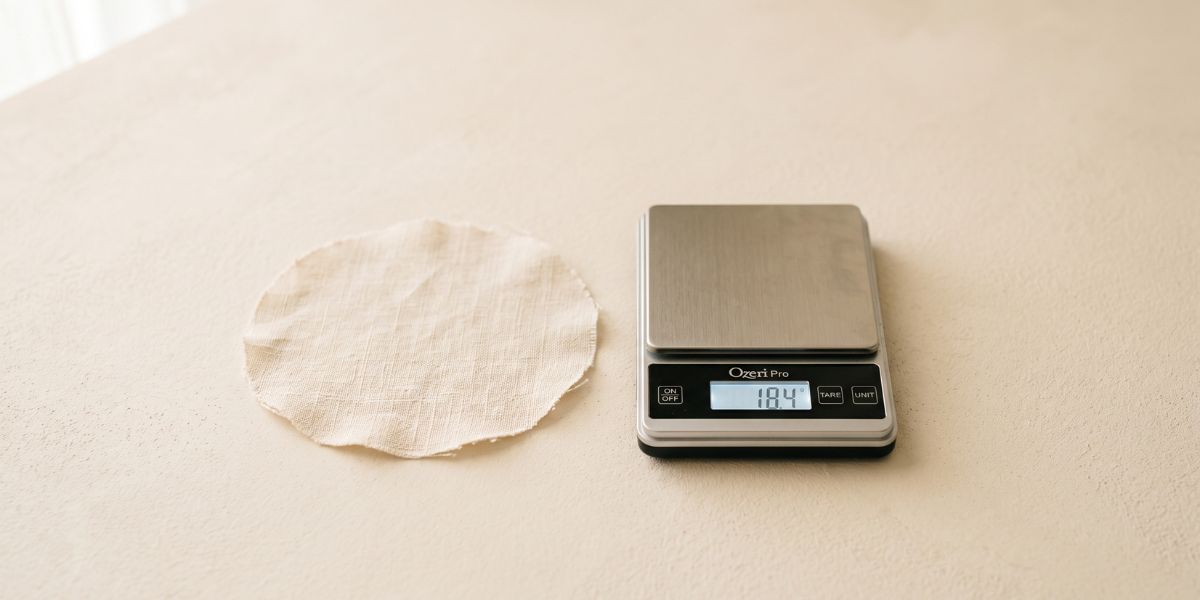
GSM is short for grams per square meter. It is a simple way to measure fabric weight. A worker cuts a small circle of fabric with an exact area of one square meter. The fabric sample is then weighed on a scale. The number on the scale, in grams, becomes the GSM value.
GSM is different from thread count. Thread count measures how many threads fit into one square inch of fabric. GSM measures the total weight of the fabric instead. Two fabrics can have the same thread count but different GSM values. Yarn thickness also changes the fabric weight.
How Fabric GSM Is Measured
Textile mills use a tool called a GSM cutter to measure fabric weight. This tool cuts a fabric sample that is always the same size. The sample then goes on a small digital scale built for this purpose.
Buyers rarely test fabric GSM by hand. Most online kandura and thobe stores does not list the GSM value on the fabric label or product page. This number is necessary to mention because it gives buyers a quick way to judge fabric weight without touching the cloth first.
How to Measure GSM at Home?
- Cut a fabric square that measures exactly 10 cm by 10 cm. Use a ruler and sharp scissors for a clean edge. Pick the sample from a flat area of the fabric.
- Place the fabric square on a small kitchen scale or a jewellery scale.
- Note the weight of the square in grams. Multiply that weight by 100.
- The result is the approximate GSM value of the fabric.
- Cut a second square from a different spot on the fabric.
Why GSM Matters for Kandura, Thobe, and Dishdasha?
GSM affects how your Emirati kandura, Saudi thobe, and Dishdasha feels against the skin. A low GSM fabric feels cool and light and a high GSM fabric feels warmer and heavier.
GSM also affects the drape of fabric. Heavier fabric falls straight and holds its shape. Lighter fabric moves more with the body and can feel less structured.
GSM plays a role in fabric opacity too. Very light fabric can turn see-through under strong light. This is a common concern for buyers. Fabric with a higher GSM value blocks light better and stays fully opaque.
What is the GSM Range for Kandura, Thobe, and Dishdasha Fabric?
Fabric weight for kanduras, thobes, and dishdashas usually falls into three broad ranges. Each GSM value range suits a different season and climate. The table below gives a simple starting point for buyers.
Season | GSM Range | Feel |
Summer | 90 to 200 GSM | Light and breathable |
All Year | 150 to 200 GSM | Balanced weight |
Winters | 200 to 300 GSM | Warm and heavy |
GSM of Fabric Used in Making of Kanduras, Thobes, and Dishdashas
I have listed the GSM value of most used fabric in UAE and GCC countries. The measurements of all the fabric swatches was 30cm x 30cm. We have 50+ fabric types with GSM values ranging from 90 to 190. I have listed some of them below:
Fabric Brand | Weight (g) | GSM |
Shabab Signature | 10.39 | 115 |
Shabab Royal | 13.3 | 148 |
Shabab Dynasty | 12.27 | 136 |
Shabab Crown | 10.7 | 120 |
Faster | 14.39 | 160 |
Adventure | 16.48 | 183 |
Bait Al Shams | 12.82 | 142 |
Farwa | 15.41 | 171 |
Brother | 11.83 | 131 |
Libas-Al-Shabab | 17 | 189 |
Unique | 11.98 | 133 |
Royal Najoom | 12.33 | 137 |
Fantoosh | 13.68 | 152 |
Clock Tower | 12.86 | 143 |
Semeramis Korea | 10.98 | 122 |
CR7 | 13 | 145 |
Dubai Marina | 12.2 | 136 |
Dalma | 11.33 | 126 |
Orlando | 14.62 | 162 |
Prestige | 14.33 | 159 |
MUB | 16.80 | 187 |
Qaitanyom | 12.48 | 139 |
Liva | 11.85 | 132 |
Al-Najoom | 14.10 | 157 |
Inspired | 12 | 133 |
Khanjar | 13.20 | 147 |
Al-Badi | 15.1 | 168 |
Ilnaas | 10.27 | 114 |
Arabian | 13.28 | 148 |
Al Maroof | 10.91 | 121 |
Al- Dana | 11.93 | 133 |
Semeramis Japanese | 8.29 | 92 |
Japanese Cotton | 10.62 | 118 |
Premium | 15 | 167 |
Does GSM Affects Comfort and Opacity of Fabric?
Comfort in hot weather depends heavily on GSM. Fabric under 150 GSM lets more air pass through. It feels cooler on the skin during long hours outdoors.
Opacity is a separate concern from comfort. A fabric can feel comfortable but still look thin under bright light. Buyers who want light fabric for summer should also check the weave density. GSM alone does not tell the full story. A tight weave can keep low GSM fabric opaque even at a low weight.
Low GSM vs High GSM
Low GSM fabric works best for hot climates and daily summer wear. It packs easily for travel and dries fast after washing. High GSM fabric works best for cooler months and formal events. It holds its shape better and looks more structured in photos and in person.
The right choice depends on climate first, and occasion second. A buyer living in a hot region for most of the year should pick lighter GSM fabric for daily thobes. Heavier fabric can be saved for cooler months, air conditioned spaces, and special events.
How to Check Fabric GSM Before You Buy
- Check the product label first. Most fabric rolls and finished garments list the GSM value directly on the tag.
- Ask the seller directly if the label does not show a GSM number. Shops that sell kandura and thobe fabric in bulk usually know the exact GSM of each roll.
- Touch the fabric sample if you can. Touch alone cannot give an exact number. A trained hand can still roughly tell light fabric from heavy fabric.
At Shabab Al Yola, we keep record of GSM of every fabric, so our customers don't get confused.
Frequently Asked Questions
1- Is a higher GSM always better for a thobe?
No. A higher GSM fabric is not automatically better. It depends on the climate and the season. Heavy fabric in a hot climate can feel uncomfortable, even though it looks well made.
2- What GSM is used for luxury thobes?
Luxury thobes often use fabric between 150 GSM and 220 GSM. This range gives good drape and a smooth finish. It still works well in moderate climate.
3- Does GSM change the price of a kandura?
Yes, GSM can affect price. It is not the only factor. Fiber quality, weave type, and finishing also play a role in the final cost of the fabric.