The Gahfiya: The Small Cap That the Traditional Look Cannot Do Without
Shabab Al Yola Teams
Table of Contents
Table of Contents
The Gahfiya: The Small Cap That the Traditional Look Cannot Do Without
In the full architecture of traditional Gulf dress, the Gahfiya occupies a position that is easy to underestimate. It sits directly on the head, beneath the ghutra and agal, completely hidden from view in normal wear. Nobody sees it. It gets no attention in conversations about traditional dress. Most guides about Emirati clothing do not mention it at all.
And yet it plays a role that is more practical and more visible in its effects than its hidden position suggests. The Gahfiya is the foundation of the entire headwear arrangement. It determines how the ghutra sits, how the agal holds its position, and how comfortable the whole system feels across a long day of wear. Get it right and everything above it works as it should. Get it wrong and the problems show up in the ghutra drape, in constant readjustment, and in discomfort that accumulates over hours.
This guide covers what the Gahfiya is, where it comes from, what makes a good one, and how to choose and care for it properly, because a piece that matters this much deserves more attention than it typically receives.
At Shabab Al Yola we carry Gahfiyas as part of our complete traditional dress offering, because outfitting a man correctly means getting every layer right, including the ones nobody sees.
What the Gahfiya Actually Is
The Gahfiya is a small, close-fitting cap worn directly on the head as the base layer of Gulf men's headwear. It is typically white or off-white, made from cotton or a fine cotton blend, and sits snugly against the scalp without adding significant height or bulk.
Its primary function is to provide a stable, comfortable base for the ghutra, the larger headscarf worn on top. The Gahfiya's texture and close fit help anchor the ghutra in place and reduce slipping, which matters particularly when the agal alone is not enough to keep a freshly pressed ghutra sitting correctly throughout a long day.
Beyond its practical function, the Gahfiya carries cultural and religious significance. In Islamic tradition, covering the head during prayer is widely practiced, and the Gahfiya serves this purpose both beneath the full headwear arrangement and on its own at appropriate occasions. Many men wear the Gahfiya alone, without a ghutra, during prayer, at home, or in more casual private settings as a marker of modesty and tradition.
The History and Cultural Significance of the Gahfiya
The Gahfiya is not unique to Gulf culture. Variations of the close-fitting prayer cap exist across the Islamic world under different names, the Kufi in West Africa and South Asia, the Taqiyah in many Arab communities, the Peci in Southeast Asia. All serve a similar function: a modest, close-fitting head covering with roots in Islamic tradition and practice.
In the Gulf specifically, the Gahfiya developed as part of the complete headwear system that defines traditional male dress. As the ghutra and agal became established as the dominant form of Gulf headwear, the Gahfiya became the natural foundation beneath them, practical, modest, and culturally consistent with the tradition the outer layers express.
For many Emirati men, the Gahfiya carries personal and family significance beyond its practical role. It is often the first piece of traditional headwear a young boy is given, worn before he is old enough to manage a full ghutra and agal arrangement. This early introduction to the Gahfiya means that for most Emirati men it carries a lifetime of familiarity and personal association that makes it more than just a functional undergarment.
What Makes a Good Gahfiya
Because the Gahfiya is hidden beneath the rest of the headwear, it is tempting to treat it as a commodity, buy whatever is available, replace it when it wears out, and not think much about it otherwise. This approach misses several details that affect how the cap performs and how comfortable it is in daily wear.
Fabric quality is the starting point. A Gahfiya sits in direct contact with the scalp for many hours. A fabric that is rough, scratchy, or poorly finished causes irritation that builds over the course of a day. Fine cotton or a soft cotton blend feels comfortable from the first wear and stays comfortable through the hours of wear that a full day requires.
The fabric should also be breathable. The Gahfiya sits between the scalp and the ghutra, two layers of coverage that already reduce airflow. A Gahfiya made from dense, poorly breathable fabric contributes to heat and moisture buildup that becomes uncomfortable quickly in Abu Dhabi's climate. A lightweight, open-weave cotton allows much better air circulation and makes the whole headwear arrangement significantly more comfortable in warm conditions.
Fit is equally important. A Gahfiya that is too large shifts around on the head, particularly when the ghutra is being adjusted or removed and replaced. One that is too tight creates pressure on the scalp that becomes genuinely painful over extended wear. The correct fit is snug enough to stay in place through normal head movement without any pressure or discomfort.
The fit of the Gahfiya also affects how the ghutra sits. A cap that sits level and symmetrically on the head gives the ghutra a flat, even base to rest on. One that is slightly off-center or that bunches at the back creates an uneven foundation that shows up in the drape of the ghutra above it.
Construction quality in a Gahfiya shows up in the seams and the hem. The seams should be flat and smooth against the scalp without any raised ridges that cause irritation. The hem at the bottom of the cap should be even and finished so it does not curl or roll up during wear. The stitching throughout should be tight and consistent, a Gahfiya that begins unraveling at the seams after a few washes is not worth the saving it represented at the point of purchase.
The Different Styles of Gahfiya
Not all Gahfiyas look the same, and the differences between styles are worth understanding before you buy.
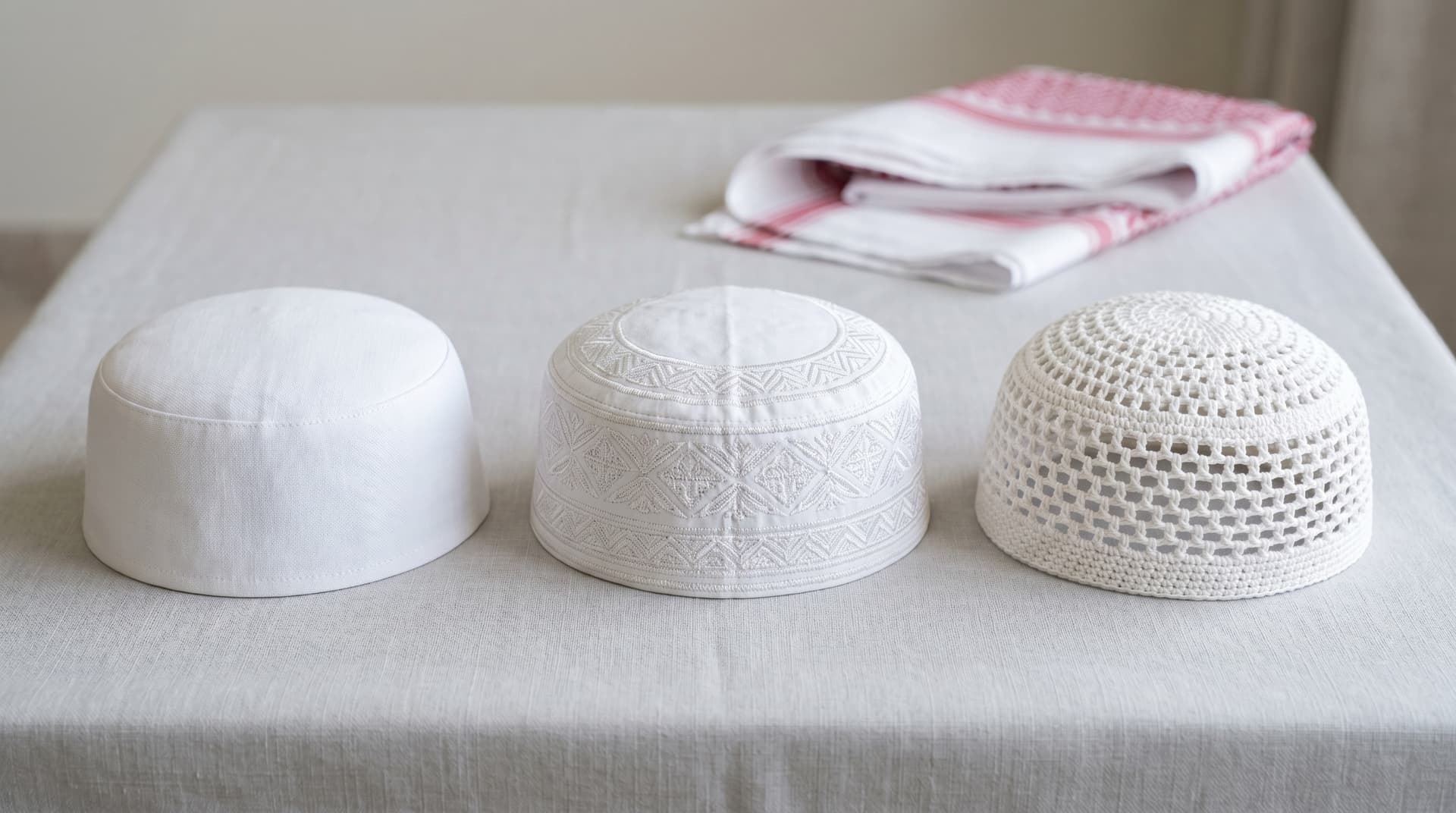
Plain Gahfiya: The most common style is a simple, undecorated white cap with a smooth surface and no embellishment. This is the everyday choice for most men and works equally well beneath the ghutra or worn alone for prayer. Its simplicity is practical, it draws no attention when worn alone and adds no bulk beneath the ghutra.
Embroidered Gahfiya: Many Gahfiyas feature embroidery along the brim or across the surface of the cap. This embroidery is typically white-on-white for a subtle, textured effect, though some versions use colored thread for a more visible pattern. An embroidered Gahfiya is often chosen for wearing alone, at prayer, at home, or at informal occasions, where the cap itself is visible and the embroidery adds a layer of care and tradition to the appearance.
Crocheted Gahfiya: A crocheted version of the cap, typically in white or off-white cotton thread, creates a distinctive open-weave texture that is particularly breathable. This style is associated with specific regional and religious traditions and is commonly seen at prayer gatherings and religious occasions. The open weave makes it one of the most comfortable options for hot weather wear.
Stiffened brim Gahfiya: Some Gahfiyas feature a slightly stiffened brim that helps the cap maintain its shape and sit more precisely on the head. This style works well for men who find that softer caps tend to shift during the day and prefer the more structured fit a firmer brim provides.
How Many Gahfiyas Should You Own
The Gahfiya is worn directly against the skin and in direct contact with the scalp, which means it absorbs perspiration and needs regular washing. In Abu Dhabi's climate, this is not a theoretical consideration, it is a daily reality.
Owning at least four to five Gahfiyas in regular rotation is a practical minimum for daily wearers. This allows you to wash used ones without running out of clean caps during the drying period. It also means you always have a fresh cap available without having to rush a wash-and-dry cycle to get one ready in time.
For men who wear a Gahfiya only for prayer or occasionally rather than daily, two to three is sufficient, enough to keep one clean and available while another is being washed.
Keep a separate Gahfiya specifically for formal occasions, one that is in excellent condition, with bright white fabric and no signs of wear, so you always have a fresh, presentable option available for events where the Gahfiya might be visible.
Caring for Your Gahfiya
The Gahfiya is a simple garment and its care is straightforward, but a few specific points make a difference to how long it lasts and how well it performs.
Wash the Gahfiya after every wear or every two wears depending on how much you perspire. Do not leave used caps unwashed for extended periods, sweat residue sets into cotton fiber and becomes progressively harder to remove, eventually causing the fabric to yellow and the weave to weaken.
Machine washing on a gentle cycle with cold or lukewarm water is fine for most Gahfiyas. Use a mild detergent that is safe for white fabrics. Avoid harsh chemicals or bleach, repeated exposure weakens the cotton fiber and accelerates yellowing rather than preventing it.
Air dry the Gahfiya rather than tumble drying. The heat of a dryer can cause cotton to shrink slightly, which affects the fit over time. A cap that fit perfectly when new may become uncomfortably tight after repeated tumble drying. Hang it or lay it flat to dry in a shaded, well-ventilated spot.
For embroidered Gahfiyas, check the embroidery thread after washing. Fine cotton embroidery is generally durable but can develop loose threads over time. Catch any loose threads early and have them secured before they unravel further.
Pairing the Gahfiya with the Rest of the Headwear
The Gahfiya's role within the complete headwear arrangement is to be invisible in effect, to work so well as a foundation that the ghutra and agal above it look and stay exactly as they should without any thought being required.
A well-chosen Gahfiya that fits correctly and sits level on the head makes the ghutra and agal arrangement at Shabab Al Yola significantly easier to set and maintain throughout the day. The ghutra has a stable, even base to rest on, the agal sits at the right height naturally, and the whole arrangement stays put without constant readjustment.
The Gahfiya also pairs naturally with the agal collection at Shabab Al Yola, both pieces work as part of the same system, and choosing quality at every layer of that system produces a complete headwear arrangement that looks right and stays right from morning through to the end of the day.
The Foundation That Everything Rests On
The Gahfiya will never be the piece anyone notices first. It will not appear in photographs. Nobody will compliment it. But when it is the right size, made from the right fabric, and in good clean condition, everything above it works the way it should, and that quiet, invisible contribution is exactly what the best foundational pieces do.
Give the Gahfiya the attention it deserves when building your traditional wardrobe. Buy enough of them to keep the rotation fresh, choose quality that matches the quality of what you wear above it, and replace them when they start to show wear. The rest of the look will thank you for it.