What is Tarboosh? History of Tassel
Shabab Al Yola Teams
Table of Contents
Table of Contents
Walk through any street in Abu Dhabi, Dubai or Muscat and you will notice men wearing long white robes with a thin cord hanging from the neckline. Most visitors walk past without a second look. But this small tassel carries a story about perfume, family tradition and national identity that goes back generations. In the UAE people call it the tarboosh. Its proper Arabic name is farukhah. In Oman it goes by “furakha” or “farkha”. In this blog we will have a close look at this small detail and explain why it means so much to people in the Gulf.
What Is a Tarboosh or Tarboush?
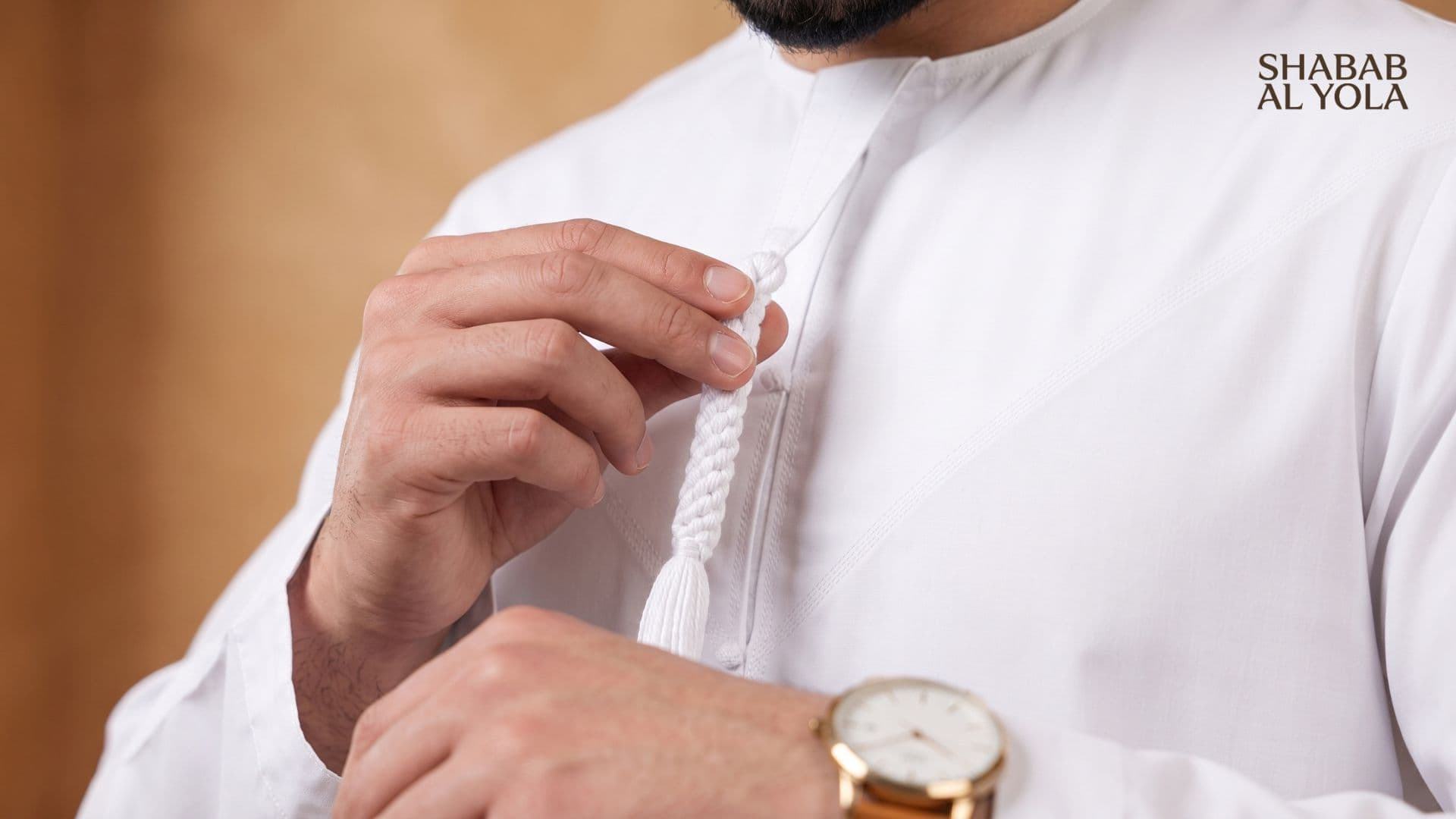
The tarboosh is a small tassel made of braided or twisted thread. It hangs from the neckline of the Emirati kandura. The tassel usually hangs straight down the middle of the chest. Some versions of tarboosh are quite long and can reach close to the waist. The tarboosh is detachable. A man can remove the tassel or swap it for a different one, which means the same robe can look slightly different depending on the occasion.
What’s the Origin of Tarboosh? The History You Must Know
When it comes to origin and history of tarboosh, there does not appear to be one officially recorded date when the tarboosh was introduced. Instead, available Emirati heritage accounts describe it as a local development of traditional kandura design.
According to a heritage account published by Al Ittihad, citing the Abu Dhabi Heritage Club’s book on traditional Emirati clothing, researcher Rashid Al Shawq explained that the idea for the kandura's tassel was inspired by date-palm fronds. People would comb and separate palm leaves into long, fine strands. These strands were placed over the shoulders, and over time the idea was adapted into a decorative tassel attached to the neckline of the kandura.
Another version also exists that tells the most popular story that the wives and mothers used to make scented tassels for the men in their family before long journeys. The tassel would be dipped in perfume so that a husband or son traveling far from home would carry a familiar, pleasant scent with him, one that reminded him of family and home. This story comes from a heritage project run during Dubai Design Week in 2019, and it remains the most commonly told explanation today.
How Fragrance Gave the Tarboosh Its Meaning
The biggest reason the tarboosh matters so much comes down to fragrance. Historically, the tassel was lightly scented with oud or musk, both of which are fragrance oils that have been treasured across the Gulf region for centuries. As a man walked or moved through the day, the scented tassel would release small traces of fragrance around him.
This connects directly to a much bigger tradition in Gulf culture, which places huge value on scent and hospitality. Guests are often perfumed when they arrive at someone's home and again before they leave, as a sign of respect. A scented tarboosh lets a man carry that same sense of care with him wherever he goes, almost like a personal, wearable perfume bottle.
Because of all this, the tarboosh has become something of a small symbol of identity too. A single glance at where the tassel sits, whether centered or to the side, tells you something about where a man is likely from.
How many types of Tassels are there?
There are two types of tassels worn today and that are:
- Emirati Tassel called "Tarboosh".
- Omani Tassel called "Furakha".
In the UAE people call this tassel ‘tarboosh’. But tarboosh is also the Arabic and Turkish word for the fez, the red felt hat once worn across the Ottoman Empire. The fez and the neckline tassel are two completely different objects. They simply share a name in casual UAE speech.
The correct Arabic term for the tassel is farukhah, also written as furakha or farkha. The word farukhah literally translates to little chick or young bird, which is a cute origin for such a formal piece of clothing. So the tassel's real name basically means little chick. This detail rarely appears in casual conversation, but it is a fun fact worth sharing with anyone curious about Gulf dress.
What’s the difference between Tarboosh and Furakha?
One of the easiest ways to spot the difference between an Emirati kandura and an Omani dishdasha is by looking at the tassel.
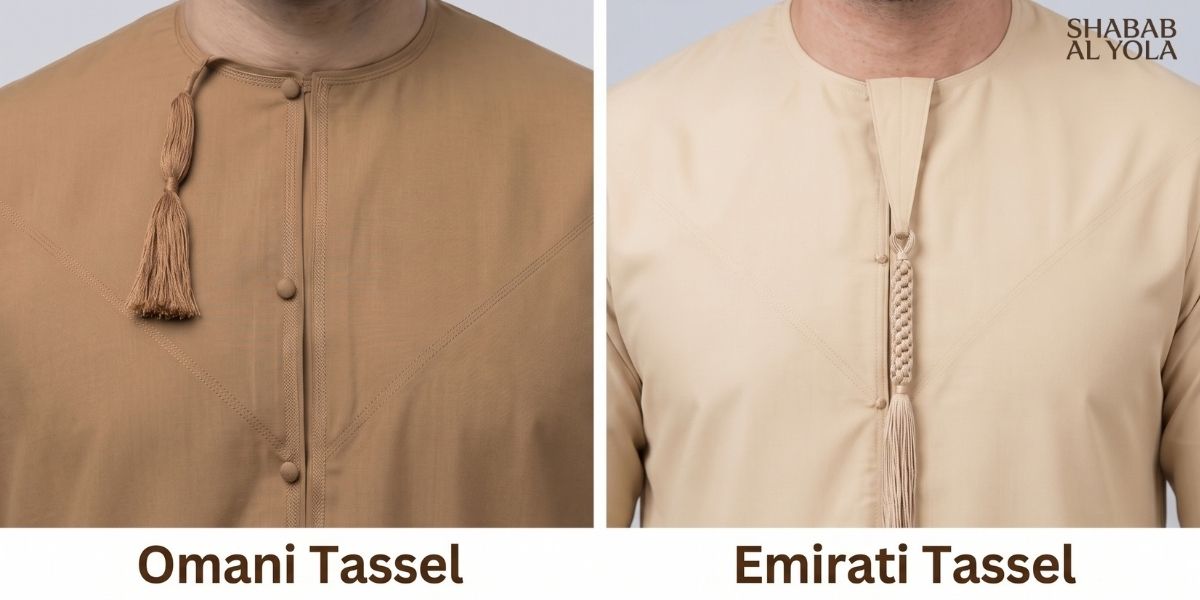
- The Emirati version usually has no collar at all, and the tassel hangs long and centred down the chest. The overall look tends to be plain, with very little embroidery.
- The Omani version often has an embroidered neckline called the "mahar", along with a short slit opening at the front called the "shaq". The tassel here is shorter and sits to one side rather than in the center. Omani robes also tend to use more color and embroidery compared to the simpler Emirati style.
Other Gulf countries take a different approach entirely. They don’t use tassels at all.
Who Wears the Tarboosh?
The short answer is almost everyone wears tarboosh in UAE. A few people including the president of UAE Mohamed bin Zayed Al Nahyan wear kandura without tarboosh, which is not very common. Tarboosh is worn by majority of men of every age, from young boys to elderly grandfathers. It does not signal whether a man is married or single, wealthy or not, or from a particular tribe or background. It is simply part of everyday dress, worn to work, to the mosque, to family gatherings and to formal events alike.
Children often wear miniature kanduras complete with their own small tassel, which means many Emirati and Omani boys grow up wearing this detail from a very young age.
How is Tarboosh Made?
Traditionally, the tassel was made from cotton thread, and older versions were sometimes made from silk. Today many are made from the same polyester thread used in the robe itself, since polyester became the standard fabric choice across the region from the 1990s onward.
Making a tarboosh by hand takes real skill. To make a tarboosh the hands and feet of tarboosh maker work toggether with as many as twelve spools of thread at once to braid a single long tassel. This is genuinely a hand skill passed down between generations of makers, mostly women, who specialize in this kind of thread work.
Machine-made tassels are widely available too, and they tend to be cheaper and more accessible for everyday wear. Handmade versions are usually valued more for the skill behind them rather than the cost of materials, since a simple length of thread is not expensive on its own.
What is the Length of Tarboosh?
Emirati tarboosh is not attached to the neckline directly, instead it is attached to a fabric which is in the shape of upside down triangle. Length of tarboosh varies with the height of a person. It usually ends at the waistline, but everyone has their personal preference. Some people like short tassel, other love to wear long tassel. So, it depends on one's own style.
Where to Buy Best Tarboosh Online?
If you want to buy custom and handmade Tarboosh online, Shabab Al Yola, a tailoring brand based in Abu Dhabi is offering what you want. We have an expert tarboosh maker whose only job is to make custom handmade tarboosh that are detachable. Shabab Al Yola sells the tarboosh as a standalone accessory, alongside other traditional items like the ghutra, shemaghagal and bisht. You can order it from every part of world to get your tarboosh at your doorstep.